When someone dies, families are often required to make several important decisions in a short period of time. A funeral home helps manage many of the practical, legal, and ceremonial responsibilities that follow a death—including practical details like whether funeral homes put undergarments on the deceased—allowing relatives to focus more fully on supporting one another and honoring their loved one.
So, what do funeral homes do? Funeral homes can transport and care for the deceased, help families make funeral arrangements, prepare legal documents, organize viewings and services, and coordinate burial or cremation.
The exact services provided by funeral homes vary according to the provider, location, family preferences, religious customs, and local requirements. Families can often choose between full-service arrangements and simpler options such as direct cremation, immediate burial, a memorial service, or a graveside ceremony.
What Is a Funeral Home?
A funeral home is a licensed business that cares for the deceased and helps families arrange funerals, memorial services, burials, and cremations.
Funeral homes are usually operated by licensed funeral directors. Depending on the size of the business, they may also employ:
- Licensed embalmers
- Funeral arrangers
- Funeral assistants
- Drivers and transportation staff
- Administrative employees
- Crematory staff
- Aftercare or grief-support coordinators
Some funeral homes provide nearly every service directly. Others coordinate with outside cemeteries, crematories, florists, clergy members, musicians, newspapers, and memorial-product providers.
“A funeral home helps families manage the care of the deceased, required paperwork, service arrangements, and final burial or cremation.”
What Do Funeral Homes Do After Someone Dies?
After someone dies, a funeral home may become involved shortly after the family, hospital, hospice facility, nursing home, or medical examiner contacts them.
The process commonly includes:
- Receiving the family’s initial call
- Confirming legal authorization to act
- Arranging transportation of the deceased
- Caring for and preparing the deceased
- Meeting with the family to make arrangements
- Coordinating a viewing, funeral, memorial, or graveside service
- Completing permits and administrative documents
- Coordinating burial or cremation
- Providing aftercare information and resources
Families do not always need to make every decision during the first phone call. The funeral home can explain what must happen immediately and which choices can wait.
HonorYou’s guide on how soon funerals usually take place can help families understand the general planning timeline.
Transfer the Deceased Into Their Care
One of the first funeral home responsibilities is arranging the transfer of the deceased into the funeral home’s care. If you are unsure who picks up dead bodies or how transport works under different circumstances, the funeral home or a specialized transport team coordinates the logistics to bring your loved one safely into care.
A funeral home may collect the deceased from:
- A private residence
- A hospital
- A nursing home
- A hospice facility
- A medical examiner or coroner’s office
- Another funeral home
The funeral home confirms the identity of the deceased and gathers the authorization required to complete the transfer. If the death is under investigation, the medical examiner or coroner may need to release the deceased before the funeral home can proceed.
Transportation costs may depend on:
- The distance traveled
- The time of day
- Whether the transfer occurs outside the normal service area
- Whether specialized transportation is needed
Families should ask whether the transfer fee is included in the funeral home’s basic charges or listed separately.
Meet With the Family to Make Arrangements
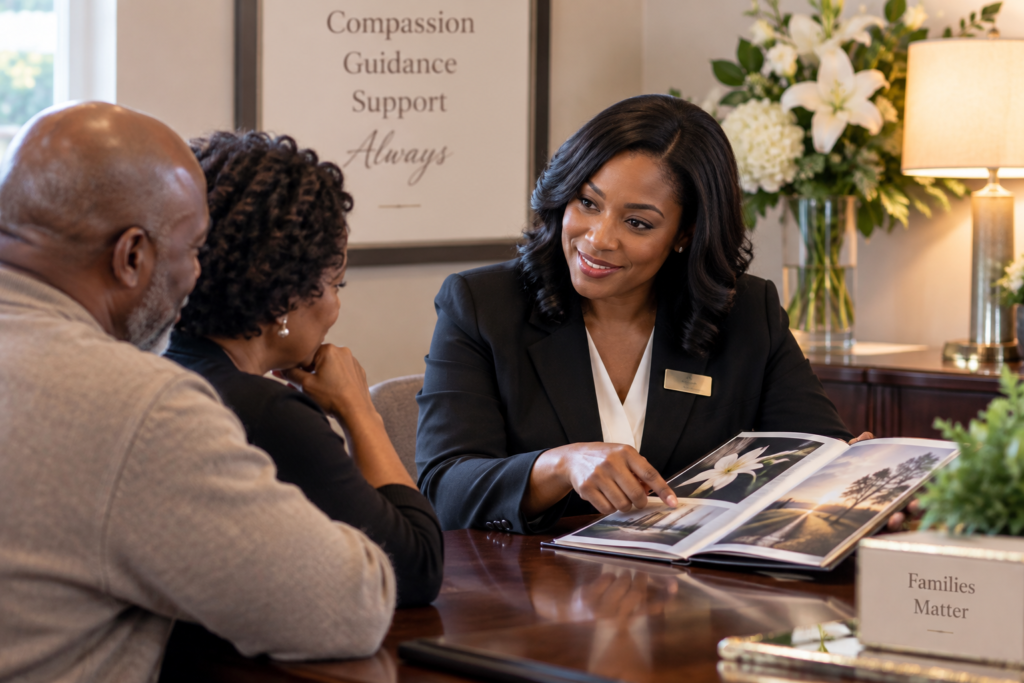
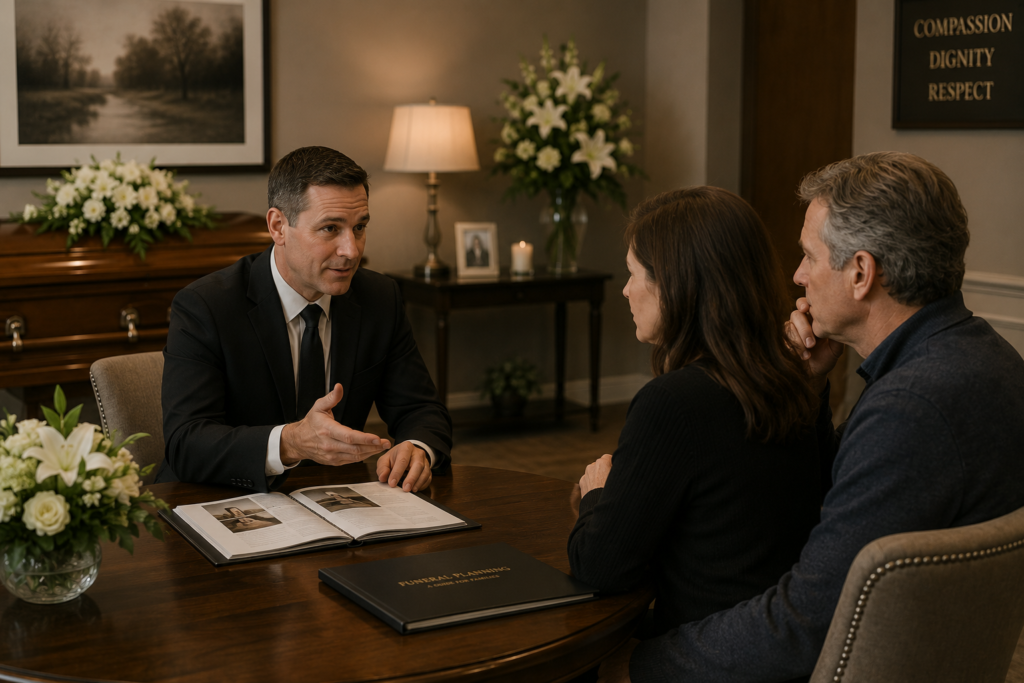
After the deceased has been transferred into care, the funeral director usually meets with the family. This meeting is often called an arrangement conference.
During the conference, the funeral director may discuss:
- Burial or cremation
- A funeral, memorial, celebration of life, or graveside service
- Viewing or visitation plans
- Religious and cultural traditions
- The service date and venue
- Casket or urn selection
- Clothing for the deceased
- Flowers, music, readings, and speakers
- Obituary information
- Funeral transportation
- Memorial products and printed materials
- Budget and payment options
A funeral director should explain what is required, what is optional, and how each decision affects the total cost.
Families preparing for this meeting may find HonorYou’s funeral planning guide useful.
Care for and Prepare the Deceased
Funeral homes provide several forms of body preparation for a funeral, burial, cremation, private identification, or public viewing. The exact preparation depends on the family’s choices, the condition of the deceased, timing, religious beliefs, and local requirements.
Basic Care
Basic care may include:
- Washing and disinfecting
- Refrigeration
- Dressing the deceased
- Hair care
- Cosmetic care
- Placement in a casket or cremation container
- Preparation for identification or viewing
The family may be asked to provide clothing, jewelry, eyeglasses, or personal items they would like included.
Embalming
Embalming is a process used to temporarily preserve, sanitize, and prepare the deceased. It may be chosen when a family plans a public viewing or when there will be a longer period before burial.
Embalming is not automatically required for every funeral. Whether it is recommended or necessary may depend on:
- The type of service
- The time before burial
- Transportation requirements
- Local regulations
- Funeral-home policies
- The family’s religious or personal preferences
Families should ask why embalming is being recommended and whether alternatives such as refrigeration are available. HonorYou’s guide to what embalming involves explains the process in more detail.
Restorative Care
In some circumstances, trained funeral professionals may provide restorative care to help create a peaceful and natural appearance for a viewing.
The amount of preparation needed differs from one person to another. Families can ask the funeral director what is recommended, who will perform the work, and what result can reasonably be expected.
Arrange Viewings and Visitations
Funeral homes often provide space and staff support for gatherings held before the funeral or final disposition.
Common options include:
Viewing
A viewing allows relatives and friends to see the deceased, usually in a casket. It may be public or limited to close family members.
Visitation
A visitation is a scheduled gathering where guests offer condolences to the family. The casket may be open, closed, or not present.
Wake
A wake is a gathering held before burial or cremation. Depending on cultural, religious, and family customs, it may take place at a funeral home, place of worship, private residence, or community venue.
Private Family Identification
A private identification allows a small number of relatives to confirm identity or say goodbye without holding a formal public viewing.
The funeral home may provide:
- A chapel or visitation room
- Seating for guests
- A register book
- Photograph and memorial displays
- Flowers and tribute arrangements
- Staff to greet and guide attendees
- Audio or video equipment
Families unfamiliar with the service process can review what to expect at a funeral service.
Plan the Funeral or Memorial Service
Funeral planning services can include nearly every practical detail required to organize a respectful ceremony.
A funeral home may coordinate a service held at:
- The funeral home
- A church or other place of worship
- A cemetery
- A crematory chapel
- A private family home
- A community hall
- Another selected venue
The funeral director may coordinate with:
- Clergy members or celebrants
- Musicians
- Florists
- Cemetery personnel
- Crematory staff
- Pallbearers
- Military honor representatives
- Transportation providers
The funeral home can also help organize the order of service, funeral procession, readings, music, eulogies, and guest instructions.
A funeral home can coordinate most aspects of a service, but the family should remain involved in deciding how their loved one will be remembered.
Coordinate Burial Arrangements
When a family chooses burial, the funeral home can coordinate with the cemetery and other service providers.
Burial arrangements may include:
- Contacting the cemetery
- Scheduling the burial
- Obtaining burial and transit permits
- Coordinating a graveside service
- Transporting the casket
- Arranging pallbearers
- Confirming grave-liner or burial-vault requirements
- Working with cemetery staff on timing and placement
Cemetery charges are commonly separate from funeral-home charges. These may include the burial plot, opening and closing the grave, a vault or liner, and a headstone or marker.
HonorYou’s guide to planning a burial can help families understand the additional decisions involved.
Coordinate Cremation Arrangements
Funeral homes can also manage cremation arrangements. Some funeral homes operate an on-site crematory, while others work with a separate licensed cremation provider.
Cremation services may include:
- Completing cremation authorization forms
- Confirming identification
- Transporting the deceased to the crematory
- Providing or arranging a cremation container
- Scheduling the cremation
- Helping the family select an urn
- Returning the cremated remains
- Planning burial, scattering, or memorial placement
Families should ask whether the funeral home owns the crematory, how identification is maintained, and when the cremated remains are expected to be returned.
HonorYou’s explanation of how cremation works provides additional information about the process.
Handle Documents and Legal Requirements
Funeral home paperwork is an important part of the arrangement process. Funeral directors regularly help families complete and submit information required by government agencies, cemeteries, crematories, insurance providers, and other organizations.
Depending on the provider and location, the funeral home may assist with:
- Registering the death
- Ordering certified death certificates
- Burial permits
- Cremation authorization
- Transit permits
- Cemetery paperwork
- Obituary submission
- Veterans’ benefit applications
- Insurance-assignment documents
- Social Security notification procedures
Certified death certificates are issued by the appropriate government authority rather than by the funeral home itself. However, funeral homes commonly register the death and help the family request copies.
Families can learn more about obtaining death certificates through a funeral home.
Help Create and Publish an Obituary
Funeral-home staff may help families prepare and publish an obituary.
This assistance can include:
- Collecting biographical details
- Formatting the obituary
- Adding funeral or visitation information
- Publishing it on the funeral-home website
- Submitting it to newspapers
- Creating an online condolence page
- Adding photographs or memorial information
The family should review names, dates, relationships, service details, and the final wording before publication. Newspaper charges are often separate third-party expenses.
Provide Funeral Products and Memorial Items
Funeral homes commonly offer merchandise and memorial items that can be used during the service or kept by the family afterward.
Products may include:
- Caskets
- Urns
- Burial vaults and grave liners
- Register books
- Funeral programs
- Prayer cards
- Memorial bookmarks
- Flowers
- Keepsakes
- Video tributes
- Memorial jewelry
Families may be able to purchase certain products from outside providers. Ask the funeral home whether any handling, delivery, sizing, or facility requirements apply before ordering elsewhere. If you plan to order custom keepsakes independently, reading HonorYou reviews can help you see how other families rated their experiences with personalized programs and memorial designs.
Arrange Funeral Transportation
Transportation may be needed at several stages of the funeral process.
A funeral home may provide or arrange:
- Initial transfer of the deceased
- A hearse
- Family limousines
- Flower vehicles
- Transportation between service venues
- Transfer to the cemetery or crematory
- Long-distance transportation
- Domestic or international repatriation
Long-distance and international transportation may require additional permits, specialized containers, airline coordination, and assistance from another funeral home at the destination.
Support Religious and Cultural Traditions
Funeral homes may help families arrange services that reflect religious, cultural, and community traditions.
These may include:
- Christian funeral services
- Jewish burial traditions
- Muslim funeral customs
- Hindu funeral practices
- African and Caribbean traditions
- Irish wakes
- Military honors
- Homegoing celebrations
- Secular memorial services
Families should ask whether the provider has experience with their specific traditions. A funeral director does not need to share the family’s faith or culture, but should be willing to listen, coordinate with community leaders, and respect the family’s wishes.
Help Families Plan Funerals in Advance
Funeral homes may offer preplanning or pre-need services for people who want to record their wishes before death.
Preplanning can help someone:
- Choose burial or cremation
- Record funeral and memorial preferences
- Select music, readings, and speakers
- Estimate funeral costs
- Choose products or service options
- Organize important documents
- Reduce future decisions for relatives
- Arrange advance payment when desired
Not every prepaid funeral plan works the same way. Before paying in advance, review:
- Cancellation terms
- Transferability
- Price guarantees
- Refund rules
- What happens if the funeral home closes
- Which costs are not included
Provide Grief and Aftercare Resources
Some funeral homes continue supporting families after the funeral or memorial service.
Aftercare resources may include:
- Grief-support information
- Referrals to counselors
- Support-group details
- Follow-up calls
- Anniversary and holiday resources
- Estate and benefits checklists
- Guidance on collecting memorial items
Funeral directors regularly offer compassionate support, but they are not necessarily licensed grief counselors or mental health professionals. Families needing clinical support should be referred to an appropriately qualified provider.
What Funeral Homes Do Not Usually Handle
Understanding the limits of funeral home services can help families know which professionals to contact.
Funeral homes do not normally:
- Perform autopsies
- Determine the medical cause of death
- Provide medical treatment
- Settle the entire estate
- Provide formal legal advice
- Replace licensed grief therapists
- Control cemetery pricing
- Make major decisions without family authorization
Medical examiners or coroners investigate certain deaths. Attorneys and estate professionals handle legal and financial matters. Licensed counselors provide clinical grief support.
What Services Are Included in Funeral-Home Costs?
Funeral-home pricing varies according to the provider, location, service type, products selected, and level of personalization.
Charges may include:
- Basic services of the funeral director and staff
- Transfer of the deceased
- Refrigeration
- Preparation or embalming
- Facilities for viewing or visitation
- Use of facilities for the funeral ceremony
- Funeral transportation
- Caskets, urns, or other merchandise
- Permits and administrative services
- Memorial products
Third-party charges may include:
- Cemetery fees
- Crematory fees
- Certified death certificates
- Clergy or celebrant honorariums
- Newspaper obituary fees
- Flowers
- Musicians
- Transportation outside the normal area
Ask for a written, itemized estimate that clearly separates funeral-home charges from outside expenses. HonorYou’s guide to common funeral-home expenses explains these costs in more detail.
Can Families Choose Only Certain Services?
Families can often select only the services that fit their needs, beliefs, and budget. A full traditional funeral is not the only available option.
Direct Cremation
Direct cremation generally takes place without a formal viewing or funeral ceremony beforehand. The family may hold a memorial service separately at a later date.
Immediate Burial
Immediate burial generally involves burial without a public viewing or formal ceremony at the funeral home.
Memorial Service
A memorial service is held without the deceased’s body present. It may take place before or after burial or cremation.
Graveside Service
A graveside service takes place at the cemetery and may be held instead of a longer funeral-home or church ceremony.
Families should ask the funeral home to explain each option and provide an itemized price list. Simpler arrangements can still be respectful and meaningful.
How to Choose the Right Funeral Home
Choosing a funeral home is an important decision. Families should consider more than location alone.
Helpful steps include:
- Compare more than one provider when possible.
- Ask for an itemized price list.
- Confirm which services are included.
- Read recent reviews from other families.
- Ask about burial and cremation options.
- Check experience with cultural or religious customs.
- Tour the facilities when practical.
- Ask who will care for the deceased.
- Review payment and cancellation terms.
- Avoid pressure to purchase unnecessary products or services.
HonorYou’s guide on how to choose the right funeral home provides a more detailed comparison checklist.
The right funeral home should communicate clearly, provide transparent pricing, respect the family’s wishes, and explain options without pressure.
Questions to Ask a Funeral Home
Before making arrangements, ask questions that clarify services, responsibilities, and costs.
Helpful questions include:
- What is included in your basic service fee?
- Can you provide an itemized price list?
- Is embalming necessary for our chosen arrangements?
- Do you operate your own crematory?
- Who will care for and prepare the deceased?
- Can we purchase a casket or urn elsewhere?
- Which third-party fees should we expect?
- Do you handle death certificates and permits?
- Can you accommodate our religious or cultural traditions?
- What are the payment and cancellation terms?
- How quickly can arrangements begin?
- Which services are optional?
HonorYou’s complete guide to questions to ask a funeral home can help families prepare for the arrangement conference.
Final Thoughts
Funeral homes manage much more than the funeral ceremony itself. They transfer and care for the deceased, guide families through important decisions, organize viewings and services, complete required paperwork, and coordinate burial or cremation.
The services provided by funeral homes differ according to the provider, local regulations, religious customs, and the family’s preferences. Families can often choose a complete funeral package or select simpler services that better suit their needs and budget.
Before hiring a funeral home, ask questions, compare written prices, understand which charges are optional, and choose a provider that communicates with compassion and transparency.
The right funeral home should help your family create a respectful farewell without making you feel rushed, pressured, or uncertain about the arrangements.
Frequently Asked Questions
What does a funeral home do with the body?
The funeral home transfers the deceased into its care and may provide refrigeration, washing, dressing, cosmetic preparation, embalming when selected, and placement in a casket or cremation container.
Does a funeral home arrange the entire funeral?
A funeral home can coordinate most aspects of the funeral, including the venue, officiant, transportation, flowers, cemetery, crematory, service schedule, and memorial products. Families may also choose to manage certain elements themselves.
Who collects and transports the deceased?
The funeral home usually sends trained staff to transfer the deceased from a residence, hospital, nursing home, hospice facility, medical examiner’s office, or another funeral home.
Do funeral homes issue death certificates?
Certified death certificates are issued by the appropriate government authority. Funeral homes commonly help register the death and order certified copies for the family.
Is embalming always required?
No. Embalming is not required in every situation. Requirements can depend on local laws, transportation, timing, viewing arrangements, and funeral-home policies.
Can a family hold a viewing without embalming?
It may be possible to hold a private or public viewing without embalming, depending on timing, refrigeration, the condition of the deceased, local regulations, and the funeral home’s policies.
Do funeral homes perform cremations?
Some funeral homes have an on-site crematory. Others coordinate cremation through a separate licensed crematory.
Can funeral homes help with military funerals?
Yes. Funeral homes may help request military honors, coordinate with veterans’ organizations, obtain service records, and arrange burial in a veterans’ cemetery.
Can I use a different cemetery from the one recommended?
Families can generally choose their preferred cemetery, provided the cemetery can accommodate the selected arrangements and has availability.
Do funeral homes provide grief counseling?
Some funeral homes offer grief resources, support groups, or referrals. Funeral directors are not necessarily licensed grief counselors or therapists.
What services are included in a funeral-home fee?
The fee may include funeral-director services, transportation, preparation, facility use, paperwork, service coordination, and certain administrative tasks. Merchandise and third-party expenses may be charged separately.
Can families choose only the services they need?
Families can often choose from full-service funerals, direct cremation, immediate burial, memorial services, and graveside services. Request an itemized price list to understand available options.