
Sitting down to arrange the final resting details for yourself or someone you love is one of the most profound responsibilities you will ever face. When you are navigating the immediate, heavy fog of grief—or trying to make logical choices for the future—the sheer volume of operational decisions can easily feel completely overwhelming. If you find yourself wondering exactly how to plan a burial, please know that having a structured, clear roadmap can replace your anxiety with a sense of calm control.
A final resting place is far more than a logistical necessity; it is a permanent anchor for memories, a sacred space for future generations to visit, and an enduring testament to a lived legacy. The key to managing this process without feeling emotionally depleted is to take it one step at a time. This comprehensive burial planning guide provides clear, compassionate direction, detailed step-by-step instructions, cost breakdowns, and a practical checklist to help you navigate funeral and burial planning with confidence, dignity, and grace.
What Is Burial Planning?
At its core, burial planning is the systematic process of choosing and coordinating all the components required for a person’s final disposition below or above ground. It establishes a definitive roadmap for a person’s final resting arrangements, detailing everything from the physical location of the gravesite to the precise operational logistics of the committal ceremony.
While people often use the terms interchangeably, there is a fundamental structural difference between burial and cremation planning. Cremation planning primarily centers around the transformation of the body by heat, followed by the selection of an urn, a niche, or a scattering location. Conversely, traditional burial planning focuses on the physical preservation, presentation, and placement of the body within a permanent, dedicated architectural location.
This type of coordination typically falls into one of two operational timelines:
- Pre-need planning (End-of-life burial planning): Arrangements made intentionally well in advance of a person’s passing. This allows for unhurried, logical choices and provides long-term financial protection for your family.
- At-need planning: Arrangements that must be organized immediately following a death. This timeline requires swift coordination under tight deadlines, often during a period of acute emotional vulnerability. Remembering that time is short can change how you approach these choices; you can read more about how quickly funerals happen to better understand these immediate operational pressures.
Why Burial Planning Is Important
Engaging intentionally with a cemetery planning guide serves several vital logistical, financial, and psychological purposes. When a death occurs without a structural plan in place, surviving relatives are suddenly forced to make dozens of legally binding, expensive choices within a 24-to-48-hour window. This scenario frequently leads to emotional overspending, as families often default to the most expensive options out of sheer exhaustion or a desire to show love through a high price tag.
Additionally, formalizing these steps in advance eliminates last-minute family disagreements. When a person’s wishes are written down clearly, it removes the painful guesswork from the equation. Survivors do not have to argue over what their loved one “would have wanted.” Instead, they can take comfort in knowing they are executing a carefully designed plan, giving them the emotional space to focus on healing, remembering, and supporting one another.
Compassionate Note: Grief can significantly compromise our decision-making capacity. Establishing a clear framework ahead of time is a profound act of love that shields your family from administrative stress when they are least equipped to handle it.
Step-by-Step Burial Planning Guide
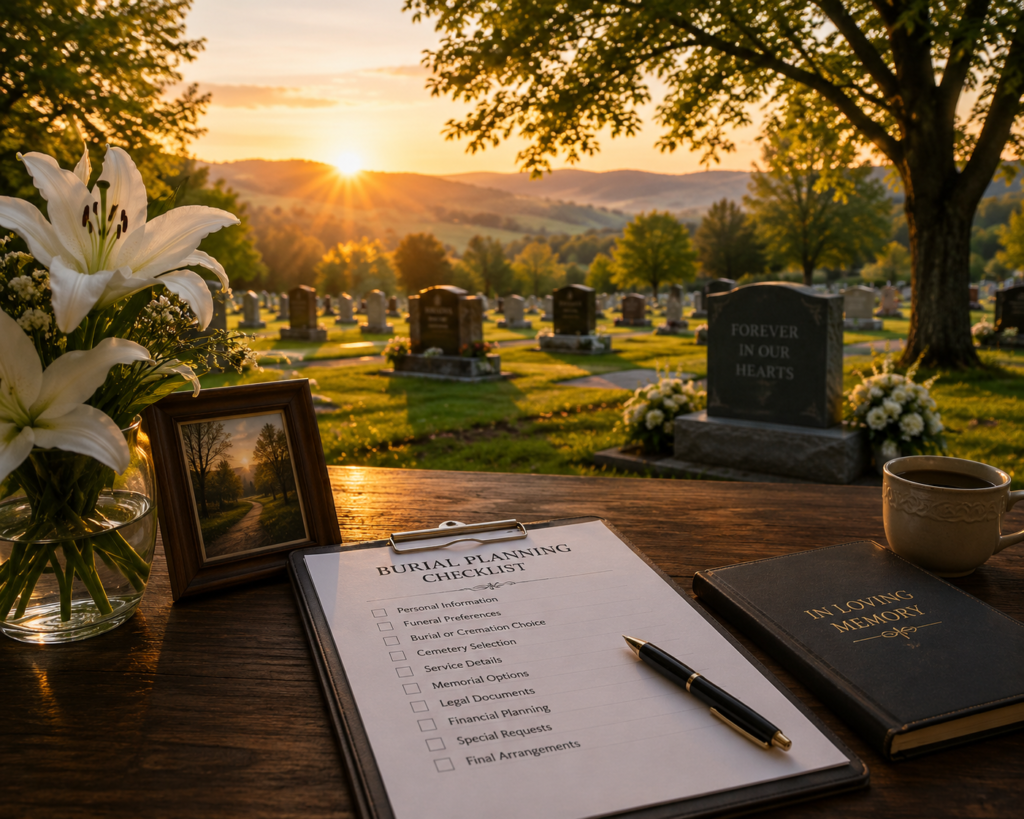
To make this process as straightforward as possible, the primary decisions required for final arrangements can be broken down into seven distinct, manageable burial planning steps.
1. Choose Burial Type
The first step is determining the physical format of the disposition. A traditional below-ground burial typically includes professional embalming, a public viewing or visitation, a formal chapel service, and transport to a cemetery. Alternatively, above-ground entombment places the casket inside a sealed crypt within a public or private mausoleum.
Many families are now choosing a green or natural burial. This eco-conscious practice avoids chemical embalming fluids, concrete burial vaults, and exotic woods. Instead, it utilizes simple biodegradable shrouds or woven wicker caskets, allowing the body to return naturally to the earth within a protected woodland or conservation pasture.
Throughout this step, religious and cultural traditions must take precedence. For instance, traditional Jewish and Islamic customs strictly mandate natural burials without chemical preservation, requiring interment to happen as quickly as legally possible. You can explore how these traditions differ by reading our guide on different funeral and burial practices around the world.
2. Select a Cemetery
Finding a permanent geographic home requires balancing emotional connection with practical realities. When selecting a cemetery, consider how accessible the location is for surviving relatives who wish to visit, alongside the overall atmosphere and rules of the grounds.
Cemeteries offer several distinct plot configurations:
- Single Plots: A dedicated space designed to hold one casketed or shrouded individual below ground.
- Companion Plots: Two adjoining spaces sold together for couples, configured either side-by-side or stacked vertically (known as double-depth).
- Family Plots: A larger, pre-purchased block of multiple plots earmarked for successive generations of a single family.
Be sure to ask for a copy of the cemetery’s rules and regulations, as some properties only allow flat bronze grave markers to maintain a park-like lawn, while others permit upright granite headstones.
3. Choose a Casket or Burial Container
Selecting the burial vessel is often one of the largest financial decisions in the process. Caskets are widely available in two primary material categories: metals (ranging from standard carbon steel to premium bronze or copper) and hardwoods (such as oak, maple, mahogany, or cherry).
When reviewing styles, remember that the casket’s primary purpose is to provide a dignified presentation during services and secure transport to the gravesite. Most modern cemeteries also require an outer burial container, such as a concrete or steel burial vault or grave liner. This outer container shields the casket from the immense weight of heavy lawn equipment and prevents the soil above from shifting or collapsing over time.
4. Plan the Funeral or Memorial Service
With your physical selections established, focus can turn to configuring the community gathering. You must decide whether to host a traditional funeral service (with the body present in an open or closed casket) or a memorial service (held after interment takes place, focusing on a celebration of life display).
You will need to choose a venue—such as a church, a secular funeral home chapel, or directly at the graveside for an intimate committal—and select an officiant or celebrant to lead the program. Knowing exactly what to expect at a funeral or memorial service can help you structure these specific elements with confidence.
5. Arrange Transportation
Logistical movement requires careful coordination. A traditional hearse is typically chartered to transport the casket from the funeral home to the service venue and final cemetery grounds. Additionally, families should consider booking dedicated transport, such as matching limousines or designated lead vehicles, to safely guide the immediate family through the formal funeral procession without the added stress of navigating local traffic.
6. Complete Legal Documentation
Behind the visible ceremonies sits essential legal paperwork. A certified death certificate must be officially filed by an attending physician, coroner, or funeral director to legally record the passing. Following registration, regional health authorities will issue a formal burial or transit permit. No cemetery can open a grave or accept remains without this document in place.
7. Coordinate with a Funeral Home
A licensed funeral home serves as your primary coordinator for this entire process. A funeral director will manage the physical transportation of the remains, professional preparation, staff scheduling, venue styling, and paperwork filing. When evaluating choices, always ask for an itemized General Price List (GPL) to review individual components clearly versus bundled pre-packaged offerings.

Burial Planning Checklist
Use this concise, scannable burial checklist to track your progress through the vital decision points of the arrangement process:
Essential Milestone Checklist:
- ✔ Cemetery Selected: Physical grounds chosen and location verified for visitation.
- ✔ Burial Plot Purchased: Right of interment secured with deed paperwork in order.
- ✔ Burial Type Determined: Chosen between traditional below-ground, green, or above-ground entombment.
- ✔ Casket Chosen: Material, interior style, and dimensions finalized with the provider.
- ✔ Outer Container Confirmed: Concrete vault or grave liner verified with cemetery rules.
- ✔ Service Planned: Venue booked, date set, and officiant or clergy secured.
- ✔ Logistics Scheduled: Hearse and family vehicles reserved for the procession.
- ✔ Documents Completed: Death certificates ordered and burial permits finalized.
- ✔ Funeral Home Contract Signed: Itemized services agreed upon with a licensed director.
Burial Costs Breakdown
Every complete burial costs guide must address the financial components of a service. When establishing a budget, gaining a clear understanding of cemetery plot costs is essential, since totals vary widely based on your geographic region, local property rates, and personal selections.
| Expense Component | Average Estimated Cost Range | Key Cost Factors |
|---|---|---|
| Cemetery Plot | $1,000 – $4,500+ | Urban vs. rural settings, plot type selection |
| Casket | $2,000 – $7,000+ | Material choices (steel, wood, copper, cloth-covered) |
| Funeral Home Professional Fees | $2,500 – $5,000 | Basic staffing, legal coordination, overhead costs |
| Opening & Closing Fees | $1,000 – $2,500 | Cemetery labor, machinery operation, weekend surcharges |
| Outer Burial Vault | $900 – $3,000 | Reinforced concrete vs. basic unlined grave liners |
| Headstone / Marker | $1,500 – $5,000+ | Flat bronze plaques vs. upright sculpted granite monuments |
Note: The figures above are national averages. It is essential to request itemized pricing directly from local providers in your specific area to build an accurate budget.
Pre-Planning vs. At-Need Burial Planning
The time frame in which choices are made changes the entire arrangement experience. At-need planning occurs under the immediate weight of shock and grief. Decisions must be made quickly, often within hours, to accommodate local customs and scheduling constraints.
Conversely, pre-planning allows you to work through this exact same choices with a calm mind, years in advance. This approach offers significant emotional and practical advantages. It allows you to systematically record your personal preferences without outside pressure. Financially, pre-planning often allows you to lock in today’s prices for future services, shielding your family from inflation and unexpected financial stress down the road.
How to Personalize a Burial Service
A burial should be far more than a standard checklist of administrative tasks; it should stand as a unique reflection of a specific life. Personalizing a service brings deep comfort to those gathering to say goodbye. Consider including tailored music selections, meaningful readings, or favorite poems that directly capture the spirit of your loved one.
Additionally, visual touches like custom photo collages, videos, or displays of personal items—such as military uniform pieces, sports memorabilia, or favorite books—can enrich the service environment. You can also provide visitors with unique memorial folders, personalized prayer cards, or beautifully printed keepsakes that attendees can take home to remember the day. Looking at how customs have evolved over time can provide inspiration; check out our overview on the evolution of funeral ceremonies throughout the years to see how modern personalization has become a central part of honoring our loved ones.
Common Mistakes to Avoid
When working through end-of-life burial planning, keep these common missteps in mind to avoid unnecessary stress:
- Failing to establish a firm budget first: Always decide on a clear spending limit before entering a showroom, ensuring you stay within comfortable financial boundaries.
- Rushing through major purchases: Take your time to review itemized pricing tables before signing agreements, rather than accepting the first package offered.
- Keeping plans private: An unshared pre-plan cannot help your family. Ensure your closest relatives know exactly where your planning documents are stored.
- Overlooking hidden cemetery fees: Remember that purchasing a burial plot is separate from the cemetery’s labor fees for opening and closing the grave. Be sure to budget for both components.
When Should You Start Burial Planning?
The simple answer is: the best time to start planning is whenever you have the peace of mind to do so. While many families are forced into at-need planning following a sudden loss, starting the process during calm periods of life is a profound act of care for your family.
Key milestones—such as updating a will, purchasing a home, welcoming a child, or entering retirement—are natural moments to look ahead and secure these arrangements. Proactive preparedness ensures your voice is heard and guarantees that your family is completely supported when the time eventually comes.
Final Thoughts
Planning a final resting place is undeniably a challenging task, but it is also one of the most grounding actions you can take for your family’s future. By breaking down complex logistics into clear, actionable steps, you replace anxiety with a sense of order and confidence. Focus on the choices that carry the most meaning for you and your family, and remember that you don’t have to navigate this path alone—trusted professionals are available to support you every step of the way.
Honoring Their Legacy with Personalized Care
A beautifully customized service keeps precious memories alive forever. Browse our collection of custom-designed acknowledgment cards, registration books, and funeral service programs to create a deeply meaningful tribute for your loved one.
