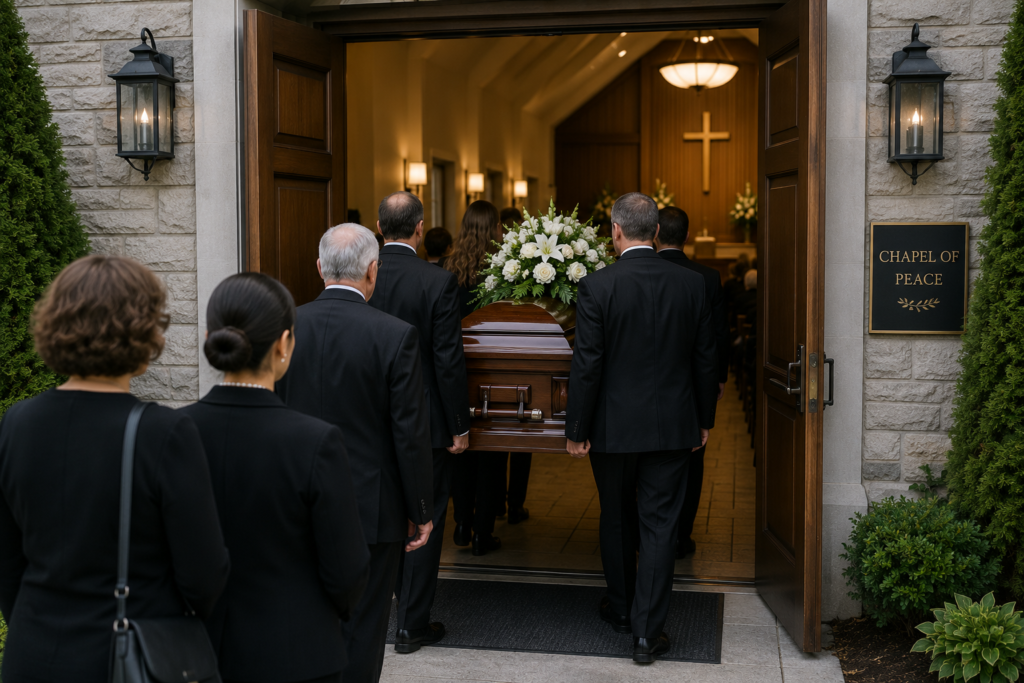
A funeral is a ceremony or gathering held after a person dies. It gives family members, friends, and community members an opportunity to honor the deceased, acknowledge the death, offer support, and express beliefs about life, loss, and remembrance.
The meaning of funerals goes beyond the ceremony itself. A funeral can represent love, respect, farewell, faith, community, continuity, and the lasting importance of a person’s life.
There is no single correct funeral format. Funerals may be religious or secular, formal or informal, public or private. They may take place before burial or cremation, after cremation, or as part of a wider series of gatherings that includes a wake, visitation, committal, memorial service, or reception.
Although funeral traditions differ between cultures, religions, and families, their central purpose is often similar: to create a meaningful way for people to respond to death together.
What Is the Meaning of a Funeral?
A funeral is a ceremony or gathering connected to a person’s death. It may include prayers, music, readings, personal stories, religious rites, a eulogy, a procession, burial, cremation, or another final farewell.
The meaning of a funeral often includes:
- Honoring the life of the deceased
- Acknowledging that a death has occurred
- Giving people an opportunity to say goodbye
- Supporting family members and other mourners
- Expressing religious or spiritual beliefs
- Preserving cultural and family traditions
- Beginning or continuing the mourning process
- Preparing for burial, cremation, or another form of final disposition
A funeral is not only about death. It is also about memory, relationships, identity, community, and the value of the life that was lived.
“A funeral gives people a shared space to recognize a death, honor a life, and support one another through loss.”
Why Are Funerals Held?
Funerals help individuals, families, and communities respond to death in an organized and meaningful way.
People may hold a funeral:
- To recognize that someone has died
- To pay tribute to the deceased
- To allow loved ones to gather
- To provide comfort and practical support
- To share memories and stories
- To perform religious or cultural rites
- To accompany burial or cremation
- To mark the transition from life to death
- To help survivors begin adjusting to life after the loss
Funerals can also help a wider community recognize the significance of the person who died. Coworkers, neighbors, friends, religious communities, and extended relatives may attend to show respect and offer support to the immediate family.
What Is the Purpose of a Funeral?
A funeral can serve several purposes at the same time. The importance of each purpose depends on the family, the circumstances of the death, and the traditions being followed.
Honoring the Deceased
One of the main purposes of a funeral is to recognize the life, character, relationships, and achievements of the person who died.
This may be done through:
- A eulogy
- Personal stories
- Photograph displays
- Meaningful music
- Favorite readings or poems
- Flowers
- Religious or cultural rituals
- Personal belongings or symbols
These elements help tell the story of the deceased and remind mourners that the funeral is not only about how the person died, but also about how they lived.
Giving Loved Ones a Chance to Say Goodbye
A funeral may offer family and friends a structured opportunity to say goodbye.
This may involve:
- Viewing the deceased
- Attending a service
- Placing flowers or personal items near the casket or urn
- Participating in a procession
- Speaking at the funeral
- Attending the burial or committal
These actions may help some mourners acknowledge the loss. However, a funeral does not guarantee closure, and grief affects every person differently.
Bringing People Together
Funerals create a place where relatives, friends, coworkers, neighbors, and community members can gather.
This allows mourners to:
- Offer condolences
- Share memories
- Support the immediate family
- Reconnect with relatives and friends
- Recognize their shared loss
The presence of other people can help grieving individuals feel less alone.
Expressing Beliefs About Life and Death
Religious or spiritual funerals may include prayers, scripture, sacred music, blessings, or teachings about death and the afterlife.
These practices can help families express beliefs about:
- What happens after death
- The meaning of suffering and loss
- Hope, resurrection, rebirth, or spiritual transition
- The relationship between the living and the dead
- The responsibilities of the faith community
A secular funeral may express meaning through poetry, music, memories, silence, and reflections on the person’s values rather than through religious language.
Beginning the Mourning Process
Funerals can provide structure during a time that often feels confusing and emotionally overwhelming.
The order of the service, the presence of others, and the funeral rituals can help mourners recognize what has happened and begin responding to the loss.
This does not mean the funeral ends grief. Instead, it may mark one stage in a much longer mourning process.
What Does a Funeral Symbolize?
Funeral symbolism varies between families and cultures, but common meanings include:
- Love: The service demonstrates the importance of the relationship with the deceased.
- Respect: The funeral recognizes the dignity and value of the person’s life.
- Remembrance: Stories, photographs, and tributes preserve memories.
- Farewell: The ceremony marks a formal goodbye.
- Transition: The funeral may represent a passage from life to death or into an afterlife.
- Community: Gathering together shows that grief and remembrance are shared.
- Hope: Religious teachings, memories, and relationships may provide reassurance.
- Continuity: Family stories and traditions connect past and future generations.
- Legacy: The funeral highlights how the person influenced others.
- The value of human life: The ceremony publicly recognizes that the person mattered.
The same ritual can carry different meanings for different people. A candle may symbolize faith for one family, remembrance for another, and the continuation of love for someone else.
Funeral symbolism is personal. The meaning comes not only from the ritual itself, but from what that ritual represents to the family and community.
What Happens at a Funeral?
The order of a funeral varies according to religion, culture, venue, and family preference.
A funeral may include:
- Arrival and gathering
- A funeral procession
- Opening words or prayers
- Music or hymns
- Readings
- A eulogy or tribute
- Personal reflections
- Religious or cultural rites
- A moment of silence
- Closing words
- A procession to the cemetery or crematory
- A burial, committal, or final farewell
- A reception or funeral repast
Not every funeral includes all of these elements. Some services last less than an hour, while others form part of a longer period of mourning.
People attending for the first time can review HonorYou’s guide to what to expect at a funeral.
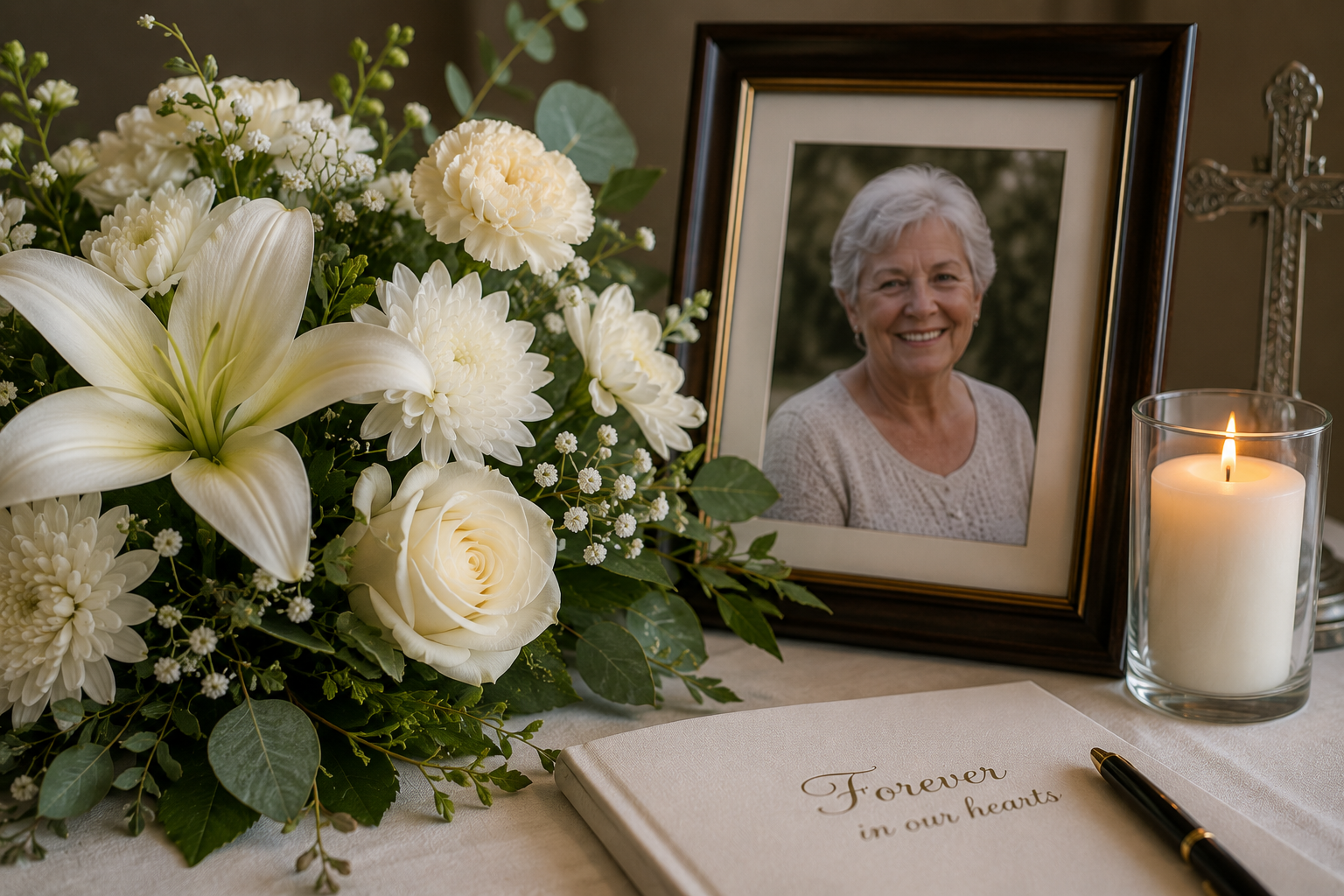
Common Parts of a Funeral and Their Meaning
The Casket or Urn
A casket or urn holds the physical remains of the deceased and often serves as a visual focus during the ceremony.
Its presence can help mourners recognize the reality of the death. Families may personalize it with flowers, photographs, religious symbols, military items, or meaningful objects.
Flowers
Funeral flowers may symbolize:
- Love
- Sympathy
- Peace
- Beauty
- Hope
- The temporary nature of life
The meaning of particular flowers may differ across cultures and families.
Music
Music can provide comfort, create space for reflection, and express feelings that may be difficult to put into words.
A funeral may include hymns, religious songs, instrumental music, or personal favorites of the deceased.
Readings and Prayers
Readings may include scripture, poetry, quotations, letters, or personal reflections.
They may offer:
- Hope
- Spiritual reassurance
- Reflection
- Comfort
- A description of the deceased’s values
The Eulogy
A eulogy is a speech that honors the deceased through stories, memories, and reflections.
It may describe the person’s character, relationships, achievements, humor, values, and influence on others.
HonorYou’s article explaining what a eulogy means provides additional guidance.
The Committal
The committal is the formal moment when the deceased is entrusted to burial, cremation, or another final resting place.
It may include prayers, final words, a blessing, the placing of flowers, or a symbolic farewell.
A committal service may take place at a grave, mausoleum, crematory, columbarium, or another location.
Are Funerals Always Religious?
No. Funerals can be religious, secular, spiritual, cultural, or highly personalized.
A funeral may be:
- Christian
- Jewish
- Muslim
- Hindu
- Buddhist
- Traditional or cultural
- Humanist
- Secular
- Spiritual but not religious
- Personalized around the deceased’s beliefs and values
A secular funeral may use poetry, music, personal stories, photographs, moments of silence, and tributes instead of prayers or scripture.
The absence of religious content does not make a funeral less meaningful. Meaning can come from relationships, memories, community, and the person’s values.
Religious Meaning of Funerals
Religious funerals can help families place death within a larger spiritual framework.
Depending on the faith and family, a religious funeral may help mourners:
- Pray for or remember the deceased
- Express beliefs about the afterlife
- Seek comfort from sacred teachings
- Perform required or customary rites
- Receive support from a faith community
- Understand death through religious teachings
- Express hope, trust, or spiritual continuity
Religious practices vary greatly. Even families within the same faith may choose different readings, music, rituals, or levels of formality.
Cultural Meaning of Funerals
Funeral customs often reflect how a culture understands death, family, ancestry, grief, memory, and community responsibility.
Cultural funeral traditions may include:
- Wakes
- Homegoing services
- Funeral processions
- Periods of mourning
- Wearing particular colors
- Community meals
- Storytelling
- Music and dancing
- Grave decoration
- Annual remembrance ceremonies
Traditions can differ significantly within the same country, religion, ethnic group, or family. It is better to ask relatives or community leaders about the family’s customs than to make assumptions.
Funeral Meaning in Different Cultures and Religions
The following examples are broad descriptions. Individual families may follow some, all, or none of these practices.
Christian Funerals
Christian funerals may focus on prayer, scripture, resurrection, hope, and commending the deceased to God.
The ceremony may include hymns, a sermon, Bible readings, a eulogy, and a burial or committal.
Jewish Funerals
Jewish funerals often emphasize simplicity, dignity, prompt burial, and care for mourners.
The funeral may be followed by shiva, a period during which relatives receive visitors and support from the community.
Muslim Funerals
Muslim funerals commonly emphasize respectful preparation, prayer, community responsibility, and burial according to Islamic tradition.
Practices may include ritual washing, shrouding, funeral prayer, and burial as soon as reasonably possible.
Hindu Funerals
Hindu funerals may focus on cremation, spiritual transition, family duties, and beliefs connected to rebirth.
Family rites and later remembrance ceremonies may continue after the cremation.
African American Homegoing Services
A homegoing service may combine worship, prayer, scripture, music, remembrance, and celebration of the deceased’s spiritual journey.
These services may be both deeply mournful and uplifting.
Irish Funeral Traditions
Irish funeral traditions may include a wake, storytelling, prayer, shared food, community support, a funeral procession, and a funeral Mass where appropriate. While these customs reflect Christian and Celtic influences, Northern Europe is also known for its ancient Norse funeral practices. Learn more about Viking burials to discover how Scandinavian warriors and leaders were honored with ship burials, grave goods, and other symbolic rites.
The wake can give people time to visit the family, remember the deceased, and offer condolences before the formal funeral.
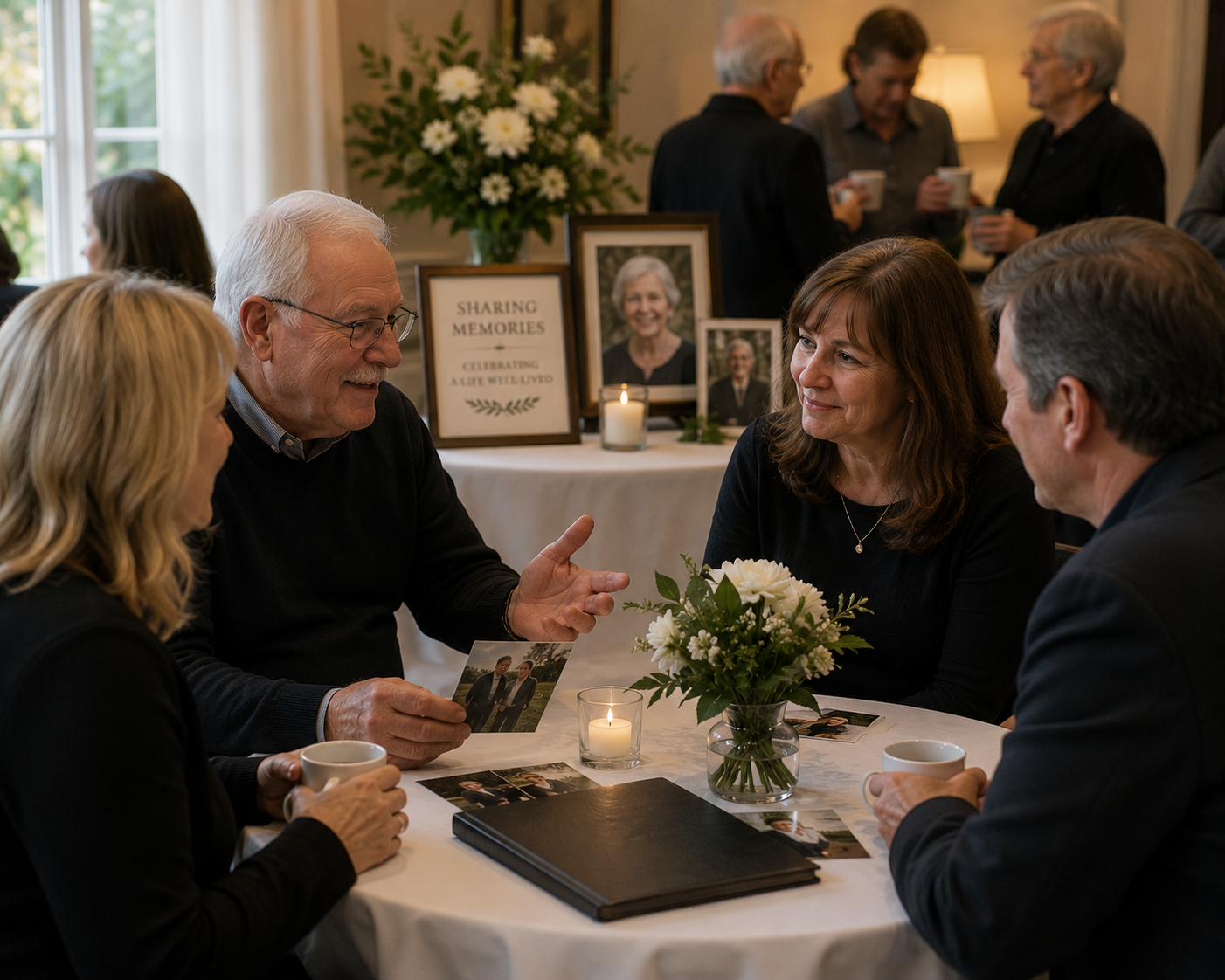
What Is the Difference Between a Funeral and a Memorial Service?
A funeral usually takes place with the deceased’s body or cremated remains present.
A memorial service is often held without the body present. It may take place days, weeks, or months after the death.
Both may include:
- Music
- Readings
- Prayer
- Tributes
- Photographs
- Shared memories
A memorial service may be chosen when direct burial or cremation has already occurred, when relatives need more time to travel, or when the family prefers a later gathering.
Funeral vs. Celebration of Life
A traditional funeral often follows a structured and solemn format. It may include the deceased’s remains, religious rites, formal readings, and a procession to burial or cremation.
A celebration of life is often more personalized and may focus more heavily on:
- Memories
- Personality
- Achievements
- Hobbies
- Favorite music
- Informal storytelling
The formats can overlap. A funeral can include laughter and joyful memories, while a celebration of life can still be emotional, reflective, and solemn.
The most appropriate format is the one that reflects the deceased and supports the family.
Funeral vs. Wake
A wake usually takes place before the funeral. It gives visitors an opportunity to gather, offer condolences, pray, share memories, or view the deceased.
The funeral is the formal ceremony honoring the deceased. It may be followed by burial, cremation, a committal, or a reception.
HonorYou’s guide to what happens at a wake explains the purpose and common structure of the gathering.
Funeral vs. Burial
A funeral is a ceremony. Burial is a method of final disposition in which the deceased is placed in a grave, tomb, or mausoleum.
Burial may take place:
- After a funeral
- After a graveside service
- Privately
- Without a formal funeral
A funeral can also take place before cremation. Burial and cremation describe what happens to the physical remains, while the funeral describes the ceremony held to honor the person.
Why Funeral Rituals Matter
Funeral rituals can provide:
- Structure during uncertainty
- A clear beginning and ending to the ceremony
- Opportunities for family participation
- A connection to tradition
- A way to express emotion
- A connection with community
- A symbolic way to say goodbye
Rituals may be centuries old or newly created for one particular person.
Examples include lighting a candle, placing flowers, carrying the casket, reading a poem, sharing a meal, singing together, or inviting guests to write messages.
A ritual does not need to be elaborate to be meaningful. Its value comes from the purpose it serves for the people participating.
Can Funerals Help With Grief?
Funerals may support grieving by:
- Making the death feel more real
- Allowing emotions to be expressed
- Bringing supportive people together
- Encouraging remembrance
- Giving mourners a role in the farewell
- Creating a shared story of the person’s life
However, attending a funeral does not remove grief or guarantee closure.
Some people find funerals deeply comforting. Others may feel overwhelmed, numb, anxious, or unsure how to participate. Some prefer a private farewell.
All of these reactions can be understandable. There is no single correct emotional response to a funeral.
What Makes a Funeral Meaningful?
A meaningful funeral does not have to be large, expensive, or highly formal.
It may feel personal and sincere when it includes:
- Genuine memories
- Meaningful music
- Favorite readings
- Photographs
- Participation from relatives and friends
- Cultural or spiritual traditions
- References to the deceased’s hobbies or interests
- Respect for the person’s stated wishes
- A simple and manageable structure
The most meaningful elements are often those that help people recognize the individual behind the ceremony.
A meaningful funeral reflects the person who died and supports the people who remain. It does not need to follow every tradition or include every possible service element.
How Families Can Personalize a Funeral
Families can personalize a funeral by:
- Creating a photograph display
- Playing meaningful songs
- Including a video tribute
- Asking relatives to share memories
- Displaying personal belongings
- Choosing meaningful flowers
- Serving the deceased’s favorite food
- Creating a personalized funeral program
- Including poetry, scripture, or quotations
- Inviting guests to write in a register book
Personalization should support the family rather than make the funeral harder to organize. A few meaningful details are often more effective than a complicated plan.
Do Funerals Need to Be Formal?
No. Funerals do not need to follow a formal or traditional format.
They may take place in:
- Funeral homes
- Churches or places of worship
- Cemeteries
- Family homes
- Gardens
- Community halls
- Beaches
- Parks
- Crematories
- Other meaningful locations
The level of formality should reflect:
- The family’s preferences
- The wishes of the deceased
- Cultural or religious expectations
- Venue rules
- The number of guests
- The family’s budget and practical needs
A small private gathering can be just as meaningful as a large formal funeral.
Irish Funeral Traditions
Irish funeral traditions may include a wake, storytelling, prayer, shared food, community support, a funeral procession, and a funeral Mass where appropriate. If you’d like to learn more about the customs, etiquette, and timeline, read our guide to traditional Irish funeral traditions.
The wake can give people time to visit the family, remember the deceased, and offer condolences before the formal funeral.
What If Someone Does Not Want a Funeral?
Some people do not want a traditional funeral. Alternatives may include:
- Direct cremation
- Immediate burial
- A private family gathering
- A memorial service at a later date
- A celebration of life
- No formal ceremony
- A scattering ceremony
- An interment or graveside ceremony
There is no single correct way to honor someone after death.
Families may still choose a small act of remembrance, even when there is no public funeral. This could involve sharing a meal, planting a tree, scattering ashes, creating a memorial, or gathering privately to tell stories.
Final Thoughts
The meaning of a funeral extends far beyond the ceremony itself.
Funerals help people honor a life, acknowledge a death, say goodbye, express beliefs, preserve traditions, and support one another. They can provide structure during an uncertain time and create a shared space for memory and mourning.
A funeral may be religious or secular, formal or informal, public or private. It may include burial, cremation, a memorial service, or another type of farewell.
The most meaningful funeral is not necessarily the most traditional or elaborate. It is the one that reflects the person who died and meets the emotional, cultural, spiritual, and practical needs of those left behind.
Frequently Asked Questions
What does the word funeral mean?
A funeral is a ceremony or gathering held to honor someone who has died, acknowledge the death, and support the people mourning them.
What is the main purpose of a funeral?
The main purposes are to honor the deceased, recognize the death, allow people to say goodbye, express beliefs or traditions, and support the bereaved.
Is a funeral the same as a burial?
No. A funeral is a ceremony, while burial is a method of placing the deceased in a grave, tomb, or mausoleum.
Can a funeral be held after cremation?
Yes. A funeral or memorial service may take place before or after cremation. The cremated remains may also be present in an urn during the service.
Does every religion hold funerals?
Many religions have funeral and mourning traditions, but the format, beliefs, and rituals vary widely.
Can a funeral be nonreligious?
Yes. Secular and humanist funerals may focus on memories, values, relationships, music, poetry, and the person’s life rather than prayers or scripture.
Why do people wear black to funerals?
Black is traditionally associated with mourning in many Western cultures. However, funeral colors vary across religions, cultures, and families.
Why do people eat after a funeral?
A shared meal gives mourners time to gather, offer support, rest after the service, and continue remembering the deceased in a less formal setting.
What is the difference between a funeral and a celebration of life?
A funeral is often more structured and may include the deceased’s remains. A celebration of life is usually more personalized and may take place after burial or cremation, although the two formats can overlap.
Can a funeral help with grief?
A funeral may help some people acknowledge the loss, express emotions, and receive support. It does not remove grief or guarantee closure.
Is burial or cremation part of every funeral?
No. A funeral is a ceremony, while burial and cremation are forms of final disposition. A funeral may occur before either one, after cremation, or separately from the final disposition.
Why are funeral rituals important?
Funeral rituals provide structure, encourage participation, express beliefs, connect people with tradition, and create a symbolic way to honor the deceased and say goodbye.