Funeral homes are now a familiar part of death care, but they are a relatively modern development. For much of human history, families cared for deceased relatives at home with help from neighbors, clergy members, local craftspeople, and the wider community.
The history of the funeral home developed gradually rather than beginning with one inventor or business. Coffin makers, cabinetmakers, carriage operators, embalmers, and undertakers slowly expanded their services until funeral directing became a distinct profession.
The growth of cities, modern embalming, professional training, public-health regulations, motorized transportation, and specialized funeral facilities gradually moved many funeral activities away from private homes and into funeral establishments.
Modern funeral homes still perform many traditional duties, but they now offer families a wider range of burial, cremation, memorial, technological, and advance-planning services.
What Is a Funeral Home?
A funeral home is a business and facility that cares for the deceased and helps families arrange funerals, memorial services, burials, and cremations.
Modern funeral homes may provide:
- Transfer and transportation of the deceased
- Refrigeration and secure care
- Washing, dressing, and preparation
- Embalming when selected or required
- Arrangement conferences with families
- Viewing and visitation rooms
- Funeral chapels
- Burial and cremation coordination
- Death-certificate assistance
- Obituary support
- Funeral products and memorial materials
The exact services vary by provider, state, religion, culture, and family preference. HonorYou’s guide explaining what funeral homes do provides a more detailed overview of their modern responsibilities.
“The modern funeral home developed from several older roles, including coffin making, transportation, embalming, ceremony planning, and community support.”
What Happened Before Funeral Homes Existed?
Before funeral homes became common, death care usually took place inside the family home.
Relatives and neighbors commonly:
- Washed and dressed the deceased
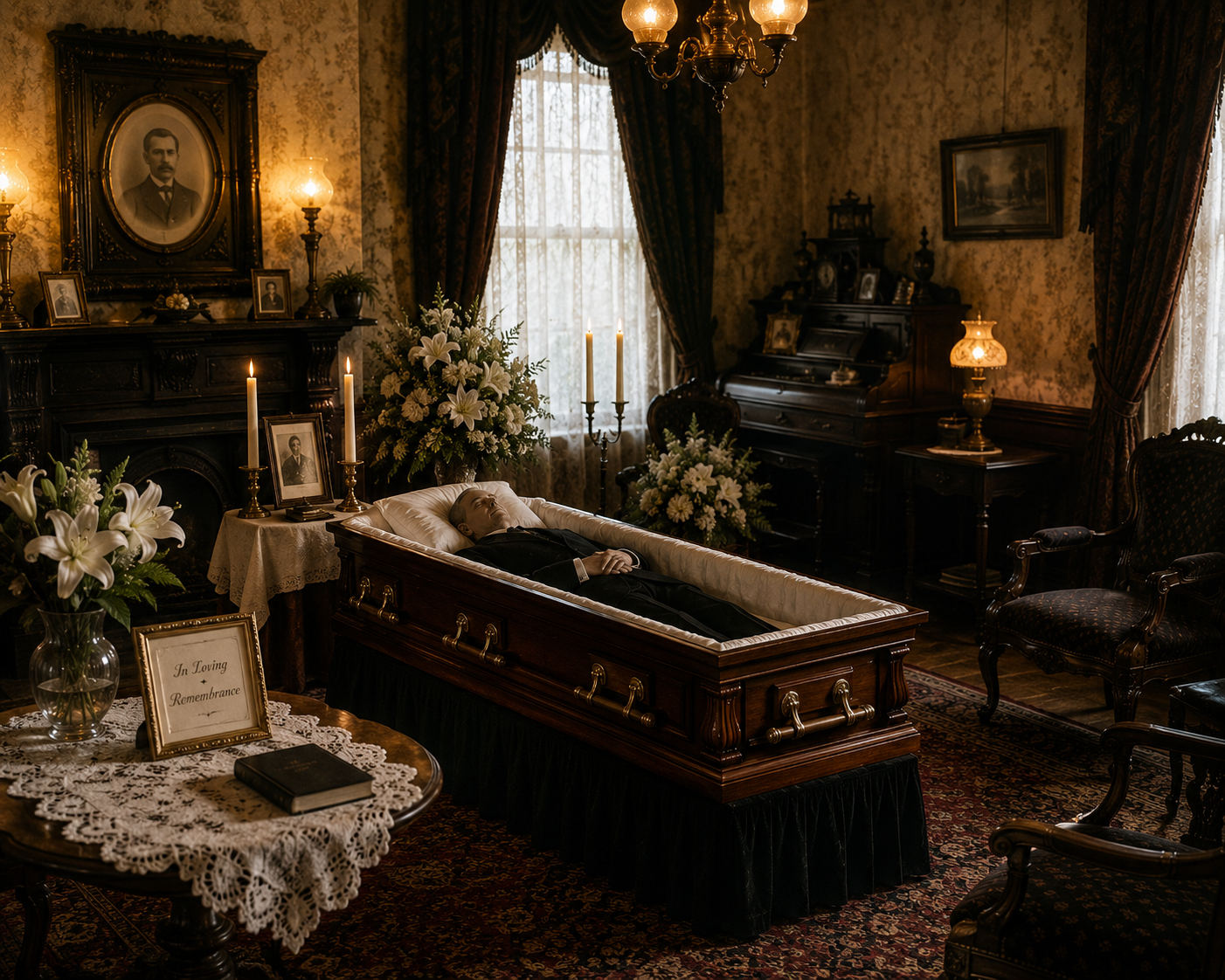
- Placed the body in a bedroom or formal parlor
- Held a wake or visitation at home
- Built or purchased a simple coffin
- Invited clergy, relatives, and neighbors
- Organized the funeral procession
- Prepared food for mourners
- Carried the coffin to a nearby churchyard or burial ground
- Observed cultural or religious mourning customs
The home served as both the place of death and the center of mourning. The deceased might remain there until burial while relatives sat vigil, prayed, received visitors, and completed practical arrangements.
These customs varied widely. A rural family, wealthy urban household, immigrant community, and religious congregation might follow very different practices.
The Role of the Family and Community
Death care was once a shared household and community responsibility rather than a service managed mainly by professionals.
Neighbors might help:
- Notify relatives
- Prepare and clean the home
- Make funeral food
- Dig the grave
- Construct or decorate the coffin
- Sit with the deceased
- Assist with the procession
- Care for children and household duties
- Support the bereaved after burial
Clergy members often led prayers and ceremonies, while local craftspeople supplied the coffin and transportation. Funerals were closely connected to homes, churches, local burial grounds, and community relationships.
This system could provide strong communal support, but it also placed significant practical responsibility on grieving relatives.
Where Did the Term “Undertaker” Come From?
The word undertaker originally described someone who undertook or accepted responsibility for a task.
Over time, the term became associated with people who took responsibility for funeral arrangements.
Early undertakers often came from trades such as:
- Cabinetmaking
- Carpentry
- Furniture making
- Carriage operation
- Livery services
Cabinetmakers and carpenters had the tools and skills needed to build coffins. Carriage and livery businesses had horses, vehicles, and staff capable of transporting the coffin and organizing a procession.
As families began asking these tradespeople to handle more of the arrangements, the undertaker’s role expanded beyond selling a coffin.
Coffin Makers and the Beginning of Professional Funeral Services
Coffin makers were among the earliest people to turn funeral assistance into a specialized occupation.
Their services might include:
- Measuring the deceased
- Building or supplying the coffin
- Delivering the coffin to the family home
- Providing chairs, drapery, or mourning equipment
- Arranging a horse-drawn hearse
- Coordinating the burial procession
- Helping the family manage practical details
As demand increased, some undertakers maintained inventories of ready-made coffins instead of building each one individually.
They also began offering transportation, preparation, ceremony coordination, and documentation. This expansion helped create the foundation of the modern funeral-service business.
How Embalming Changed Funeral Practices
The history of embalming is much older than the modern funeral home. Different forms of preservation were used in ancient and traditional cultures long before professional funeral directing developed.
Modern arterial embalming became more widely known during the 19th century. It involved specialized knowledge, equipment, chemicals, and preparation facilities that families generally did not have at home.
Embalming influenced the development of funeral homes by making it easier to support:
- Longer periods between death and burial
- Public viewing and visitation
- Long-distance transportation
- Professional preparation of the deceased
- Services held away from the family home
- Specialized preparation rooms and equipment
As embalming became more associated with undertakers, funeral businesses needed dedicated spaces where preparation could be completed privately and safely.
HonorYou’s guide to what embalming involves explains its modern purpose and common uses.
The Civil War and the Growth of Embalming
The American Civil War was an important influence on the growth of embalming in the United States, although it did not create the practice or the funeral industry by itself.
During the war:
- Many soldiers died far from their families.
- Relatives wanted deceased service members returned home for burial.
- Transportation over long distances created preservation challenges.
- Embalmers offered services near military camps and transportation routes.
- Public awareness of modern preservation methods increased.
After the war, embalming became more familiar to the general public and gradually became part of civilian funeral care.
Other factors—including urbanization, changing expectations around viewing, professional education, and public-health regulation—also contributed to its wider use.
From Undertaker to Funeral Director
During the late 19th and early 20th centuries, undertaking became a more formal and professional occupation.
The title funeral director gradually replaced “undertaker” because the work had expanded beyond coffin making and transportation.
A funeral director might now:
- Meet with grieving families
- Coordinate ceremonies
- Arrange transportation
- Prepare or supervise preparation of the deceased
- Handle permits and documentation
- Work with clergy and cemeteries
- Manage viewing and funeral facilities
- Guide families through burial and memorial decisions
Mortuary schools, professional associations, state licensing systems, sanitation rules, and ethical standards helped formalize the profession.
The older word “undertaker” is still understood, but “funeral director” and “mortician” became more common professional titles.
The Rise of the Funeral Parlor
Many early funeral establishments operated from converted houses rather than purpose-built commercial buildings.
The term funeral parlor reflected the formal parlor found in many homes. A parlor was a room where visitors were received, important conversations took place, and the deceased might be displayed during a home funeral.
Early funeral parlors often included:
- A formal front parlor or visitation room
- A private preparation room
- Office space for arrangement meetings
- Residential rooms for the funeral director’s family
- A stable or garage for funeral vehicles
- Storage space for coffins, caskets, chairs, and equipment
The residential appearance helped funeral establishments feel familiar and less institutional.
Many funeral homes still use house-like architecture, warm furnishings, quiet sitting rooms, and formal parlors to create a calm environment for grieving families.
Why Funerals Moved Out of Family Homes
The transition from home funerals to funeral establishments was influenced by several social and practical changes.
These included:
- Urbanization: More people moved into towns and cities.
- Smaller living spaces: Apartments and smaller homes offered less room for viewings and large gatherings.
- Family mobility: Extended families increasingly lived farther apart.
- Public-health regulation: Death care became subject to additional sanitation and recordkeeping requirements.
- Professional embalming: Preparation required specialized equipment and facilities.
- Specialized transportation: Funeral businesses maintained hearses and transfer vehicles.
- Funeral chapels: Families gained access to dedicated ceremony spaces.
- Changing work and family life: Relatives had less time and experience to manage every detail themselves.
The funeral home offered privacy, space, equipment, transportation, staff, and professional coordination that many households could no longer easily provide.
Funerals did not move into funeral homes because of one event. The shift occurred gradually as housing, transportation, healthcare, family life, and professional services changed.
Victorian Funeral Customs and Their Influence
The Victorian era is often associated with highly visible and formal mourning customs.
Depending on class, community, religion, and personal preference, these customs could include:
- Black mourning clothing
- Formal periods of mourning
- Dark fabric draped around the home
- Memorial jewelry
- Elaborate funeral processions
- Printed funeral notices and mourning stationery
- Postmortem photography in some communities
- Symbolic flowers
- Formal viewing and visitation
These customs helped shape expectations around funeral clothing, flowers, processions, printed materials, and public expressions of mourning.
However, not every Victorian family could afford or chose to follow elaborate practices. Customs differed significantly by economic status, region, religion, and culture.
HonorYou’s article on why people traditionally wear black to funerals explains how black became associated with mourning in many Western communities.
The Development of Funeral Transportation
Funeral transportation changed as communities grew and technology advanced.
Hand-Carried Coffins
In smaller communities, relatives or pallbearers might carry the coffin from the home or church to a nearby burial place.
This was practical when the distance was short and reflected the active role of family and community members.
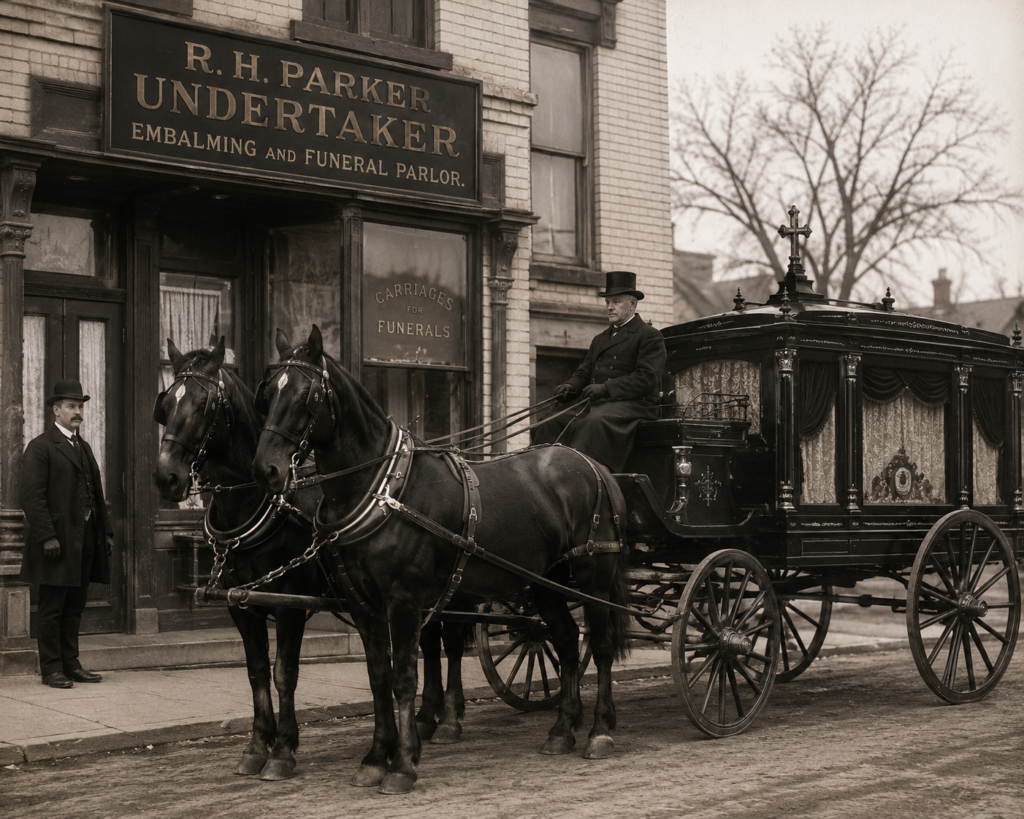
Horse-Drawn Hearses
Horse-drawn hearses allowed coffins to be transported over longer distances and made funeral processions more formal.
Some hearses were simple enclosed wagons, while others were highly decorated carriages with glass panels, drapery, carvings, and metal ornamentation.
Motorized Hearses
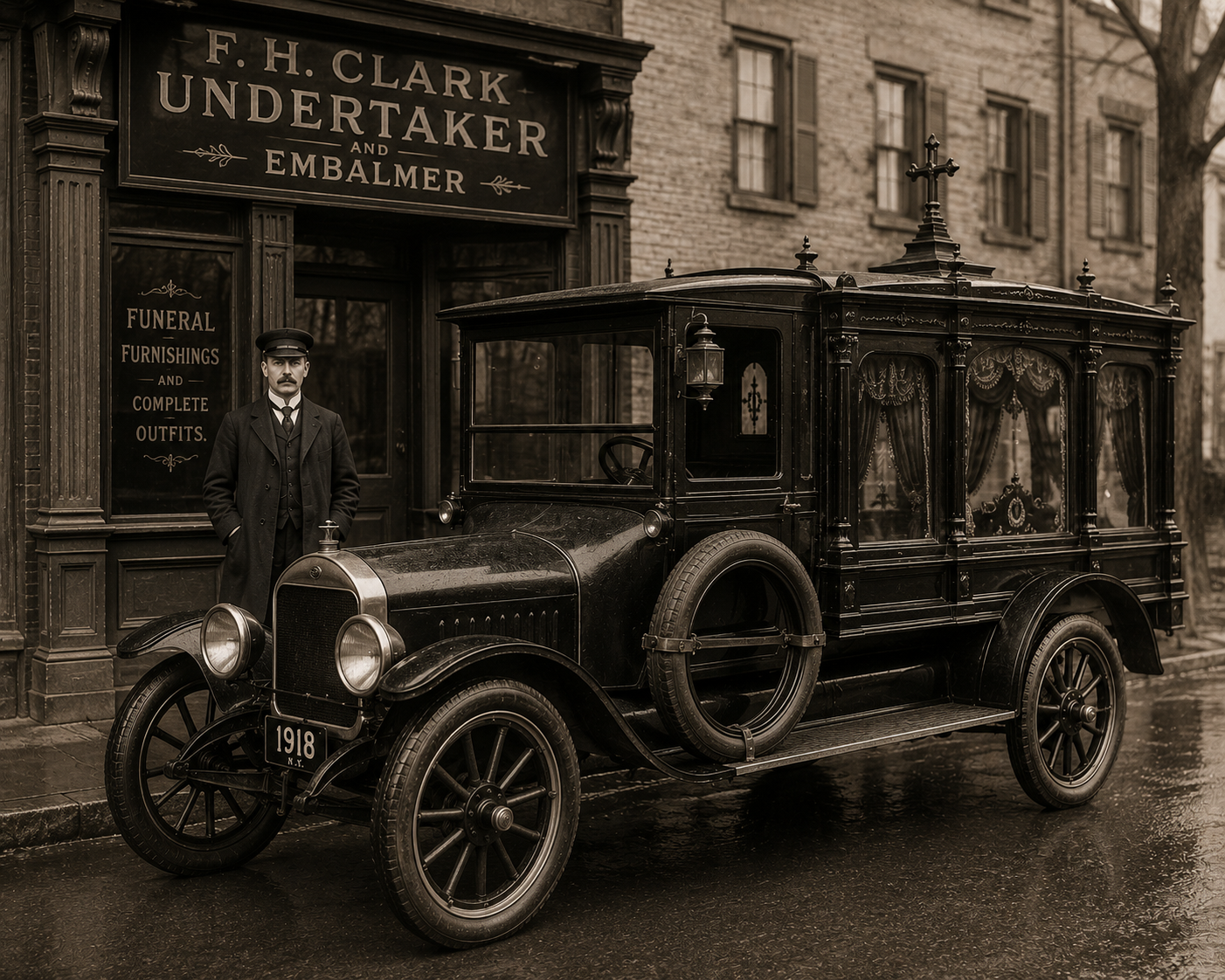
During the early 20th century, automobiles gradually replaced horse-drawn hearses.
Motorized vehicles could travel farther, operate more efficiently, and support funerals in growing urban and suburban communities.
Modern Funeral Vehicles
Today, funeral homes may use:
- Discreet transfer vans
- Traditional hearses
- Family limousines
- Flower vehicles
- Specialized long-distance transport
- Airline and international repatriation services
The procession remains an important part of many funeral traditions. Learn more about the meaning of a funeral procession.
Funeral Homes in the Early 20th Century
Funeral homes became increasingly common during the early 20th century as professional funeral directing expanded.
Services commonly included:
- Embalming
- Preparation and dressing
- Viewing rooms
- Funeral chapels
- Hearse transportation
- Casket sales
- Funeral planning
- Coordination with clergy
- Burial permits and paperwork
- Newspaper notices
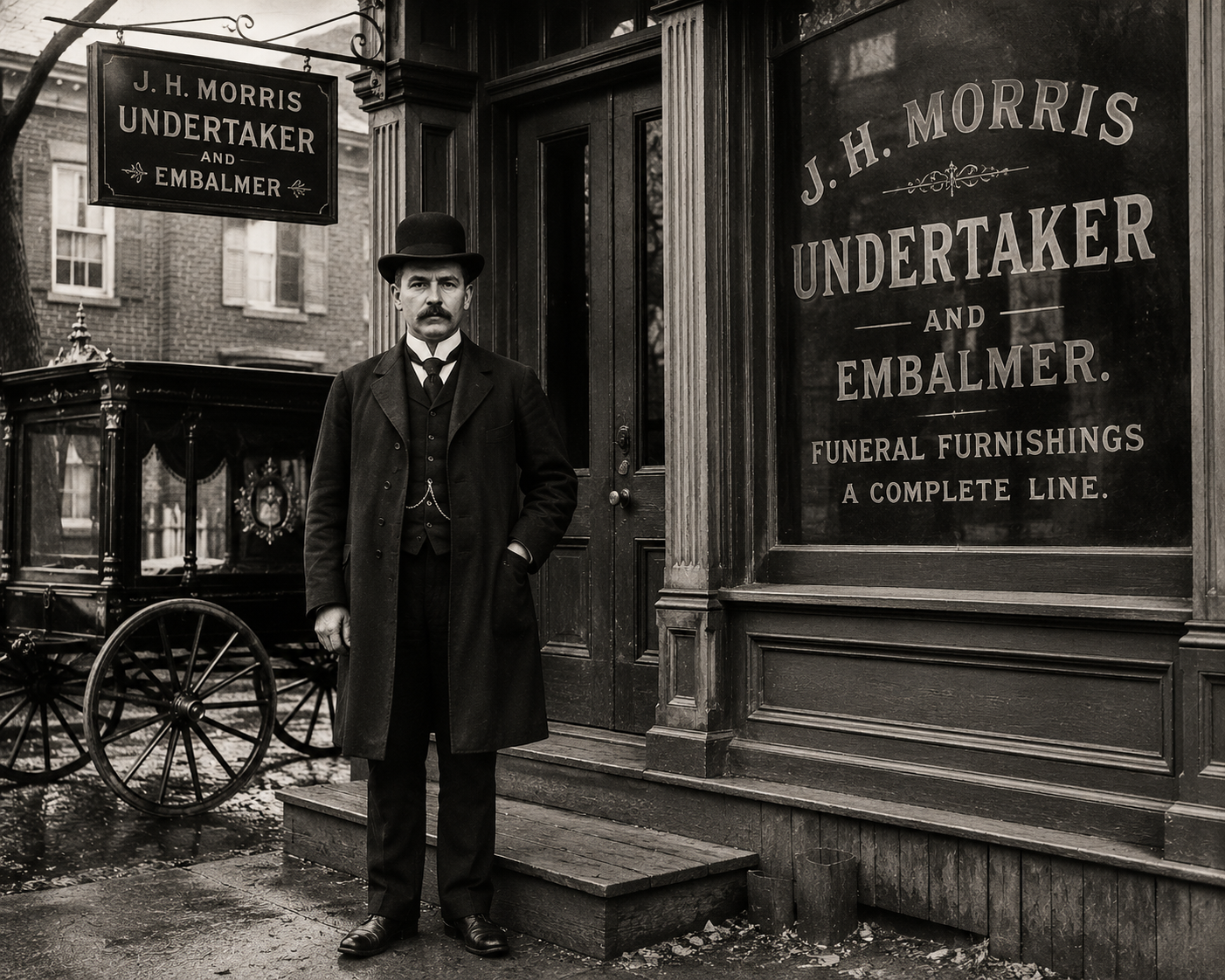
Many funeral homes were family-owned businesses. The funeral director might live in the same building, answer calls at all hours, and serve the same churches, cemeteries, and families for several generations.
The funeral home became both a business and a local community institution.
The Growth of Mortuary Science and Licensing
As funeral service became more specialized, formal education and regulation expanded.
Professional preparation increasingly involved:
- Mortuary-science education
- Embalming instruction
- Supervised apprenticeships
- State licensing examinations
- Sanitation and infection-control standards
- Recordkeeping requirements
- Professional ethics
- Continuing education
Licensing helped distinguish trained funeral professionals from earlier tradespeople who offered only limited services.
Requirements have always varied between states and continue to differ today. Some professionals hold separate funeral-director and embalmer licenses, while others qualify under a combined funeral-service license.
How Cremation Changed Funeral Homes
As cremation became more widely chosen, funeral homes expanded their services beyond traditional casket burial.
Modern providers may:
- Complete cremation authorization paperwork
- Offer direct cremation
- Operate their own crematory
- Partner with an outside crematory
- Provide urns and keepsakes
- Hold a viewing or funeral before cremation
- Arrange a memorial after cremation
- Coordinate burial, scattering, or inurnment
Cremation did not eliminate funeral ceremonies. Families can still hold a traditional funeral, religious rite, visitation, memorial service, graveside gathering, or celebration of life.
HonorYou’s guide to what cremation is and how it works explains the process in more detail.
The Rise of Memorial Services and Celebrations of Life
Funeral practices became more flexible during the 20th and 21st centuries.
Families increasingly began choosing:
- Memorial services without the body present
- Celebrations of life
- Informal family gatherings
- Outdoor ceremonies
- Personalized music and readings
- Video tributes
- Delayed services
- Livestreamed funerals
These formats gave families more freedom to reflect the deceased’s personality, values, hobbies, and relationships.
A traditional funeral and celebration of life are not complete opposites. Many modern services combine formal rituals with personal stories, music, photographs, and moments of humor.
Funeral Homes and Religious Traditions
Funeral homes have long developed working relationships with clergy members, churches, cemeteries, temples, mosques, synagogues, and other faith communities.
They may help coordinate:
- Christian funeral traditions
- Jewish funeral practices
- Muslim burial customs
- Hindu cremation rites
- Buddhist memorial traditions
- African American homegoing services
- Secular and humanist funerals
- Culturally specific funeral customs
A funeral home should adapt to the family’s traditions rather than treating one religious format as the universal standard.
Families can also explore funeral practices around the world and traditional African funeral customs.
The Role of Family-Owned Funeral Homes
Family-owned funeral homes have played an important role throughout funeral industry history.
Possible advantages include:
- Detailed local knowledge
- Long-term community relationships
- Familiarity with nearby cemeteries and churches
- Continuity between generations
- Personalized service
- Understanding of local customs
The modern funeral industry also includes independent firms, regional groups, national corporations, nonprofit providers, and direct-cremation businesses. Ownership structure alone does not determine service quality. Families should evaluate communication, pricing, facilities, and licensing—and reading HonorYou reviews can offer valuable perspective on a provider’s reputation and client support.
Ownership structure alone does not determine service quality. Families should compare communication, pricing, facilities, licensing, reviews, and the provider’s ability to respect their wishes.
Funeral Homes in the Modern Era
Modern funeral homes combine traditional care with newer services and technologies.
Today’s services may include:
- Online obituaries
- Funeral livestreaming
- Digital guest books
- Video tributes
- Online arrangement tools
- Personalized funeral programs
- Memorial websites
- Green burial coordination
- Direct cremation
- Advance funeral planning
- Grief and aftercare resources
- Fingerprint, jewelry, and DNA keepsakes
The central role remains similar: caring for the deceased and helping families manage the practical and ceremonial responsibilities that follow a death.
How Technology Changed Funeral Homes
Technology has changed how families plan, attend, and remember funerals.
Developments include:
- Online funeral notices
- Digital memorial pages
- Remote attendance through livestreaming
- Electronic forms and signatures
- Online casket and urn selection
- Social-media memorialization
- QR-code memorials
- Cloud-based video tributes
- Virtual arrangement meetings
These tools can make funeral services more accessible to relatives who live far away or cannot attend in person.
Technology has expanded access, but it has not replaced the importance of compassionate communication, personal guidance, and respectful care.
Funeral Homes and Consumer Protection
Modern funeral-home practices are also shaped by consumer-protection regulations.
The federal FTC Funeral Rule gives consumers important rights when purchasing funeral goods and services.
Covered funeral providers generally must:
- Provide prices by telephone when requested
- Supply itemized price information
- Allow families to choose individual services
- Provide required disclosures about embalming
- Offer an alternative container for direct cremation
- Accept an outside casket without adding a handling fee merely because it was purchased elsewhere
HonorYou’s guide to the FTC Funeral Rule explains these protections in more detail.
Are Home Funerals Still Possible?
Some families still choose to care for a deceased relative at home.
A home funeral may include:
- Family-led washing and dressing
- A home vigil
- Religious or cultural rituals
- A home viewing or visitation
- A family-led ceremony
- Coordination with a cemetery or crematory
Home-funeral laws and requirements vary by state. Some jurisdictions allow families to manage much of the process themselves, while others require a licensed funeral director to complete specific tasks.
Requirements may involve:
- Death registration
- Transportation permits
- Refrigeration or preservation
- Cremation authorization
- Cemetery rules
Families should review state law and consult the appropriate local authority before proceeding.
Historic Funeral Home vs. Modern Funeral Home
Historic Funeral Establishments
- Often operated from converted houses
- Focused mainly on coffins, embalming, transportation, and burial
- Relied on newspapers and printed notices
- Served primarily nearby families and churches
- Used horse-drawn or early motorized hearses
- Offered fewer cremation and memorial options
- Were commonly owned and operated by one family
Modern Funeral Homes
- Provide both burial and cremation services
- Offer digital planning and memorial tools
- Coordinate livestreaming and remote attendance
- Work with many venues and service providers
- Offer highly personalized ceremonies
- Provide advance planning and pre-need arrangements
- Follow detailed licensing, health, documentation, and pricing regulations
Despite these differences, both historic and modern funeral establishments aim to help families care for the deceased and organize a respectful farewell.
A Brief Timeline of Funeral Home History
Before the 1800s
Families and communities generally cared for the deceased at home. Clergy members, neighbors, coffin makers, and local burial grounds supported funeral arrangements.
Early to Mid-1800s
Cabinetmakers, coffin makers, carriage operators, and livery businesses increasingly provided funeral-related goods and services.
Civil War Era
Embalming gained wider public attention in the United States, particularly because of the need to transport deceased soldiers over long distances.
Late 1800s
Undertaking became more specialized. Embalming schools, professional associations, funeral equipment suppliers, and regulatory systems began to develop.
Early 1900s
Funeral parlors and dedicated funeral homes became increasingly common. Motor vehicles gradually replaced horse-drawn hearses.
Mid-1900s
Funeral chapels, formal licensing, full-service funeral homes, and professional mortuary education expanded.
Late 1900s
Cremation, advance planning, personalized memorial services, and consumer-protection rules became increasingly influential.
2000s to Today
Online obituaries, livestreaming, digital memorials, direct cremation, green burial, virtual arrangements, and highly personalized services became more widely available.
Why the History of Funeral Homes Matters
Understanding funeral-home history helps explain:
- Why modern funerals are structured the way they are
- How death care moved from households to professionals
- Why embalming became associated with funeral homes
- How transportation changed funeral processions
- Why many funeral homes resemble private residences
- How mortuary education and licensing developed
- How consumer expectations and protections changed
- Why families now have more options than previous generations
The history also shows that funeral customs are not fixed. They continue to change in response to technology, religion, migration, family structure, cost, environmental concerns, and individual preferences.
The funeral home is not an ancient institution with one clear starting point. It is the result of a gradual shift from family-led death care to specialized professional services.
Final Thoughts
The history of the funeral home began with family-led home funerals, community support, coffin-making trades, horse-drawn transportation, and religious burial customs.
Over time, undertakers expanded their responsibilities. Embalming, urbanization, motorized transportation, mortuary education, professional licensing, and specialized facilities helped transform undertaking into modern funeral directing.
Funeral homes became places where families could arrange transportation, preparation, viewing, ceremonies, burial, and later cremation under one coordinated service.
Today’s funeral homes continue many traditional duties while offering more choices than earlier generations had. Families can select traditional burial, cremation, direct services, home funerals, celebrations of life, livestreaming, digital memorials, green options, and highly personalized ceremonies.
The evolution of funeral homes reflects broader changes in society, technology, family life, religion, consumer law, and attitudes toward death. Their central purpose, however, remains consistent: caring for the deceased and helping families create a respectful farewell.
Frequently Asked Questions
When were funeral homes invented?
There was no single invention date. Funeral homes developed gradually during the 19th and early 20th centuries as coffin makers, undertakers, embalmers, and transportation providers expanded their services.
What did people do before funeral homes?
Families usually cared for the deceased at home with help from relatives, neighbors, clergy members, coffin makers, and other local craftspeople.
Why were funeral homes called funeral parlors?
Many early funeral businesses operated inside converted houses. The formal parlor was used as a room where relatives received visitors and held viewings.
What is the difference between an undertaker and a funeral director?
The terms are often used interchangeably. “Funeral director” became the preferred professional title as the role expanded and became subject to formal training and licensing.
Did the Civil War create embalming?
No. Preservation methods existed long before the Civil War. The war increased public awareness and use of modern embalming in the United States, particularly for transporting deceased soldiers.
When did funeral homes become common?
Funeral homes became increasingly common during the late 19th and early 20th centuries, especially in growing towns and cities.
Why did funerals move out of private homes?
Urbanization, smaller homes, professional embalming, public-health requirements, specialized transportation, and access to funeral chapels all contributed to the shift.
Are most funeral homes family-owned?
Many funeral homes remain family-owned, but the industry also includes independent companies, regional groups, national corporations, nonprofit providers, and direct-cremation businesses.
Are home funerals legal?
Home funerals are permitted in many locations, but requirements vary by state. Families should review local laws and determine which tasks require a licensed professional.
Do funeral homes still embalm every body?
No. Embalming is not part of every funeral and is not automatically required in all situations. Refrigeration, direct burial, and direct cremation may be available alternatives.
Did cremation replace traditional funerals?
No. Cremation changed the services funeral homes provide, but families can still hold a viewing, funeral, memorial service, or celebration of life before or after cremation.
Why do many funeral homes look like houses?
Many early funeral establishments operated from converted residences. The residential style created a familiar, less institutional setting and continues to influence funeral-home design today.