
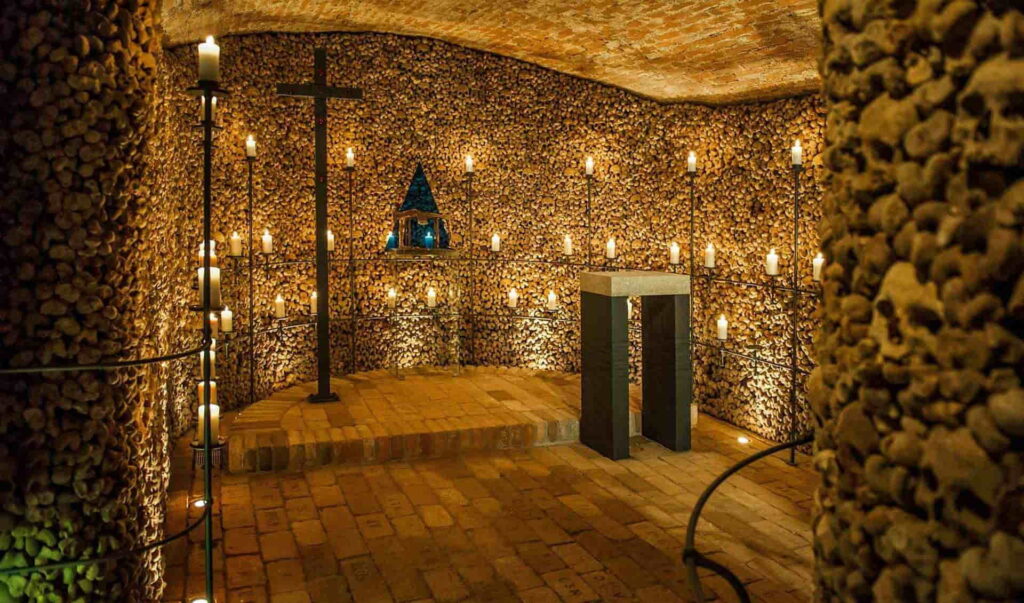
Hidden beneath churches, carved into cliffs, or quietly tucked away in old cemeteries, an ossuary tells a story most people don’t expect to hear. Unlike traditional graves, ossuaries were created out of necessity, belief, and sometimes even art. They offer a practical yet deeply symbolic way to honor the dead.
For centuries, communities around the world have used ossuaries to preserve human remains when space was limited or customs required it. Today, they stand as historical landmarks, cultural artifacts, and reminders of how differently societies have understood death and remembrance. So what exactly is an ossuary, and why has it endured for so long? Let’s find out.
Ossuary Definition
The ossuary definition refers to a place or container used for the respectful storage of human bones after the body has fully decomposed. Rather than serving as a primary burial site, an ossuary is part of a secondary burial process, one that allows remains to be preserved while making practical use of limited burial space. This practice has existed for centuries and appears in cultures across Europe, the Middle East, and parts of Asia.
Ossuaries exist largely out of necessity. In many historical communities, land for cemeteries was scarce, especially near religious centers where people wished to be buried. Once a body had decomposed, the bones were removed from the grave and transferred to an ossuary, freeing the space for future burials without disturbing the memory of the deceased. In some traditions, this process also held spiritual meaning, symbolizing a transition from physical life to eternal rest.
The way bones are stored in an ossuary varies by time and culture, but the approach is generally careful and intentional. In larger communal ossuaries, bones may be organized and stacked, sometimes with skulls placed separately for order and identification. In smaller or individual ossuaries, bones are often kept together in a single container, occasionally marked with names or dates. Despite their different forms, ossuaries share a common purpose: preserving human remains with dignity and reflecting the values and beliefs of the societies that created them.
History of Ossuaries
To understand what is an ossuary, we need to look back at where the practice began. Long before modern cemeteries existed, ancient civilizations were already facing a simple reality – space was limited, but the need to honor the dead was universal. As a result, early societies developed ways to reuse burial areas and still treat human remains with care.
Some of the earliest ossuaries date back to the ancient Near East, particularly within Jewish burial traditions during the Second Temple period. Bones were collected and placed into stone containers, reflecting religious beliefs about death, purity, and remembrance. Early Christian communities later adopted similar practices, especially as burial near churches became increasingly important.
During the Middle Ages, ossuaries spread across Europe as cities grew and cemeteries became overcrowded due to wars and epidemics. Churches and monasteries created bone chambers to manage space, many of which still exist today. Famous examples like the Paris Catacombs and the Sedlec Ossuary show how these spaces evolved into historical and cultural landmarks, blending necessity with symbolism.
Religious and Cultural Significance
The ossuary meaning goes beyond practical burial. In many religions, ossuaries reflect beliefs about respect for the dead, spiritual transition, and remembrance. Rather than being seen as disturbing, they often serve as meaningful spaces connected to faith and tradition.
In Christianity, ossuaries became common as burial near churches was considered spiritually important. When cemeteries filled up, bones were moved to ossuaries so graves could be reused while remaining within sacred ground, forming what many would recognize today as an ossuary cemetery.
Judaism has one of the earliest traditions of ossuary use. After decomposition, bones were placed in stone containers as part of a secondary burial process, reflecting beliefs about purity and the resurrection of the dead. Catholic traditions later expanded this practice in Europe, where ossuaries were sometimes designed to encourage reflection on mortality and eternal life.
Across cultures, preserving bones has symbolized continuity and respect. Ossuaries show how different societies have balanced practical needs with spiritual meaning, ensuring the dead were honored long after burial.
How an Ossuary Is Used Today
While ossuaries have ancient roots, the concept continues to serve practical and symbolic purposes in the modern world. Today, a modern ossuary is used in several ways:
- Cemetery space saving – in crowded urban areas, ossuaries allow cemeteries to store remains efficiently, freeing up ground for new burials without losing respect for the deceased.
- After cremation or burial – many families transfer bones or ashes to an ossuary after cremation or once a grave has been reused, providing a secure and dignified resting place.
- Memorial purposes – ossuaries often serve as places for reflection and remembrance, which helps families and communities honor loved ones in a shared or individual space.
- Modern ossuary designs – today, ossuaries range from simple, minimalistic containers to architecturally designed chambers, combining tradition with contemporary aesthetics while maintaining reverence for the dead.
Ossuary vs Mausoleum vs Columbarium
Understanding the difference between an ossuary vs mausoleum and other burial options can be confusing. Here’s a simple breakdown to make it clear:
| Term | Definition | Typical Use |
Ossuary | A place or container for storing human bones after decomposition. | Used when cemetery space is limited, for secondary burials, or as a memorial. |
Mausoleum | A freestanding building that houses one or more complete bodies above ground. | Often used by families or individuals for above-ground burial and long-term preservation. |
Columbarium | A structure with niches designed specifically to hold cremation urns. | Used for storing ashes after cremation, commonly found in cemeteries or churches. |
While an ossuary focuses on bones and secondary burial, a mausoleum preserves the whole body, and a columbarium is designed exclusively for ashes. Choosing between them depends on space, religious or cultural traditions, and personal preference.
Are Ossuaries Still Common?
Even though we often think of ossuaries as something from the distant past, historical ossuaries still shape the way some communities handle burials today. In parts of Europe and Asia, ossuaries are still in use, especially in crowded cities where cemetery space is limited.
Today, ossuaries aren’t just about tradition, they’re practical. They save space in urban cemeteries, reduce the environmental impact of repeated full-body burials, and give families a respectful place to keep their loved ones’ remains. Even with cremation becoming more popular, ossuaries offer a meaningful and efficient way to preserve bones.
In a way, they connect the past with the present. These spaces remind us of centuries-old customs while addressing modern challenges like urban growth and environmental concerns, proving that ossuaries are far from obsolete.
Can Families Visit an Ossuary?
Many people wonder whether families can visit an ossuary, and the answer is yes. Though it depends on the type of site. Some ossuaries are part of public spaces, like historic churches or city cemeteries, while others function as private bone repositories for families or religious communities.
Visiting an ossuary can be a meaningful way to honor and remember loved ones. Some sites provide designated areas for reflection, prayer, or placing flowers, allowing families to maintain a personal connection even without a traditional grave.
Respectful etiquette is important when visiting any ossuary. Speak quietly, avoid touching the bones unless permitted, and follow site-specific rules. These practices make sure that the ossuary continues to serve its dual purpose – a space for remembrance and a preserved repository for human remains.
Memorial Options Connected to Ossuaries
Ossuaries often offer families ways to remember loved ones beyond the physical storage of bones. Common memorial options include:
- Nameplates – small plaques or markers placed on or near the ossuary to identify the deceased.
- Funeral programs – printed materials that commemorate a service and provide details about the ossuary.
- Memorial books – records where families can write messages, prayers, or memories for those interred.
- Keepsakes – personal items, such as miniature urns or tokens, that allow loved ones to carry a piece of the memorial with them.
Frequently Asked Questions About Ossuaries
- What is kept in an ossuary?
Bones of deceased people are kept in an ossuary, usually after the body has decomposed.
- Is an ossuary religious?
An ossuary can be religious, but it isn’t always. Many are used for practical or cultural purposes as well as spiritual ones.
- Can ashes go in an ossuary?
Yes, ashes from cremation can be placed in an ossuary, especially in modern bone repositories.
- Is an ossuary above ground?
An ossuary can be either above ground or underground, depending on its design and location.
- Are ossuaries legal everywhere?
Ossuaries are legal in many places, but rules vary by country and local cemetery regulations.
