
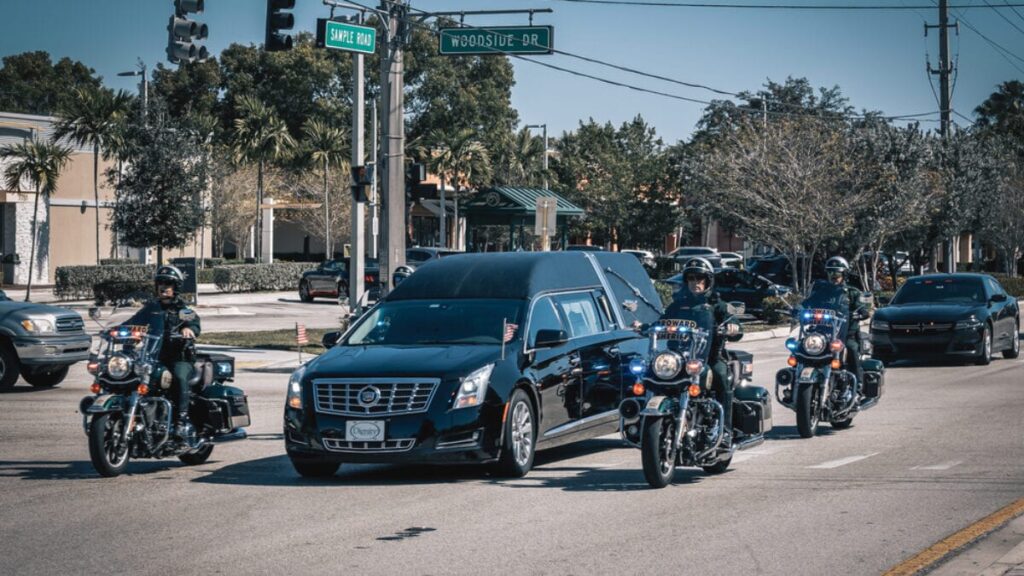
A funeral procession is a tradition that follows a funeral or memorial service and brings family members and loved ones together as they escort the deceased to their final resting place. Usually led by a hearse, the procession allows mourners to travel side by side, which creates a sense of togetherness during an emotionally heavy time.
This shared journey has an important purpose – it honors the life that has ended while also offering space for reflection, remembrance, and quiet support. For people experiencing loss, understanding what a funeral procession is and why it matters can help them feel calmer and have a guide during times of uncertainty and grief.
What Is a Funeral Procession?
What is a funeral procession? It is a traditional practice in which family members, close friends, and mourners travel together after a funeral or memorial service to escort the deceased to their burial site, crematorium, or place of final rest. It is typically led by a hearse. Such a procession creates an organized and respectful journey that allows loved ones to remain united during a deeply emotional moment.
Historically, funeral processions have existed across cultures and centuries and date back to ancient civilizations, where honoring the dead was considered a sacred duty. In earlier times, these processions often took place on foot and served as a public acknowledgment of loss, which allowed entire communities to pause, show respect, and support the grieving family. After some time, the practice evolved with modern transportation, but its meaning has remained largely unchanged.
Today, modern funeral processions are still practiced because they offer structure, dignity, and a sense of continuity during grief. They provide families with a moment of transition, moving from the service toward farewell, while reinforcing the idea that no one has to deal with loss alone. For many, participating in a funeral procession brings comfort and is a final act of care and respect for the person who has passed.
Typical Order of a Funeral Procession
The funeral procession order helps keep the journey calm, organized, and respectful for everyone involved. There is no single rule followed by all families, however, most processions follow a similar pattern.
The hearse usually leads the procession, carrying the deceased and setting the pace. In some cases, a funeral director or lead vehicle may drive in front to guide the route and help manage traffic. Vehicles with immediate family members typically follow the hearse, which allows close relatives to stay together during an emotional moment.
Behind them are extended family members and friends who have come to show their support. Funeral director or escort vehicles may also be present to help keep the procession together and ensure it moves safely. The funeral procession order can vary based on family wishes, religious traditions, or cultural customs, and adjustments are often made to honor what feels most meaningful to those saying goodbye.
Funeral Procession Etiquette
Funeral procession etiquette focuses on maintaining respect, safety, and unity throughout the journey. Participants are expected to drive calmly, avoid distractions, and follow the lead vehicle without rushing or breaking formation. Headlights or hazard lights are often turned on to help keep the procession visible and together, and vehicles should maintain a close but safe distance.
At intersections and traffic lights, drivers in the procession typically follow the hearse through the route as directed by escort vehicles or local laws. Other drivers who encounter a funeral procession should slow down, avoid cutting in, and yield whenever possible. Simple gestures of patience and courtesy go a long way in honoring the deceased and people who are grieving.
Religious and Cultural Funeral Procession Traditions
Funeral procession traditions vary widely across religions and cultures. They all reflect different beliefs about death, mourning, and remembrance. The way processions are carried out can look very different around the world, however, the purpose of honoring the deceased remains the same.
In Christian funeral processions, the hearse is typically followed by family and close friends as they travel from the church to the cemetery. These processions are often quiet and formal, emphasizing reflection, prayer, and respect. Jewish funeral customs may involve a simple procession to the burial site, with an emphasis on humility and timeliness, as burial usually takes place soon after death. Processions are often modest, reflecting the value placed on equality in death.
Muslim funeral processions are guided by religious teachings that stress dignity and simplicity. The deceased is escorted promptly to burial, often with community members participating as a sign of collective responsibility and support. In many cultures around the world, funeral processions can include music, ceremonial clothing, or symbolic rituals, while others remain very subdued. These differences highlight how funeral procession traditions are shaped by faith, culture, and the values of each community.
Modern Funeral Processions
Funeral traditions have evolved, and today’s processions often reflect personal preferences, lifestyle, and community customs. Modern funeral processions can be flexible, which allows families to honor their loved ones in ways that are meaningful and fitting:
- Shorter or non-traditional routes – some families choose alternative paths instead of traditional routes, tailoring the procession to meaningful locations.
- Processions without vehicles – memorial walks or on-foot gatherings allow participants to honor the deceased in a more intimate and personal way.
- Celebrations of life – modern processions often take the form of casual gatherings or events that reflect the personality and wishes of the deceased.
- Police‑escorted vs. non‑escorted processions – while police escorts provide safety and traffic control, many families now prefer non‑escorted processions for smaller or private farewells.
Common Questions About Funeral Processions
- Are funeral processions required?
No, funeral processions are not required. They are a traditional way to honor and escort the deceased, but families can choose if they want to have one, how it’s conducted, or even replace it with a memorial walk or private ceremony. The choice depends on personal preference, cultural or religious practices, and logistical considerations.
- Do drivers have to stop for a procession?
It depends on local laws. In many places, drivers are required to yield or stop for a funeral procession, especially if it is police‑escorted or clearly marked. In other areas, stopping is not legally required, but it is considered a sign of respect and courtesy. Always follow traffic rules and local regulations.
- How long does a funeral procession last?
The length of a funeral procession varies depending on the route, number of vehicles, and distance to the final resting place. Typically, funeral processions last anywhere from 15 minutes to an hour. Some may be shorter or longer.
- Can you pass a funeral procession?
Generally, you should not pass a funeral procession when it is moving, especially if it is police‑escorted or vehicles have headlights/hazard lights on. If you wait, it shows respect and helps keep the procession together and safe. Local traffic laws may also prohibit passing in these situations.

Honoring a Loved One During the Procession
For many families, a funeral procession is more than just a journey, it’s a chance to honor a loved one in meaningful ways. How does a funeral procession work? Beyond following the hearse, families often add some personal touches such as playing a favorite song, displaying flowers, or including keepsakes in the vehicles. Some may make symbolic gestures, like waving to friends along the route or lining the street with mementos.
These small actions help turn the procession into a shared act of remembrance, which gives participants a moment to reflect, grieve, and celebrate the life of the person they are saying goodbye to. The emotional importance of this final journey can provide comfort, closure, and a sense of togetherness for everyone involved.
Understanding Funeral Procession Rules
Funeral processions are a meaningful way to honor and escort a loved one to their final resting place. Understanding funeral procession rules, from the order of vehicles to proper etiquette, will help you make sure the journey is safe, respectful, and supportive for everyone involved.
While the customs and traditions may vary, the heart of a funeral procession remains the same – it provides a moment of unity, reflection, and farewell. For those grieving, participating in or witnessing a procession can bring comfort, a sense of connection, and a quiet space to honor the life that was lived. Remember, there is no right or wrong way to say goodbye, what matters most is the love, respect, and remembrance shared along the way.
