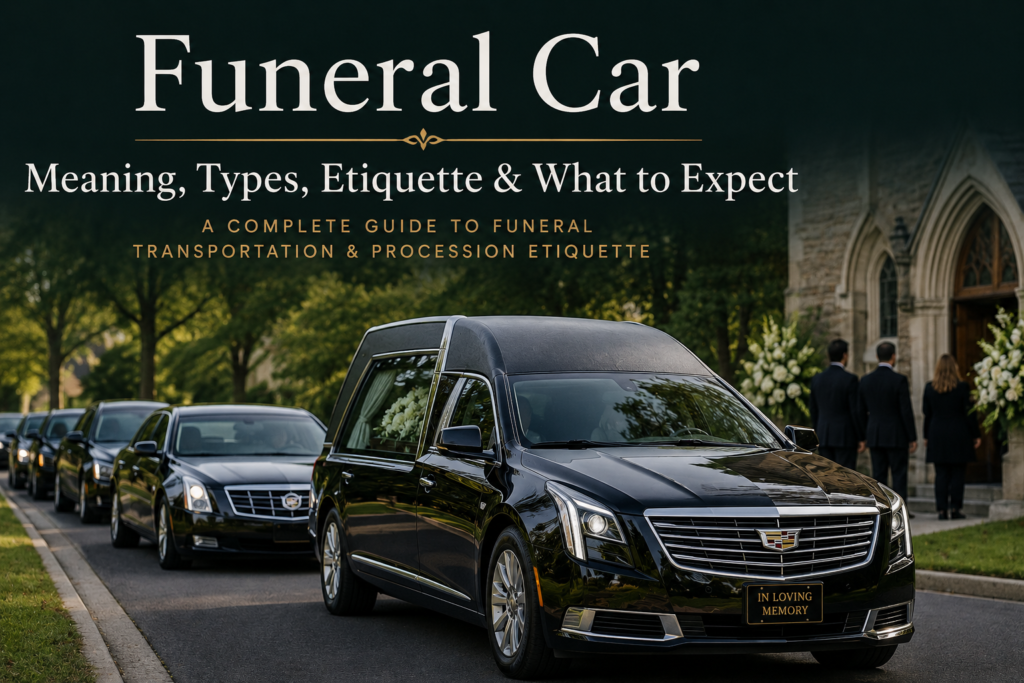
Funeral cars play an important role in creating a respectful, organized, and dignified funeral service. They help transport the deceased, guide close family members between locations, and keep the funeral procession together as it moves from the funeral home, church, memorial venue, or cemetery.
Many people are unsure what a funeral car is, who rides in each vehicle, what order the cars should follow, and what etiquette applies when driving in or near a funeral procession. Understanding the basics can help families feel more prepared and help guests show proper respect on the day of the service.
This guide explains what funeral cars are, the different types used in funeral transportation, who rides in them, how funeral processions are usually organized, and what etiquette to follow before, during, and after the procession.
What Is a Funeral Car?
A funeral car is any vehicle used as part of funeral transportation. This can include the hearse that carries the casket, a funeral limousine for close family members, a flower car for arrangements, or the vehicles that follow in the funeral procession.
Funeral cars help move people and important service items between locations in a calm and organized way. Depending on the type of service, funeral transportation may be used for:
- Transporting the deceased to the funeral home, church, cemetery, or crematory
- Guiding immediate family members to the service location
- Carrying flowers, wreaths, sprays, or memorial items
- Creating a formal funeral procession
- Helping guests travel together from the service to the cemetery
“A funeral car is more than transportation. It helps create a respectful journey and gives family members a clear, organized way to move through each part of the service.”
Why Funeral Cars Are Important
Funeral cars help maintain order during a difficult and emotional day. When families are grieving, transportation details can feel overwhelming. A funeral home or funeral director usually helps coordinate the vehicles, route, timing, and procession order so the family does not have to manage everything alone.
Funeral cars are important because they:
- Transport the deceased with dignity and care
- Help family members travel together
- Keep the procession organized
- Reduce confusion between service locations
- Show respect during the final journey
- Make it easier for guests to follow the correct route
A funeral car also gives structure to the day. Whether the service is traditional, religious, graveside, or a simple memorial, organized transportation helps each part of the service move smoothly.
Common Types of Funeral Cars
There are different types of funeral cars, and each one has a specific purpose. Not every service will use every type of vehicle, but these are the most common options families may see.
Hearse
A hearse is the funeral vehicle used to transport the deceased in a casket. It is usually driven by funeral home staff and is one of the most recognized vehicles in a funeral procession.
Funeral Limousine
A funeral limousine is often used to transport immediate family members. This allows close relatives to travel together without having to drive during an emotional time.
Flower Car
A flower car is used to carry floral arrangements, wreaths, sprays, or other memorial flowers. Some funeral homes may use a separate vehicle for flowers, while others may transport arrangements in another suitable vehicle.
Clergy or Officiant Car
In some services, a separate car may be provided for the minister, priest, celebrant, or person leading the ceremony. In other cases, the officiant may travel separately.
Family Cars
Family cars are vehicles used by relatives and close friends who are part of the funeral procession. These may be personal vehicles or cars arranged through the funeral home.
Guest Vehicles
Guests often follow the procession in their own vehicles. They may travel from the funeral home or church to the cemetery, graveside service, or reception location.
What Is a Hearse?
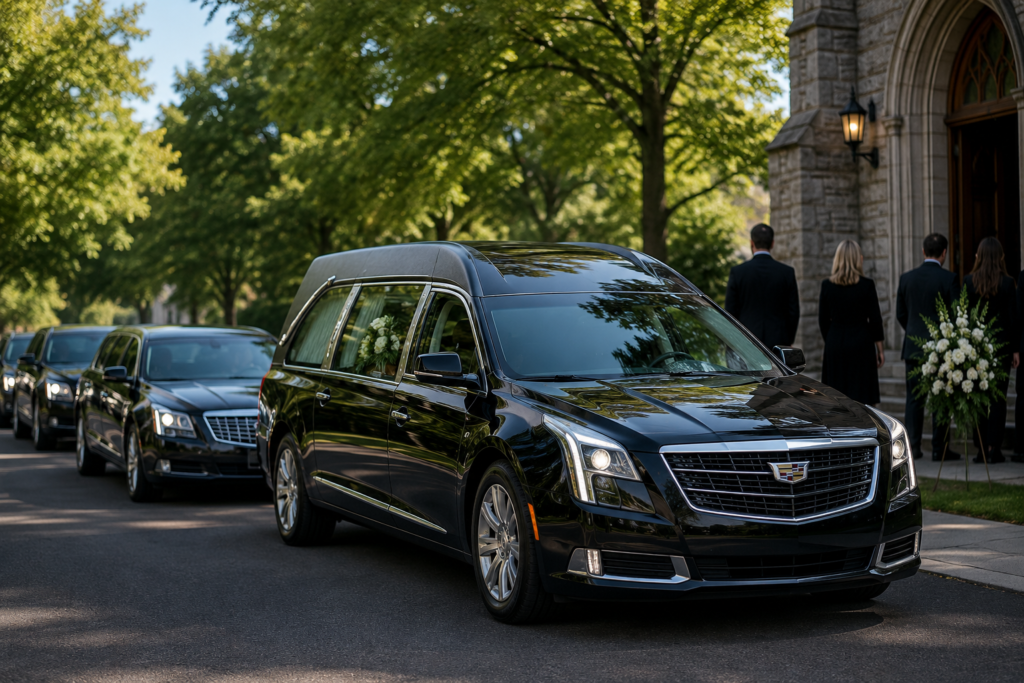
A hearse is the main funeral car used to transport the casket. It is designed with a long rear compartment where the casket can be placed securely and respectfully. The hearse is typically driven by a funeral director or funeral home staff member.
In a funeral procession, the hearse usually travels near the front. It may follow a lead vehicle, police escort, or funeral escort, depending on local customs, funeral home practices, and traffic requirements.
The hearse often represents the solemn focus of the procession. Other vehicles follow behind it in an organized order to accompany the deceased to the cemetery, crematory, or final service location.
The hearse is usually the most important vehicle in the funeral procession because it carries the deceased. Guests should never cut in front of it or separate it from the procession.
Who Rides in Funeral Cars?
Who rides in each funeral car depends on the family’s wishes, the type of service, and the funeral home’s arrangements. However, there is a general order that many families follow.
- The deceased is transported in the hearse.
- Immediate family members may ride in a funeral limousine or designated family car.
- Close relatives often follow behind the family limousine or first family vehicle.
- Friends and guests usually follow in their own vehicles.
- The officiant may travel separately, with funeral home staff, or in a designated vehicle.
Immediate family members may include a spouse, children, parents, siblings, or those closest to the person who passed away. If space is limited, the funeral director can help decide the best vehicle arrangement.
If you are unsure where to ride or where to line up, ask the funeral director before the procession begins.
Funeral Car Order in a Procession
The order of funeral cars can vary, but most funeral processions follow a similar structure. The funeral home will usually explain the order before the procession begins.
A common funeral car order is:
- Lead vehicle or funeral escort
- Hearse
- Immediate family limousine or family car
- Close family vehicles
- Friends and guests
- Other attendees following the route
The exact order may depend on the funeral home, local customs, cemetery rules, religious traditions, and whether police or traffic escorts are used. Some funeral homes place small flags, windshield markers, or procession stickers on the cars so other drivers can recognize the line of vehicles.
You can also learn more about proper funeral procession etiquette if you will be driving in or near a procession.
Funeral Car Etiquette
Funeral car etiquette is important because it helps keep the procession safe, respectful, and organized. Whether you are a close family member or a guest, following the funeral director’s instructions can help prevent confusion.
Important funeral car etiquette includes:
- Arrive early so you know where to park or line up.
- Follow instructions from the funeral director or procession leader.
- Turn on your headlights if asked.
- Stay close to the vehicle in front of you without driving unsafely.
- Do not leave the procession unless necessary.
- Avoid using your phone while driving.
- Drive slowly, calmly, and respectfully.
- Park where directed when you arrive at the cemetery or service location.
Funeral processions are often emotional for families. Calm, patient driving helps keep everyone safe and shows respect for the significance of the moment.
What to Do If You Are Driving in a Funeral Procession
Driving in a funeral procession can feel unfamiliar if you have never done it before. The funeral director will usually provide instructions before cars leave the funeral home, church, or service venue.
If you are driving in the procession:
- Ask where you should line up before the procession begins.
- Use headlights or hazard lights if instructed.
- Stay in the order you were assigned.
- Follow the same route as the procession.
- Avoid changing lanes unless directed by an escort or funeral staff.
- Be patient with traffic and other drivers.
- Wait for parking instructions when you arrive.
If the procession is long, it is especially important to keep a safe but steady distance from the car in front of you. This helps prevent other drivers from entering the procession and separating the group.
What to Do If You See a Funeral Procession on the Road
Many people encounter funeral processions while driving and are unsure what to do. The most respectful response is to be patient, cautious, and avoid interrupting the line of cars.
If you see a funeral procession:
- Yield when it is safe to do so.
- Do not honk at the procession.
- Do not cut into the line of funeral cars.
- Allow the cars to stay together.
- Do not pass unless it is clearly safe and legal.
- Be patient if the procession is moving slowly.
Different areas may have different traffic laws about funeral processions, so always follow local rules and drive safely. Even when you are not part of the service, allowing the procession to pass respectfully is a simple way to show compassion to the grieving family.
Are Funeral Cars Required?
Funeral cars are common, but they are not always required for every type of service. Some families choose a traditional hearse, funeral limousine, and formal procession. Others may prefer simpler transportation, especially for a small memorial service, direct cremation, or private family gathering.
Whether funeral cars are needed may depend on:
- The type of service being held
- Whether burial or cremation is planned
- The distance between service locations
- The family’s budget
- Religious or cultural traditions
- Funeral home and cemetery requirements
If your family is still planning the service, HonorYou’s funeral planning guide can help you understand the larger decisions involved in arranging a meaningful service.
How Much Do Funeral Cars Cost?
The cost of funeral cars can vary depending on the funeral home, the type of vehicle, the number of vehicles needed, travel distance, and whether an escort or limousine is included. A hearse may be included in some funeral packages, while other transportation options may be charged separately.
Costs may be affected by:
- Use of a hearse
- Use of a family limousine
- Distance between the funeral home, service venue, cemetery, or crematory
- Additional vehicles for flowers or family members
- Local escort or traffic support
- Special transportation requests
Before agreeing to funeral transportation, ask the funeral home for pricing in writing. This can help your family understand what is included and avoid unexpected costs.
You can also review broader funeral expenses in HonorYou’s guide to average funeral costs to better understand how transportation may fit into the overall budget.
Can Funeral Cars Be Personalized?
Yes, funeral cars can sometimes be personalized, depending on the funeral home, local regulations, cemetery rules, and the family’s preferences. Personal touches can make the journey feel more meaningful and reflective of the person being honored.
Personalization options may include:
- Floral arrangements placed on or near the vehicle
- Ribbons or small decorative details
- Flags for military, veteran, or patriotic services
- A special route past a meaningful location
- A vehicle style connected to the loved one’s personality or interests
- Cultural or religious details approved by the funeral director
Some families may ask the procession to pass a favorite home, church, workplace, park, or meaningful place before continuing to the cemetery. If this is important to your family, discuss it with the funeral director early so they can confirm whether it is possible.
Funeral Cars for Different Types of Services
Not every funeral service uses funeral cars in the same way. Transportation needs can change depending on whether the service is traditional, graveside, memorial, or a celebration of life.
| Service Type | Common Funeral Car Needs |
|---|---|
| Traditional Funeral | A hearse, family limousine, and procession to the cemetery are often used. |
| Memorial Service | A hearse may not be needed if burial or cremation has already taken place. |
| Graveside Service | A funeral car may transport the casket directly to the cemetery. |
| Celebration of Life | Transportation may be less formal depending on the family’s wishes. |
Some services may include a formal committal at the cemetery after the main funeral. If this applies to your family, it may help to understand what a committal service is and how transportation fits into that part of the day.
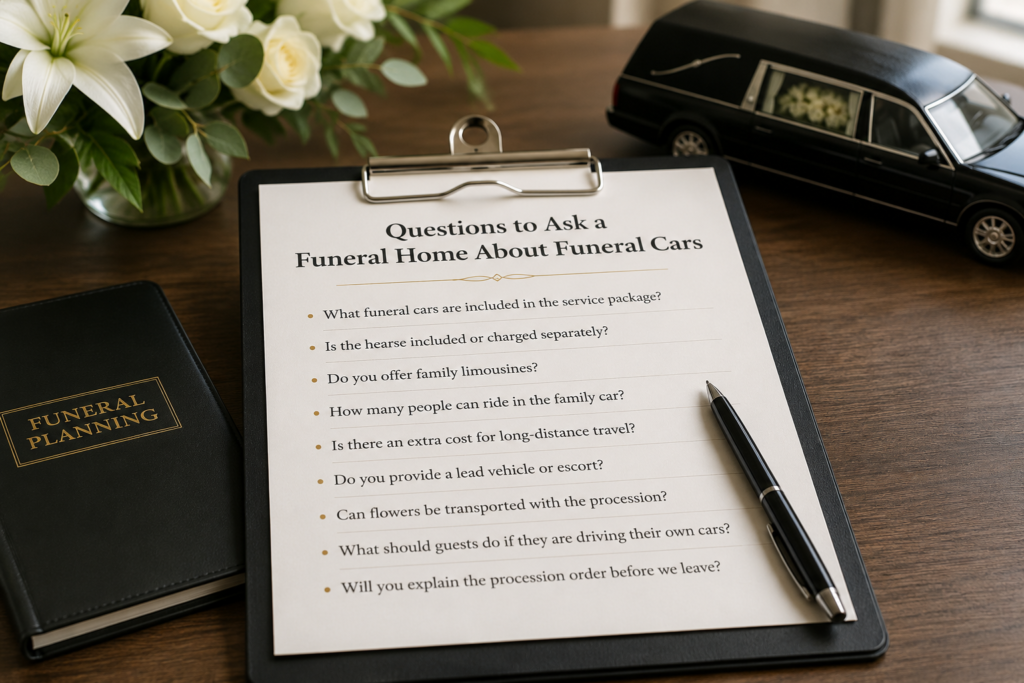
Questions to Ask a Funeral Home About Funeral Cars
Before making final arrangements, ask the funeral home about funeral cars, procession details, and transportation costs. This can help your family avoid confusion and understand what is included in the service package.
Helpful questions include:
- What funeral cars are included in the service package?
- Is the hearse included or charged separately?
- Do you offer family limousines?
- How many people can ride in the family car?
- Is there an extra cost for long-distance travel?
- Do you provide a lead vehicle or escort?
- Can flowers be transported with the procession?
- What should guests do if they are driving their own cars?
- Will you explain the procession order before we leave?
If you are still choosing a provider, asking clear questions can help your family compare services, pricing, and communication. It can also help to review questions to ask a funeral home before your first appointment.
Funeral Car Checklist
Use this quick checklist before the day of the service:
- Confirm whether a hearse is included.
- Ask if a family limousine or family car is available.
- Confirm who will ride with immediate family.
- Ask where guests should line up for the procession.
- Confirm the route from the service location to the cemetery.
- Ask whether headlights, hazard lights, flags, or markers will be used.
- Ask where guests should park when they arrive.
- Confirm any special transportation requests ahead of time.
If the service is being planned soon after a loss, HonorYou’s guide on the first steps to take after a loved one passes can help families understand what may need attention early in the process.
Final Thoughts
Funeral cars help create a calm, respectful, and organized experience during a funeral service. From the hearse that carries the casket to the family limousine and procession vehicles, each car plays a role in guiding the family and guests through the day.
Whether your family chooses a traditional funeral procession or a simpler transportation plan, it is important to ask the funeral home about vehicle options, costs, route details, and etiquette ahead of time. Clear instructions can reduce stress and help everyone know what to expect.
A funeral car is not only a practical part of the service. It is also part of the final journey, offering dignity, structure, and respect as family and friends gather to honor a loved one’s life.
Frequently Asked Questions
What is a funeral car?
A funeral car is any vehicle used for funeral transportation. This may include a hearse, funeral limousine, flower car, family car, clergy car, or guest vehicles that follow in the funeral procession.
What is the car that carries the casket called?
The car that carries the casket is called a hearse. It is designed to transport the deceased respectfully and is usually driven by funeral home staff.
Who rides in the funeral limousine?
Immediate family members usually ride in the funeral limousine or designated family car. This may include a spouse, children, parents, siblings, or those closest to the person who passed away.
What order do funeral cars follow in a procession?
A common order is the lead vehicle or escort, hearse, immediate family car or limousine, close family vehicles, friends, and other guests. The exact order may vary by funeral home, local customs, or religious traditions.
Should I turn on my headlights in a funeral procession?
Many funeral processions ask drivers to turn on their headlights so other vehicles can recognize the procession. Follow the funeral director’s instructions before leaving.
Can I drive my own car in a funeral procession?
Yes. Guests often drive their own vehicles in a funeral procession. Ask where to line up, stay in order, follow the route, and avoid leaving the procession unless necessary.
Are funeral cars required?
Funeral cars are common but not always required. Some families choose formal funeral transportation, while others use simpler arrangements depending on the service type, budget, distance, and personal preferences.
How much do funeral cars cost?
The cost can vary depending on the funeral home, vehicle type, distance, and number of vehicles needed. Ask for written pricing so your family understands what is included and what may cost extra.