Navigating the loss of a loved one is an emotionally exhausting experience. From the immediate, practical steps of figuring out who picks up dead bodies to sitting down with a funeral director to plan a meaningful farewell, the process can feel overwhelming. During this difficult time, you will likely encounter unfamiliar terminology that makes planning—or attending—a bit confusing.
If you are looking at an obituary, or if you are currently arranging end-of-life services for a family member, you might be asking: What exactly is the funeral and wake difference? Are they the same thing? Do I need to host, or attend, both?
Whether you are pre-planning your own arrangements, organizing a service for a loved one, or simply seeking etiquette guidance as a guest, understanding the difference between wake and funeral services is essential. In this guide, we will break down the specific definitions, cultural nuances, and etiquette expectations for each event.
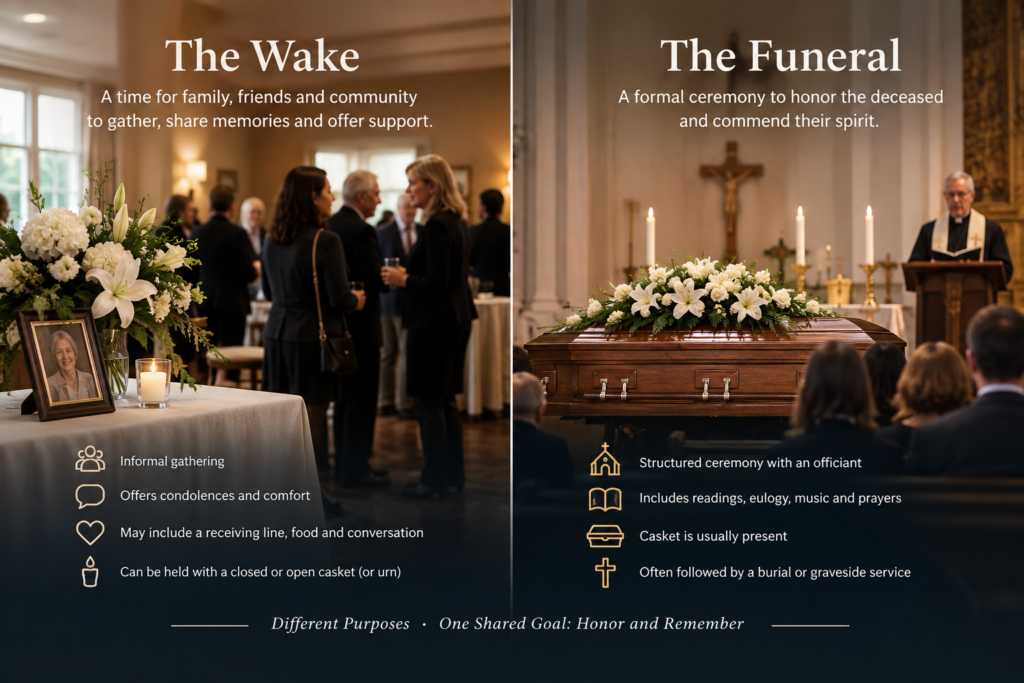
A wake is a relatively informal gathering held before the funeral, designed to give friends and extended family a chance to offer condolences and comfort the immediate family. A funeral, on the other hand, is the formal, structured ceremony led by an officiant to honor the deceased and commend their spirit, typically followed by the burial.
What is a Wake? (And How is it Different from a Visitation?)
To fully grasp the difference between these events, we first need to define what is a wake. Historically, a wake was a vigil where family members would literally keep “watch” over the body of the deceased from the time of death until the burial.
This practice is deeply rooted in Celtic traditions (like the famous Irish wake) and Catholic vigils. Keeping watch was a way to protect the body and offer continuous prayers for the departed soul.
The Purpose of a Wake
Today, the primary focus of a wake is comforting the living. It provides a dedicated time and space for the community to gather, share memories, and offer their sympathies to the grieving family.
At a wake, there is usually a receiving line where guests can speak directly to the immediate family. The atmosphere is generally conversational. While there may be moments of quiet prayer, particularly if a priest leads a rosary, a wake does not follow a strict, beginning-to-end ceremonial structure.
Wake vs. Viewing vs. Visitation
You will often hear these three terms used interchangeably by funeral homes and families, but there are subtle differences:
- Visitation vs Wake: A visitation is simply a designated time for guests to visit with the family. A wake is a type of visitation, but the term “wake” usually implies that there is a religious or cultural vigil aspect to the gathering.
- Wake vs Viewing: A viewing specifically means that the deceased’s body is present in an open casket, allowing mourners to see them one last time. A wake or visitation can take place with a closed casket, or even an urn if the person was cremated.
What is a Funeral?
While a wake is about supporting the family, a funeral is a formal ceremony dedicated to honoring the person who has passed away. It is a highly structured event with a clear beginning, middle, and end.
A funeral is usually led by an officiant—such as a priest, pastor, rabbi, or a secular celebrant. The ceremony typically includes specific rituals, such as the reading of a eulogy, religious scriptures, or meaningful poems. There are usually carefully chosen musical selections, and the family may use funeral program ideas to create printed booklets that guide guests through the order of service.
The casket (whether open or closed) is almost always present at a funeral. Following the conclusion of the ceremony, pallbearers will carry the casket to a hearse, and the congregation may form a procession to the cemetery for a committal service (also known as a graveside service), where the physical burial takes place.
The Main Differences Between a Wake and a Funeral
To make the distinctions as clear as possible, here is a side-by-side comparison of a wake versus a funeral. This table highlights the practical differences you will experience at each event.
| Consideration | Wake / Visitation | Funeral |
|---|---|---|
| Timing | Usually held the afternoon or evening before the funeral. Sometimes held hours prior on the same day. | Held on a scheduled day and time, immediately preceding the burial or cremation. |
| Formality & Structure | Informal and unstructured. Guests can arrive and leave at any point during the designated hours. | Formal and structured. Guests are expected to arrive before it begins and stay for the entire ceremony. |
| Primary Focus | Comforting the grieving family, offering condolences, and sharing casual memories. | Honoring the deceased, delivering eulogies, and performing religious or spiritual rites. |
| Location | Usually held at a funeral home. Can also be held in a family home or church gathering space. | Often held at a place of worship, a funeral home chapel, or directly at the graveside. |
| Presence of Body | Casket is often present and may be open (viewing). Can also feature just an urn or photographs. | The casket or urn is present. The casket is usually closed during the formal service. |
Etiquette Guide: Attending a Wake vs. a Funeral
If you are a guest reading an obituary that lists multiple events, it is entirely normal to feel unsure about what is expected of you. Here is a quick etiquette guide to help you navigate these gatherings gracefully and confidently.
Do I Have to Attend Both?
One of the most common questions guests ask is: do you go to both wake and funeral?
The answer depends heavily on your relationship with the deceased and their family. Close family members and dear friends are expected to attend both gatherings. However, if you are a casual acquaintance, a coworker, or a distant friend, you are not obligated to attend both.
Many acquaintances choose to attend only the wake. This allows them to pay their respects to the family in the receiving line without taking up space at the more intimate, formal funeral ceremony. Conversely, if you live out of town and can only take one day off work, attending just the funeral is completely acceptable.
What to Wear
While society has become more casual over time, conservative, respectful attire is standard for both events. A wake can sometimes be slightly less formal than a funeral, but you should still avoid overly bright colors, athletic wear, or very casual clothing.
Dark suits, modest dresses, slacks, and collared shirts in muted tones (black, navy, gray, dark green) are always appropriate choices for paying respects. Ultimately, dressing nicely shows that you care about the family’s loss.
What to Say to the Grieving Family
Approaching the family in a receiving line at a wake can feel intimidating. Remember that they are experiencing profound grief and will likely only speak to you for a minute or two. Keep your words brief, sincere, and comforting.
You do not need to have the perfect advice. Simply saying one of the following is enough:
- “I am so incredibly sorry for your loss.”
- “Your father was a wonderful man, and I will miss him at the office.”
- “You and your family are in my thoughts and prayers.”
If you have a fond, brief memory of the deceased, the wake is the perfect time to share it with the family. Keep it light and focused on the positive impact the person had on your life.
Do You Have to Have Both Services?
If you are the one planning the arrangements, you might be wondering if you are required to host both a wake and a funeral. The short answer is no. Unless dictated by your specific religious beliefs or cultural traditions, there are no strict rules you must follow.
Modern end-of-life trends show that families are increasingly personalizing how they mourn. Some families choose to have a traditional wake on a Friday evening, followed by a funeral mass on Saturday morning. Others choose to host a brief, one-hour visitation immediately before the funeral service to make it easier for traveling guests.
Furthermore, when looking at a funeral vs memorial service, you have even more options. A memorial service or Celebration of Life serves the same purpose as a funeral, but it takes place without the body present (though an urn may be there). Because there is no immediate need to bury the body, families can skip a wake and a traditional funeral altogether, opting to host a Celebration of Life weeks or even months after the passing.
If you read customer reviews of modern memorial services, you will see that families find immense peace in choosing the format that best fits their unique situation.
The right choice is the one that best honors the life of the person who has passed, while providing the most comfort, connection, and closure for the friends and family left behind.