When a loved one passes away, the immediate journey through grief is often accompanied by an overwhelming list of decisions. For generations, the standard response was to follow a rigid, traditional funeral structure—somber black attire, hushed organ music, and sorrowful farewells. However, in recent years, a profound cultural shift has transformed how human beings mark the end of life. More and more families are choosing to honor their loved ones not with solemn mournings, but with joyous, vibrant tributes centered on love, gratitude, and storytelling.
This transition has led many to explore the deeper celebration of life meaning. What does it actually mean to “celebrate” a life when your heart is breaking? Rather than denying or glossing over the pain of loss, a celebration of life reorients the gathering’s emotional center. It shifts the focus away from the tragedy of death and places it squarely upon the joy, humor, accomplishments, and connections that defined the person’s journey.
Whether you have been invited to a service and are unsure of what to expect, or you are researching how to plan a celebration of life for your loved one, this comprehensive guide will explain the essential meaning behind these modern ceremonies, how they compare to traditional funerals, guest etiquette, and practical planning steps.
A Compassionate Perspective: A celebration of life is not a dismissal of grief; it is an affirmation that love outlasts physical absence. By gathering to laugh, reminisce, and share authentic memories, we honor the truth that a person’s impact is measured by how vividly they lived, not merely that they died.
What Is a Celebration of Life?
A celebration of life is an uplifting, highly personalized memorial gathering designed to honor a person’s unique story, passions, and personality. Unlike somber traditional funerals, it centers on joyful remembrance, storytelling, and gratitude, shifting the focal point from the finality of death to the vitality of the life lived.
What Is a Celebration of Life? (Definition & Purpose)
To fully answer the question, what is a celebration of life, one must look beyond standard funeral industry definitions. At its core, a celebration of life is an intentional end-of-life gathering created to reflect the authentic spirit, values, and energy of the deceased.
Traditional funerals are often structured around formal religious liturgies and time-honored rituals that focus on commending the soul and expressing collective mourning. In contrast, a celebration of life is an open canvas. While sorrow and tears are naturally welcomed, the overarching atmosphere is warm, conversational, and uplifting.
The primary purpose of this gathering is threefold:
- To Validate Legacy: It gives family and friends a shared platform to recount personal anecdotes, celebrate hobbies, highlight professional milestones, and remember how the person made others feel.
- To Provide Comfort Through Joy: Psychologists recognize that shared laughter and warm nostalgia are powerful catalysts for grief processing, helping the bereaved transition from acute shock to emotional healing.
- To Offer Creative Freedom: These events are predominantly secular or non-denominational, though spiritual readings, hymns, or prayers can be seamlessly woven in if the family desires.
Because the physical body is rarely present in a casket, families are liberated from the strict timelines of burial schedules, allowing them to host the gathering wherever and whenever feels right.
Celebration of Life vs. Funeral: Key Differences
Understanding the practical and emotional differences between a celebration of life vs funeral helps both organizers and attendees set proper expectations. When comparing the funeral vs memorial vs celebration models, the distinctions become clear across several practical elements.
The table below breaks down the key characteristics of each service:
| Feature | Traditional Funeral | Celebration of Life |
|---|---|---|
| Primary Atmosphere | Somber, reverent, formal, and deeply reflective. | Warm, conversational, uplifting, and celebratory. |
| Presence of the Body | The casket is present (open or closed), followed immediately by burial. | The casket is typically absent; an urn with cremated remains or framed portraits are displayed. |
| Setting / Venue | Funeral home chapel, church, temple, or graveside. | Parks, botanical gardens, backyards, banquet halls, community centers, or restaurants. |
| Timing & Scheduling | Usually held within 3 to 7 days after the death occurs. | Highly flexible; often scheduled weeks or months later to accommodate travel. |
| Ceremonial Structure | Follows liturgical order, formal clergy leadership, scriptures, and traditional hymns. | Informal and personalized; features open-mic stories, multimedia slideshows, favorite music, and toasts. |
| Attire Expectation | Formal black or dark, conservative clothing. | Smart-casual, vibrant colors, or themed clothing reflecting personal hobbies. |
While a traditional funeral emphasizes final farewells and solemn grief, exploring modern types of funeral services like celebration of life services reveals how families can create spaces that feel like vibrant reunions rather than tragic farewells.
Why Families Choose a Celebration of Life
The rising popularity of celebrations of life is not a fleeting trend—it is a conscious evolution in grief care. Modern families choose this path for several profound reasons:
1. Time to Grieve and Plan Without Pressure
A traditional funeral requires immediate, high-stakes decisions during the acute shock of loss. Caskets must be purchased, cemetery plots coordinated, and schedules locked in within days. Because a celebration of life usually occurs after cremation or a private committal, families can take a deep breath. Postponing the event by several weeks or months allows relatives to process initial shock, book affordable travel, and design a truly thoughtful gathering without rushing.
2. Complete Freedom of Personalization
Traditional venues often have strict liturgical rules regarding what music can be played, who can speak, and what displays are permitted. A celebration of life eliminates those barriers. If the deceased loved classic rock, craft beer, or gardening, the event can feature an acoustic cover band, a brewery reception, or customized flower seed favors. The event becomes a true mirror of who they were.
3. Focus on Shared Memories and Legacy
Grief can be isolating, but gathering to share lighthearted memories and hearty laughs reminds survivors of the rich tapestry of relationships left behind. It allows friends to share stories the immediate family may have never heard, providing comfort and enduring proof that their loved one’s presence continues to resonate.
What Happens at a Celebration of Life? (Typical Order of Service)
If you have never attended one before, you might wonder what to expect at a celebration of life. While every service is custom-built, most organizers follow a structured yet relaxed timeline. A typical event lasts between 60 and 90 minutes, followed by an open reception.
Here is a common celebration of life order of service:
- 1. Welcome and Opening Remarks (5–10 minutes): A designated host, close relative, or celebrant steps up to welcome guests, thank them for their support, and set the tone for the day. Setting the stage with thoughtful opening words for a celebration of life helps attendees relax and enter the mindset of joyful remembrance.
- 2. Prepared Tributes and Eulogies (15–20 minutes): Two or three pre-selected individuals—such as a sibling, adult child, or lifelong friend—share structured reflections, funny stories, and heartfelt tributes.
- 3. Multimedia Tribute (10 minutes): A curated slideshow of photographs spanning childhood, career milestones, travel, and family celebrations plays on screens, accompanied by the deceased’s favorite songs.
- 4. Open Storytelling & Memory Sharing (15–20 minutes): The host opens the floor or passes a microphone to guests, inviting anyone who feels moved to share a brief, heartwarming anecdote or memory.
- 5. Symbolic Ceremony or Toast (5–10 minutes): Mourners participate in a collective symbolic action—such as lighting commemorative candles, planting a memorial tree, writing messages on river stones, or raising a favorite drink in a collective toast.
- 6. Informal Reception & Mingling (30–60+ minutes): Guests gather to enjoy favorite foods, drinks, look over memorabilia tables, and spend time connecting with one another.
Guest Etiquette: What to Wear, Bring, and Say
Because celebrations of life break away from traditional funeral conventions, guests are frequently anxious about social blunders. Following basic celebration of life etiquette ensures you support the family seamlessly.
What to Wear to a Celebration of Life
Knowing what to wear to a celebration of life begins with checking the invitation or obituary carefully.
- Themed Requests: Families often request specific dress codes—such as wearing the deceased’s favorite color (e.g., “please wear something purple”), floral patterns, Hawaiian shirts, or jerseys from their favorite sports team. If a request is made, do your best to honor it.
- General Attire: If no dress code is specified, aim for smart-casual or business-casual attire in subdued, cheerful, or neutral tones (blues, greens, soft pastels, or earth tones). Avoid stark, head-to-toe mourning black unless explicitly requested, and steer clear of overly casual gym clothes or ripped jeans.
What to Bring
Keep gifts simple, meaningful, and low-maintenance for the hosting family:
- A Handwritten Sympathy Card: Take time to write down a specific memory or story about the person that the family might not know. These personal notes often become treasured keepsakes.
- Charitable Donations: If the family designated a charity or memorial fund in lieu of flowers, making a contribution is customary and deeply appreciated.
- Avoid Large Objects: Do not bring oversized physical gifts, heavy arrangements, or clutter that the family will have to transport home at the end of the event.
What to Say to the Family
At a celebration of life, the conversation is meant to be warm, uplifting, and sincere. You do not need to give a speech; simply express your appreciation for the person’s life:
- “It is so wonderful to see how many lives [Name] touched. I will always remember their infectious laugh.”
- “I am so grateful I had the privilege of working with [Name]. They taught me so much about patience.”
- “Your family put together such a beautiful tribute today. It feels exactly like them.”
Avoid empty clichés such as “everything happens for a reason” or “it was their time,” as these can inadvertently minimize the reality of the loss.
Meaningful Celebration of Life Ideas
If you are currently planning a gathering, the goal is to weave the individual’s authentic personality into every corner of the event. Here are several creative, memorable ideas to spark inspiration:
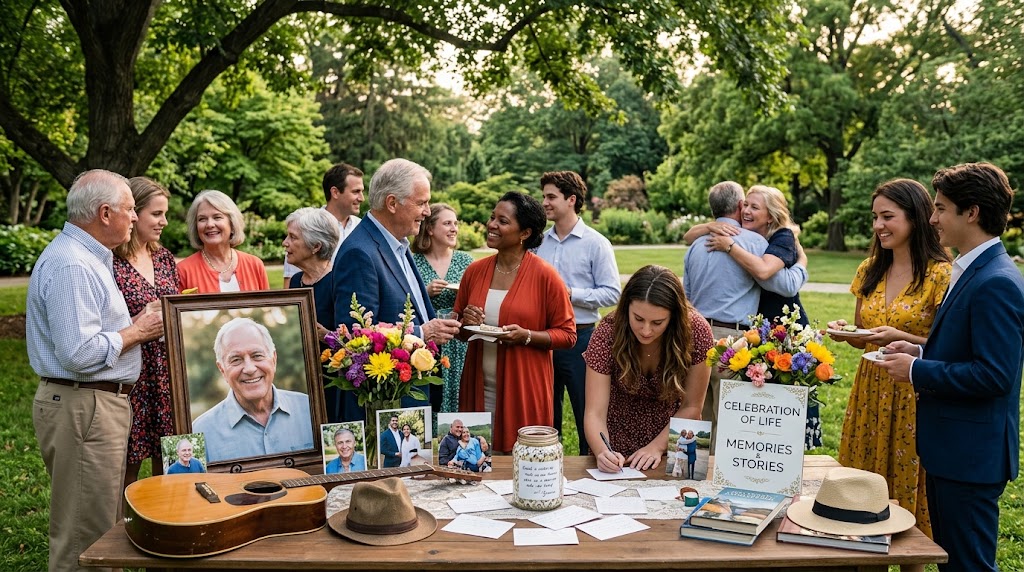
- Interactive Memory Tables: Set up curated tables featuring their favorite items—gardening tools, worn running shoes, guitars, painting palettes, or military medals. Place a decorative memory jar nearby with note cards where guests can write down their favorite memories.
- Personalized Music Playlists: Skip generic funeral music. Build a custom playlist featuring the songs they listened to on road trips, their favorite classic vinyl records, or the jazz tracks they cooked dinner to.
- Signature Food & Drink Stations: Serve foods that tell a story. If grandpa was known for his homemade apple pie or secret barbecue sauce, feature those treats prominently alongside recipe cards for guests to take home.
- Living Tribute Favors: Send guests home with small, symbolic gifts such as packets of wildflower seeds to plant in their home gardens, customized guitar picks, or personalized bookmarks featuring their favorite quotes.
Frequently Asked Questions (FAQs)
Here are answers to the most common questions families and attendees have about celebrations of life.
Can you have a celebration of life if you have a traditional burial?
Yes. Many families choose to hold a small, private committal service at the gravesite or cemetery for immediate relatives, followed by a larger, public celebration of life held later that afternoon or weeks afterward. The two formats are not mutually exclusive.
Is a celebration of life religious?
It can be, but it does not have to be. Unlike liturgical funeral masses that follow strict theological outlines, a celebration of life can be completely secular, broadly spiritual, or incorporate elements from specific faiths (such as a favorite psalm or a moment of silent prayer). The degree of religious content is entirely at the family’s discretion.
Who pays for a celebration of life?
Typically, the celebration of life is funded through the deceased’s estate, paid by the immediate family, or covered by a pre-need funeral insurance policy. Because these gatherings can be held at parks, private residences, or community spaces, they often cost considerably less than traditional mortuary packages.
Can people cry at a celebration of life?
Absolutely. Celebrating a person’s legacy does not mean erasing the pain of their absence. Grief and gratitude walk hand in hand. Guests should feel entirely comfortable shedding tears, expressing sorrow, and leaning on one another whenever emotion arises.