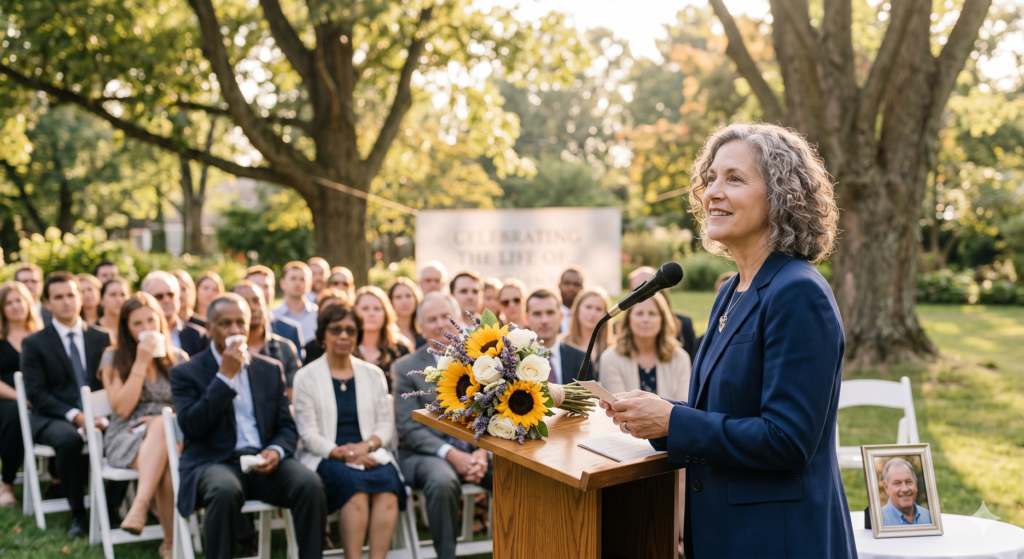
Standing in front of a room full of grieving family and friends to deliver the opening words for a celebration of life can feel overwhelming. When we lose someone we love, finding the perfect balance between honoring their memory and managing our own grief is an incredibly heavy task. You might be wondering exactly what to say at a celebration of life to set the right tone without breaking down.
Unlike a traditional, somber funeral service, a celebration of life is intentionally designed to focus on the joy, legacy, and unique personality of the person who has passed. The introductory remarks hold immense power: they give the audience permission to smile, laugh, cry, and remember. This comprehensive guide provides ready-to-use scripts, expert formatting tips, and structural advice to help you craft a meaningful celebration of life speech opening with confidence and grace.
What Are Opening Words for a Celebration of Life?
The opening words for a celebration of life are the initial remarks delivered by a host, family member, friend, or officiant that formally begin the memorial service. Their core purpose is to anchor the room, welcome the attendees, and explicitly define the intentional focus of the gathering.
In a traditional funeral, the opening remarks often adhere to rigid, formal liturgies focused on mourning and loss. In contrast, a celebration of life introductory statement shifts the paradigm. It establishes a warm, supportive atmosphere where grief is openly acknowledged, but the primary focus is steered toward gratitude for the time shared with the deceased. Ultimately, these opening lines act as a emotional roadmap, letting guests know that it is entirely acceptable to share lighthearted memories alongside their tears.
How to Start a Celebration of Life Speech
If you are tasked with writing a celebration of life script, you do not have to reinvent the wheel. A highly effective, comforting introductory speech can be constructed using a simple, four-step formula:
- Welcome the Guests: Begin by thanking everyone for their physical presence and emotional support. Acknowledging those who traveled from afar is a thoughtful touch. The tone of hospitality can even begin before the event through beautifully designed celebration of life invitations that set expectations early.
- State Your Relationship: Introduce yourself clearly. Briefly explain who you are and share your specific relationship to the person being honored so everyone in the room understands your connection.
- Acknowledge the Pain of Loss: Do not attempt to ignore or gloss over the sadness in the room. Acknowledge that losing this individual leaves a profound void in the lives of everyone present.
- Set the Intention: Clearly state the overarching purpose of the day. Invite the audience to shift their focus toward celebration, storytelling, and honoring a legacy of love and joy.
As guests walk into the venue and take in the environment—perhaps reflecting over personal photos on celebration of life poster board ideas or viewing customized celebration of life decorations—your opening words will formally bring them together, transitioning them from private contemplation into a shared communal experience.
Simple Opening Words for a Celebration of Life (Examples)
If you are looking for concise, direct, and universally fitting ways to begin the service, these short memorial service opening words can be used exactly as written or slightly adapted to match your needs.
“Welcome, everyone. Thank you for being here today as we gather to remember [Name]. Our hearts are heavy with their passing, but our primary goal today is to focus on the incredible life they lived and the love they left behind in each of us. Let us spend this afternoon sharing stories, leaning on one another, and celebrating a truly remarkable soul.”
“Good afternoon. Thank you all for coming together to honor [Name]. We are united today by our shared grief, but more importantly, we are united by our deep love for [him/her/them]. This service is a space to remember [Name]’s warmth, laugh, and enduring spirit. Thank you for bringing your memories here today.”
“Thank you all for being here today. As we look around this room, it is easy to see just how many lives [Name] touched. While we deeply mourn our loss, today we choose to celebrate the joy, adventure, and kindness they brought into our world. Thank you for helping us honor [his/her/them] today.”
Heartfelt Opening Speech Examples
When the atmosphere calls for a deeply emotional, reflective tone that emphasizes love, legacy, and long-term memory, a slightly extended opening script is highly effective. These templates work beautifully when learning how to start a eulogy or a larger tribute service.
“Family and friends, we come together today with sorrow in our hearts, but also with an overwhelming sense of gratitude. We are here to look back on a life that was beautifully and fully lived. [Name] had a rare gift for making everyone feel seen, loved, and valued. Though they are no longer physically with us, the legacy of their kindness lives on in this very room. Today is not about final goodbyes; it is about remembering the moments, the lessons, and the love that will stay with us forever.”
“Thank you for being here to wrap [Name]’s family in love during this difficult time. Grief can feel incredibly isolating, but looking out at all of you reminds us that we do not have to carry this sorrow alone. Today, we invite you to shed tears if you must, but also to smile when you remember [Name]’s unique spirit. Let us honor [him/her/them] by speaking [his/her/them] name, telling [his/her/them] stories, and keeping [his/her/them] memory vibrant and alive.”
Uplifting and Positive Opening Words
If your loved one explicitly requested a joyful, vibrant service, or if their personality was exceptionally bright, witty, and adventurous, your celebration of life speech opening should directly mirror that radiant energy.
“Hello everyone, and welcome! If [Name] were looking down on us right now, [he/she] would tell us to dry our eyes, grab a drink, and start telling jokes. [Name] lived life with wide-open arms and an infectious sense of joy. [He/She] didn’t want a room full of heavy hearts; [he/she] wanted a true party to celebrate the journey. So today, let’s honor [Name] the way [he/she] lived: with laughter, shared stories, loud music, and a deep appreciation for the time we were lucky enough to share.”
“Welcome to [Name]’s final victory lap! We are here today not to mourn a death, but to give profound thanks for a spectacular life. [Name] taught us how to love fiercely, laugh loudly, and appreciate the little things. While we will miss [him/her] terribly every single day, today is strictly dedicated to celebrating the indelible mark [he/she] left on our lives. Let’s make this an afternoon worthy of [Name]’s incredible legacy.”
Religious Opening Words
For families who draw profound strength from their spirituality or religious traditions, adding structured faith-centered language can bring deep comfort. These options focus heavily on peace, eternal rest, and divine comfort while remaining welcoming to all attendees.
“Family and friends, we come together today with sorrow in our hearts, but also with an overwhelming sense of gratitude. We are here to look back on a life that was beautifully and fully lived. [Name] had a rare gift for making everyone feel seen, loved, and valued. Though they are no longer physically with us, the legacy of their kindness lives on in this very room. Families may also preserve meaningful photos, letters, and personal items by creating a memorial shadow box as a lasting tribute. Today is not about final goodbyes; it is about remembering the moments, the lessons, and the love that will stay with us forever.”
“Thank you for gathering today to honor [Name]. We find comfort in our shared faith and the knowledge that love transcends the physical boundaries of this earth. As we celebrate the beautiful life [Name] lived, we ask for God’s grace, peace, and comforting presence to fill this room and heal our broken hearts.”
Opening Words for Different Roles
The specific words you choose to open a service should naturally align with your relationship to the deceased. Different roles require slightly distinct emotional boundaries and delivery structures.
For Family Members
As a family member, your tone should be highly personal and intimate. The audience understands that you are experiencing the deepest layer of grief. It is perfectly acceptable to speak directly from the heart and acknowledge the raw reality of the loss within your home. Keep your statements anchored to the love and support that surrounds your family unit.
For Friends
When a close friend delivers the opening remarks, the tone is typically more story-driven, warm, and communal. Friends often bridge the gap between the immediate family and the broader community of colleagues and acquaintances. You can reference specific shared adventures, unique personality quirks, or the foundational role the person played in your social circle.
For Officiants
Professional celebrants, pastors, or hired officiants should maintain a structured, guiding, and comforting tone. Your job is to serve as an empathetic master of ceremonies. An officiant’s opening remarks focus heavily on organizing the service flow, providing universal reflections on life and legacy, and extending formal hospitality to everyone gathered.

Tips for Delivering Opening Words
Public speaking is challenging under perfect conditions, but speaking while grieving requires extra preparation. Keep these practical tips in mind to ensure your delivery goes as smoothly as possible:
- Keep It Brief: Your opening remarks should generally run between 1 to 3 minutes. Their primary role is to set the stage and welcome the room, not to tell the person’s entire life history.
- Speak Slowly and Focus on Pacing: When nerves and adrenaline spike, we naturally tend to speed up. Intentionally force yourself to take deep breaths and pause between sentences.
- It Is Entirely Okay to Show Emotion: Do not feel pressured to be a stone wall. If your voice cracks or you need to pause to wipe away a tear, stop. The audience is completely on your side and shares your grief.
- Practice Out Loud: Reading a script silently in your head is completely different from speaking it aloud. Practice reading your text in front of a mirror or to a trusted friend a few times before the service.
Common Mistakes to Avoid
To keep the opening segments focused, polished, and comforting, try to steer clear of these common introductory pitfalls:
| Mistake | Why to Avoid It | What to Do Instead |
|---|---|---|
| Going Too Long | Exhausts the speaker early and disrupts the timing of the entire program. | Stick strictly to a 1–3 minute welcome frame. |
| Overly Formal Tone | Can make a celebration of life feel stiff, disconnected, or uncomfortably cold. | Use conversational language and warm words. |
| Chasing “Perfection” | Creates intense, unnecessary anxiety for an already grieving speaker. | Focus entirely on sincerity rather than flawless execution. |
Frequently Asked Questions
How long should opening words be?
Opening words should strictly be kept between 1 to 3 minutes long. Their main structural job is to greet the audience, acknowledge the loss, and state the celebratory goal of the service before handing the floor over to subsequent speakers or activities.
Can I read directly from a script?
Yes, absolutely. No one expects you to memorize your remarks during a time of deep personal loss. Write your speech out clearly in a large, easy-to-read font, or use clean bullet points on sturdy index cards so you can easily track your place.
What should I do if I get too emotional to finish?
Always have a backup plan. Designate a trusted friend or family member ahead of time who has a copy of your script. If you find yourself unable to continue, they can step up to the podium and smoothly finish reading your words for you.
Do I need to mention every family member by name?
No, you do not need to list every single family member in the brief opening remarks. Doing so can make the opening run far too long. Instead, use inclusive, warm phrases such as “On behalf of [Name]’s entire family, we want to thank you.”
Final Thoughts
When preparing the opening words for a celebration of life, remember that sincerity matters far more than a perfect public speaking performance. The individuals sitting in the room are not there to judge your delivery; they are there because they love the person you are honoring and want to support you.
By using these scripts as a supportive foundation, speaking openly from the heart, and focusing the room on a beautiful legacy, you will provide comfort to everyone present and set a wonderful tone for a memorable tribute.