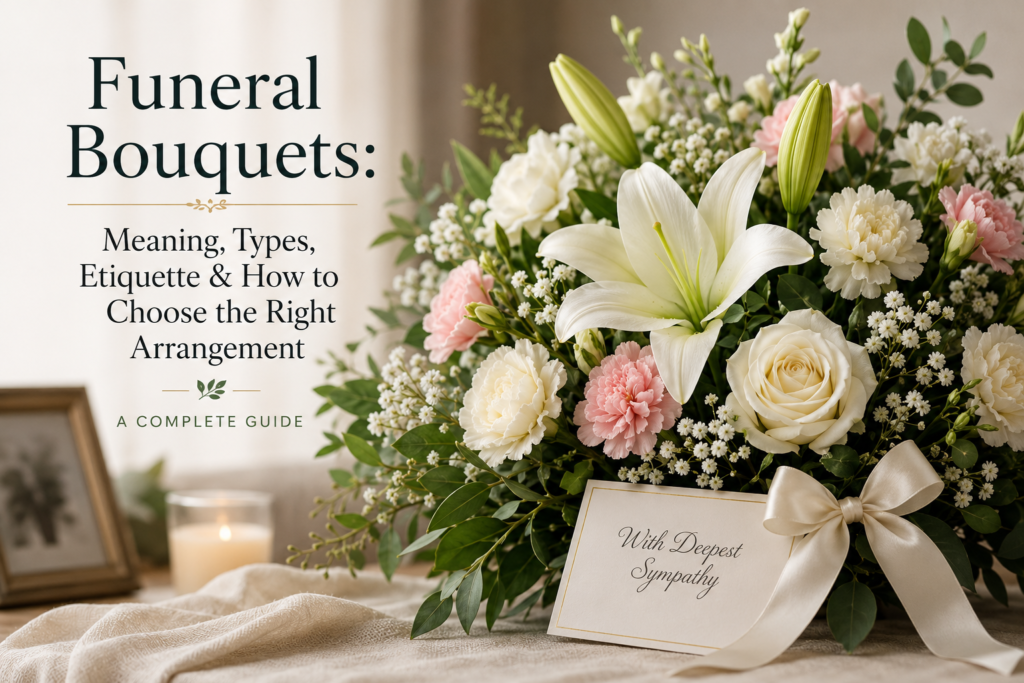
Funeral bouquets are a thoughtful way to express sympathy, honor a loved one, and bring a gentle sense of beauty to a funeral, memorial service, wake, graveside service, or celebration of life. When words feel difficult to find, flowers can offer comfort, remembrance, and quiet support to grieving family members.
Choosing the right funeral bouquets can feel overwhelming, especially if you are unsure which flowers are appropriate, what different colors mean, or where the bouquet should be sent. Some bouquets are meant for the funeral service itself, while others are better suited for the family’s home after a loss.
This guide explains what funeral bouquets are, common types of funeral flower bouquets, popular flower meanings, etiquette tips, message ideas, and how to choose an arrangement that feels respectful and meaningful.
Funeral bouquets can also be paired with other meaningful memorial items, such as printed funeral programs, remembrance cards, prayer cards, or keepsakes, to help create a tribute that truly honors your loved one’s life.
What Are Funeral Bouquets?
Funeral bouquets are floral arrangements used to honor someone who has passed away and show support to their family. They may be displayed at a funeral home, church, memorial venue, graveside service, or sent directly to the family’s home as a sympathy gesture.
A funeral bouquet can be simple or formal, depending on the type of service and the relationship you had with the person who passed. Some bouquets are arranged in vases or baskets, while others may be hand-tied, placed near a casket or urn, or used as part of a memorial table display.
Funeral bouquets are often chosen for:
- Traditional funeral services
- Memorial services
- Wakes and visitations
- Graveside services
- Celebrations of life
- Sympathy gifts sent to the family home
“A funeral bouquet does not need to be large or expensive to be meaningful. The most thoughtful arrangement is one chosen with care, respect, and the family’s wishes in mind.”
Why Funeral Bouquets Are Meaningful
Flowers have long been used to express emotions that are difficult to put into words. During a time of grief, funeral bouquets can represent love, respect, peace, remembrance, and support.
They can also help create a warm and comforting atmosphere during a funeral or memorial service. A simple bouquet placed beside a framed photo, guest book, urn, casket, or memorial program can make the space feel more personal and peaceful.
Funeral bouquets may also reflect the personality of the person being remembered. For example, a soft white bouquet may feel appropriate for a traditional service, while a colorful garden-style arrangement may be better suited for someone who loved bright flowers, nature, or celebrations of life.
Common Types of Funeral Bouquets
There are several types of funeral bouquets and sympathy flower arrangements to consider. The right choice often depends on where the flowers will be displayed and how close you were to the person or family.
Sympathy Bouquets
Sympathy bouquets are usually sent to the family’s home to offer comfort after a loss. These arrangements are often smaller and more personal than large funeral sprays or wreaths. They may include soft flowers, greenery, and a condolence card.
Funeral Service Bouquets
Funeral service bouquets are designed to be displayed at the funeral home, church, chapel, or memorial venue. These arrangements can be placed near the guest book table, memorial display, casket, urn, or entrance area.
Graveside Bouquets
Graveside bouquets are placed at the cemetery or burial site. These may be simple hand-tied arrangements, vase bouquets, or flowers chosen specifically for outdoor placement.
Memorial Bouquets
Memorial bouquets are often used for celebration of life services, photo tables, memory tables, or private family gatherings. They can be customized with meaningful colors, favorite flowers, or small keepsakes.
Handheld Bouquets
Some families choose handheld bouquets for close relatives to carry or place during the service. These may be used during a graveside ceremony, memorial ritual, or final farewell.
Best Flowers for Funeral Bouquets
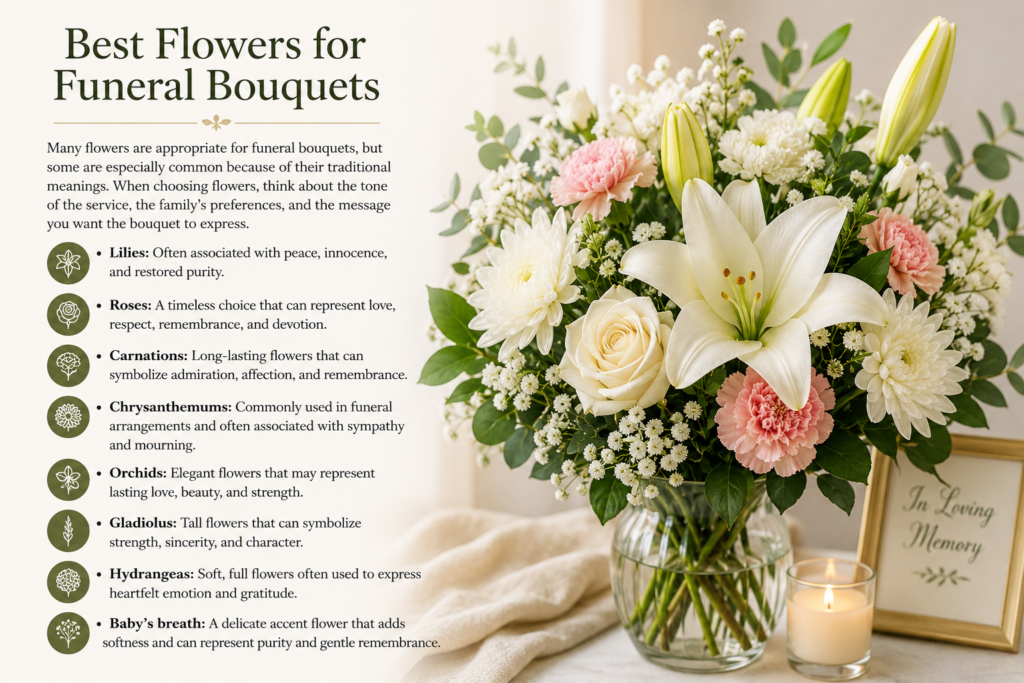
Many flowers are appropriate for funeral bouquets, but some are especially common because of their traditional meanings. When choosing flowers, think about the tone of the service, the family’s preferences, and the message you want the bouquet to express.
- Lilies: Often associated with peace, innocence, and restored purity.
- Roses: A timeless choice that can represent love, respect, remembrance, and devotion.
- Carnations: Long-lasting flowers that can symbolize admiration, affection, and remembrance.
- Chrysanthemums: Commonly used in funeral arrangements and often associated with sympathy and mourning.
- Orchids: Elegant flowers that may represent lasting love, beauty, and strength.
- Gladiolus: Tall flowers that can symbolize strength, sincerity, and character.
- Hydrangeas: Soft, full flowers often used to express heartfelt emotion and gratitude.
- Baby’s breath: A delicate accent flower that adds softness and can represent purity and gentle remembrance.
If you are unsure which flowers to choose, white lilies, roses, carnations, and soft greenery are usually safe and respectful options for traditional funeral bouquets.
Funeral Bouquet Color Meanings
Color can change the feeling of a funeral bouquet. Some families prefer soft, neutral tones, while others may welcome brighter colors that reflect the personality of their loved one.
| Flower Color | Common Meaning |
|---|---|
| White | Peace, purity, reverence, and remembrance. |
| Red | Deep love, respect, courage, and devotion. |
| Pink | Grace, gentleness, admiration, and affection. |
| Yellow | Friendship, warmth, and cherished memories. |
| Purple | Dignity, honor, spirituality, and respect. |
| Blue | Calm, peace, comfort, and quiet reflection. |
For a traditional service, white funeral flowers or soft pastel bouquets are usually appropriate. For a celebration of life, brighter flowers may be fitting if they reflect the loved one’s personality or the family’s wishes.
How to Choose the Right Funeral Bouquet
Choosing the right funeral bouquet is not only about selecting beautiful flowers. It is also about choosing an arrangement that feels appropriate for the service, respectful to the family, and meaningful to the person being honored.
Helpful things to consider include:
- Choose flowers that reflect the person’s personality or favorite colors.
- Consider the family’s culture, religion, or personal preferences.
- Think about where the bouquet will be displayed.
- Use soft, respectful colors for a traditional funeral service.
- Choose brighter flowers only if they suit the tone of the service.
- Include a short sympathy message with the arrangement.
If the bouquet will be placed near a memorial table, it can also be coordinated with other tribute items such as framed photos, candles, printed programs, or funeral prayer cards.
Funeral Bouquet Etiquette
Funeral flower etiquette can vary depending on the family, culture, faith, and type of service. In most cases, sending funeral bouquets is considered a kind and respectful gesture. However, it is always wise to check the obituary, funeral announcement, or family instructions before ordering flowers.
General funeral bouquet etiquette includes:
- Send flowers to the funeral home, church, cemetery, or family home as instructed.
- Choose a bouquet that matches your relationship to the person or family.
- Close family members may choose larger or more personal arrangements.
- Friends, coworkers, and extended relatives often send sympathy bouquets or smaller arrangements.
- Respect requests for donations instead of flowers.
- Avoid overly casual, humorous, or very bright arrangements unless you know they are welcome.
If you are sending flowers along with another gift, it may help to read more about things to consider when sending a sympathy gift so your gesture feels thoughtful and appropriate.
What to Write on a Funeral Bouquet Card
A funeral bouquet card does not need to be long. A short, heartfelt message is often enough to show your care and support. Try to keep the message warm, respectful, and sincere.
Examples of funeral bouquet messages include:
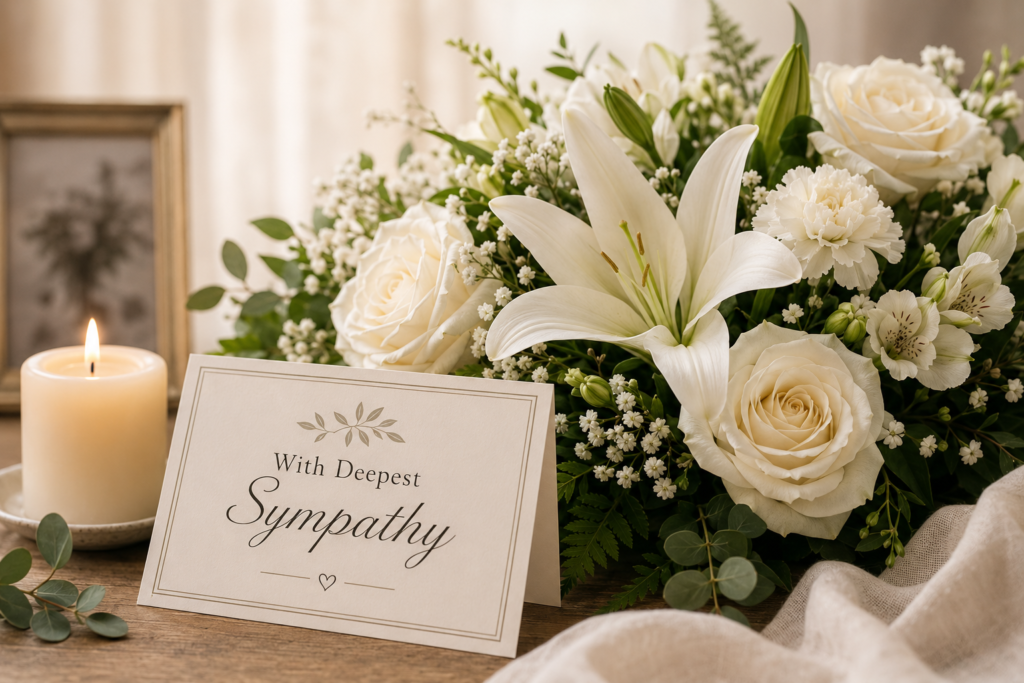
- With deepest sympathy.
- Thinking of you and your family during this difficult time.
- In loving memory of [Name].
- Wishing you peace and comfort.
- Forever remembered and deeply loved.
- Our hearts are with you.
- May beautiful memories bring you comfort.
If you need more wording inspiration, you can also read HonorYou’s guide on funeral messages for thoughtful examples that can be used in cards, programs, and sympathy notes.
Funeral Bouquets vs. Funeral Wreaths and Sprays
Funeral bouquets, wreaths, and sprays are all common types of funeral flower arrangements, but they are used in slightly different ways.
- Funeral bouquets are usually smaller and more versatile. They can be sent to the home, placed on a memorial table, or displayed at the service.
- Funeral wreaths are circular arrangements that often symbolize eternal life, remembrance, and continuity.
- Funeral sprays are larger arrangements often displayed on stands or placed near the casket. Selecting a dignified and beautifully arranged funeral spray is an elegant way for close friends, relatives, or colleagues to make a meaningful visual tribute at a traditional service.
Bouquets are often a practical choice if you want something meaningful but not too large. They are also easier for families to take home after the service.
For more inspiration, you may want to explore funeral flower arrangement ideas before choosing the final bouquet style.
Can Funeral Bouquets Be Personalized?
Yes. Funeral bouquets can be personalized in many subtle and meaningful ways. Personalization can help the arrangement feel more connected to the person being remembered.
Personalized funeral bouquet ideas include:
- Using the loved one’s favorite flowers
- Choosing colors connected to their personality or interests
- Adding a ribbon with their name or a short message
- Including small keepsakes or photo charms
- Matching the bouquet to the theme of a celebration of life
- Pairing flowers with a framed photo, candle, or memorial card
Personal details do not need to be elaborate. Even choosing a flower that your loved one grew in their garden or a color they often wore can make the bouquet feel more special.
Funeral Bouquet Ideas
If you are unsure where to start, these funeral bouquet ideas can help you choose an arrangement that feels appropriate for the occasion.
| Bouquet Idea | Best For |
|---|---|
| Classic white lily and rose bouquet | Traditional funeral services and formal memorials. |
| Soft pink rose and carnation bouquet | Gentle sympathy flowers for family members or close friends. |
| Blue and white sympathy bouquet | A peaceful arrangement that expresses calm and comfort. |
| Red rose memorial bouquet | Honoring a spouse, partner, parent, or someone deeply loved. |
| Wildflower celebration of life bouquet | A more colorful service that reflects joy, nature, and personality. |
| Simple white orchid bouquet | An elegant and understated tribute. |
When planning a celebration of life, flowers can also be coordinated with photos, memory tables, printed keepsakes, and celebration of life decorations to create a warm and personal setting.
Final Thoughts
Funeral bouquets are a meaningful way to honor a loved one and show support to a grieving family. Whether you choose white lilies, soft roses, peaceful blue flowers, or a personalized bouquet filled with favorite blooms, the most important thing is the care behind the gesture.
A thoughtful funeral bouquet can bring comfort, beauty, and remembrance to a difficult moment. By considering the family’s wishes, the tone of the service, flower meanings, and proper etiquette, you can choose an arrangement that feels respectful and heartfelt.
Funeral bouquets can also be paired with other meaningful memorial items, such as printed funeral programs, remembrance cards, prayer cards, or keepsakes, to help create a tribute that truly honors your loved one’s life.
Frequently Asked Questions
What flowers are best for funeral bouquets?
Lilies, roses, carnations, chrysanthemums, orchids, gladiolus, and hydrangeas are all common choices for funeral bouquets. White flowers are often used for traditional services, while softer colors or favorite flowers can add a personal touch.
What color bouquet is appropriate for a funeral?
White is one of the most traditional funeral flower colors because it represents peace, purity, and reverence. Soft pink, blue, purple, and cream arrangements are also appropriate. Brighter colors may be suitable for a celebration of life if the family welcomes them.
Can I send a funeral bouquet to the family’s home?
Yes. Sympathy bouquets are often sent to the family’s home before or after the funeral. This can be a thoughtful way to show support, especially if you cannot attend the service in person.
What should I write on a funeral bouquet card?
A short message such as “With deepest sympathy,” “Thinking of you and your family,” or “In loving memory of [Name]” is appropriate. Keep the message sincere, gentle, and respectful.
Are funeral bouquets different from sympathy bouquets?
Funeral bouquets are usually displayed at the funeral, memorial, wake, or graveside service. Sympathy bouquets are often sent to the family’s home as a gesture of comfort. However, the terms are sometimes used interchangeably.
Should I send flowers if the family asks for donations instead?
If the family requests donations instead of flowers, it is best to respect their wishes. You may still send a card or message of support, but the donation should be prioritized if that is what the family requested.