Planning a funeral involves many emotional and financial decisions, and one of the most significant expenses families face is purchasing a casket. If you have recently lost a loved one or are pre-planning your own arrangements, understanding how much a casket costs is essential for creating a realistic budget and avoiding unnecessary stress during a difficult time.
The average cost of a casket can vary wildly based on the material, the design, and where you choose to purchase it. By familiarizing yourself with the current funeral casket prices and the options available, you can confidently navigate the buying process and find a fitting resting place that aligns with your financial needs.
As you begin exploring your options, you may also find it helpful to look into how casket styles and manufacturing have changed over time. Discover more about the evolution of casket design throughout the years to better understand modern materials and choices.
How Much Does a Casket Cost? (Quick Answer)
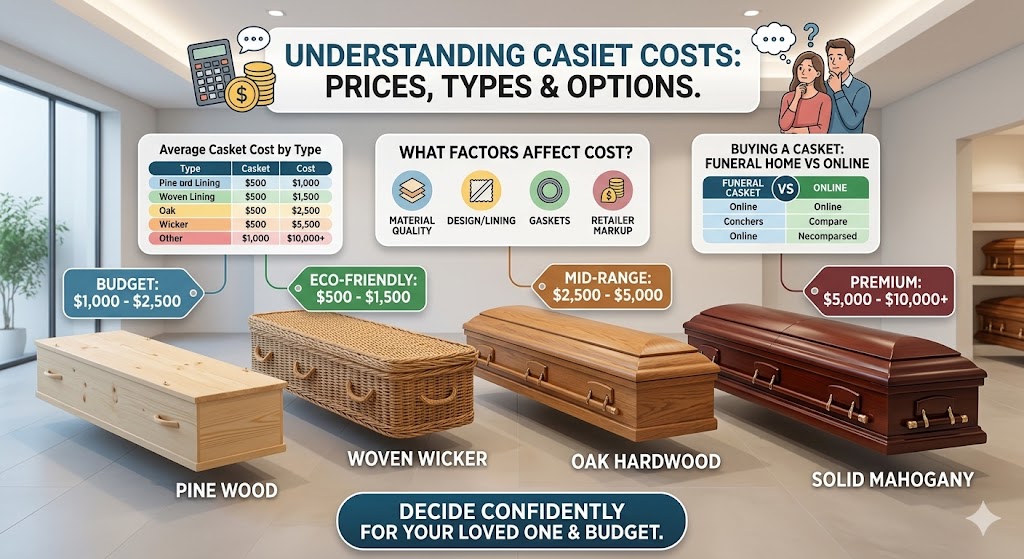
For those in immediate need of pricing, the cost of a casket generally falls into three main tiers depending on the quality of the materials and the retailer markup.
Typical Casket Price Ranges:
• Budget (Cardboard, Pine, 20-Gauge Steel): $1,000 – $2,500
• Mid-Range (18-Gauge Steel, Oak, Hardwood Veneers): $2,500 – $5,000
• Premium (Bronze, Copper, Solid Mahogany): $5,000 – $10,000+
While the average person typically spends around $2,500 on a standard metal or wood casket, knowing the specifics of what you are paying for can help you make the best decision for your circumstances.
Average Casket Cost by Type
The most significant factor influencing funeral casket prices is the material. Whether you are comparing metal vs wood casket cost or looking for something entirely different, here is a breakdown of what you can expect to spend.
Metal Caskets (Steel, Stainless Steel, Copper, Bronze)
Metal caskets are highly popular due to their durability, variety of finishes, and protective features (such as rubber gaskets designed to resist the elements). The price of a metal casket depends heavily on the thickness of the metal, known as its “gauge.”
- 20-Gauge Steel: Often the most cheapest casket options in the metal category, starting around $1,000 to $2,000. It is the thinnest steel option but still highly durable.
- 18-Gauge Steel: Thicker and heavier than 20-gauge, usually priced between $2,000 and $3,500.
- Stainless Steel: Rust-resistant and long-lasting, typically costing between $3,000 and $5,000.
- Copper and Bronze: These are premium, non-rusting metals. Because they are sold by weight rather than gauge, they are considered luxury options, ranging from $4,000 to well over $10,000.
Wood Caskets (Pine, Oak, Mahogany, Walnut)
Wood caskets offer a warm, traditional aesthetic and are crafted with the same care as fine furniture. Prices vary dramatically based on the rarity and quality of the wood.
- Softwoods (Pine, Poplar, Willow): These are beautiful but more affordable, generally ranging from $1,000 to $2,500.
- Hardwoods (Oak, Maple, Cherry): Known for distinct grain patterns and durability, these mid-range caskets cost between $2,500 and $4,500.
- Luxury Woods (Mahogany, Walnut): Highly polished and impeccably crafted, these premium caskets start around $4,500 and can exceed $8,000.
Eco-Friendly Caskets
As green burials become a growing trend, eco-friendly caskets are surging in popularity. These caskets are fully biodegradable, avoiding metals, toxic glues, and synthetic linings. Materials include bamboo, woven wicker, and heavy-duty cardboard. These are incredibly affordable, generally costing between $500 and $1,500.
Cremation Caskets (Alternative Containers)
If the deceased is being cremated, a heavy metal or solid wood casket is unnecessary. Instead, funeral homes use cremation caskets or “alternative containers” made of heavy cardboard, pressed wood, or canvas. These are designed specifically to be combustible and cost between $100 and $600.
Before purchasing a casket, it is important to understand the full scope of your area’s pricing. For instance, if you live in the Northeast, reading up on the average funeral costs in New Jersey can help you frame your budget appropriately.
What Factors Affect the Cost of a Casket?
Beyond the base material, several other variables play a major role in the final price tag of a casket:
- Design and Craftsmanship: Hand-carved details on wood or brushed finishes on metal will increase the cost.
- Interior Lining: Standard caskets use polyester or crepe linings, while premium caskets feature high-end velvet, silk, or satin interiors.
- Gaskets and Seals: A “sealed” or “protective” casket has a rubber gasket to keep out water and dirt. This feature adds several hundred dollars to the price, though it is not legally required.
- Brand and Retailer Markup: A casket purchased directly from a funeral home will almost always have a higher markup than one purchased from a third-party retailer.
Buying a Casket: Funeral Home vs Online
When families ask, “How much does a casket cost?”, the answer is heavily dependent on where they buy it. You have two main options: buy casket online vs funeral home.
Funeral Home Pricing
Purchasing directly from the funeral home offers unmatched convenience. The funeral director handles the delivery, storage, and setup. However, this convenience comes at a premium. Funeral homes typically mark up casket prices significantly to cover their operational overhead.
Buying Online
Thanks to the FTC’s Funeral Rule, funeral homes are legally required to accept any casket you purchase from a third-party vendor without charging you a handling fee. Buying a casket online from retailers or big-box stores (like Costco or Walmart) can save you anywhere from 30% to 50% compared to showroom prices.
Are Expensive Caskets Worth It?
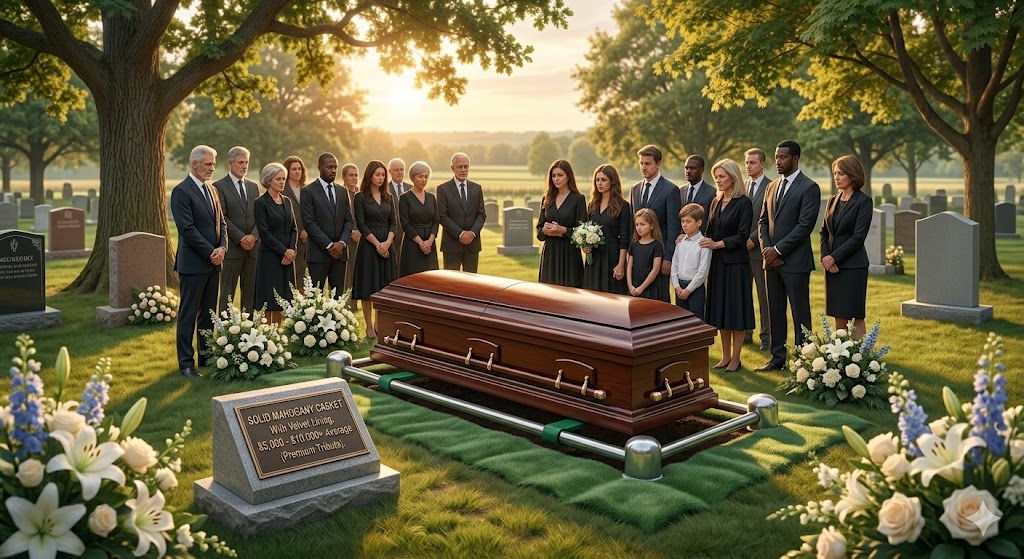
Deciding whether an expensive casket is worth the cost is an entirely personal decision. Some families view a high-end bronze or mahogany casket as a final, beautiful tribute to their loved one. Certain cultural or religious traditions may also dictate the style of the burial container.
However, from a practical standpoint, no casket will preserve a body forever. If budget realities are tight, it is perfectly acceptable to choose a modest, dignified casket and allocate those funds toward creating a more meaningful memorial service.
Ways to Save Money on a Casket
If you are looking for ways to keep funeral costs manageable, consider the following tips:
- Compare Prices: Always ask the funeral home for their General Price List (GPL) and Casket Price List before making a decision.
- Consider Alternative Materials: Opt for a 20-gauge steel or a softwood pine over premium metals and hardwoods.
- Buy Online: Exercise your right to purchase a third-party casket and have it delivered directly to the funeral home.
- Avoid Unnecessary Add-Ons: Skip the “protective seals” or memory drawers if they stretch your budget too thin.
Saving money on the casket allows you to invest in beautiful, personalized touches for the service itself. We highly recommend exploring affordable funeral programs and tips for budget-friendly designs to create a stunning tribute without overspending.
Casket vs Coffin: What’s the Difference?
Many people use the terms interchangeably, but a casket and a coffin are actually different. A casket is rectangular with a hinged lid, which is the standard choice in North America. A coffin is hexagonal, wider at the shoulders and tapering toward the feet (think of the classic shape seen in older movies). Because coffins use less material and lack complex hinged lids, they are often slightly cheaper, though they are much harder to find in the United States.
Do You Need a Casket for Burial or Cremation?
If you are opting for a traditional burial, a casket is generally required by the cemetery, along with a burial vault or grave liner to keep the ground from settling. However, if you are choosing cremation, you do not need to buy a traditional casket. Depending on the different types of funeral services you are considering, you can either rent a casket for the viewing or use a highly affordable cremation container.
FAQs
What is the cheapest casket available?
The absolute cheapest options are alternative cremation containers (heavy cardboard) which cost around $100 to $300. For a traditional burial, cloth-covered wood or simple pine caskets are the most affordable, typically starting around $800 to $1,200.
Can you rent a casket?
Yes. If you are having a traditional viewing but plan to cremate the body afterward, many funeral homes offer rental caskets. You pay a rental fee (usually $750 to $1,500) to use a beautiful outer wooden casket, while the body rests inside a removable, combustible insert that is later used for the cremation.
Why are caskets so expensive?
Caskets are expensive due to the materials, the heavy craftsmanship involved, and the logistics of transporting such large items. Furthermore, funeral homes apply a retail markup to cover the overhead costs of operating their facilities and keeping inventory on hand.
Is it cheaper to buy a casket online?
Yes, buying a casket online is almost always cheaper. Online retailers do not have the same massive overhead costs as brick-and-mortar funeral homes, allowing them to pass savings of up to 50% down to the consumer.
Final Thoughts
Deciding on a casket is an important step in honoring your loved one, but it should never cause financial distress. By understanding how much a casket costs and knowing your legal rights to shop around, you can make informed decisions that strike a beautiful balance between honoring their memory and respecting your family’s budget.
Create a Lasting and Meaningful Tribute
No matter what type of casket you choose, the most enduring part of any memorial is the memories you share. Enhance your loved one’s service with custom funeral programs, prayer cards, and keepsakes designed to celebrate their unique legacy.