
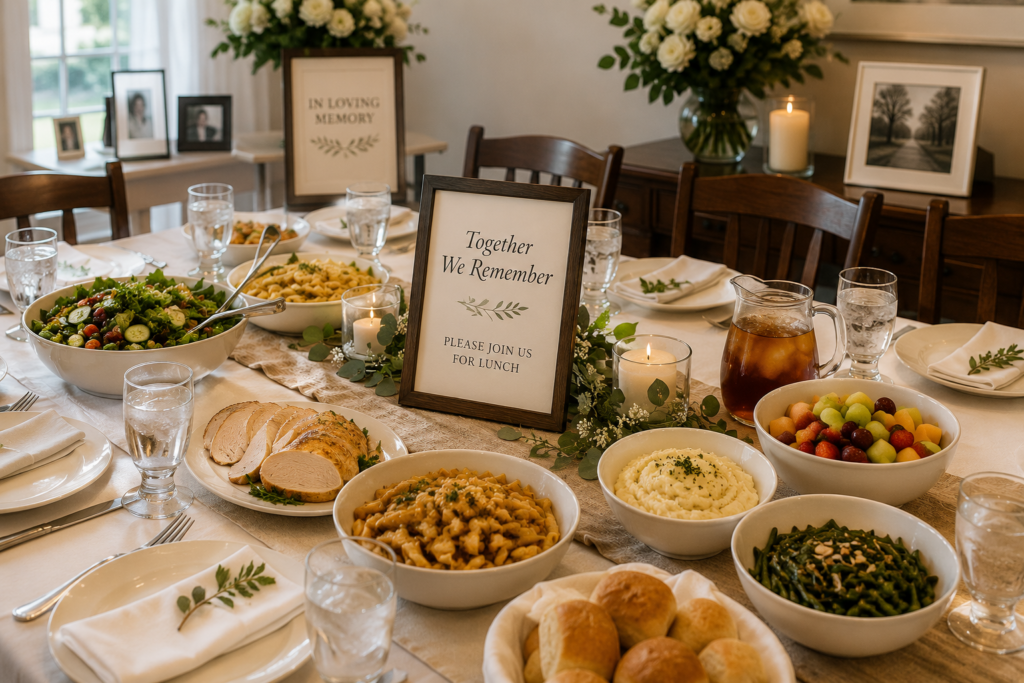
Food often brings people together after a funeral, burial, memorial service, or celebration of life. Sharing a meal gives mourners a place to rest, offer condolences, reconnect with relatives, and remember the person who has died in a less formal setting.
Funeral food does not need to be elaborate. Simple, familiar dishes that are easy to serve, store, and reheat are often the most helpful choices. Sandwiches, casseroles, chicken, salads, rolls, desserts, coffee, and water can provide comfort without creating additional stress for the family.
Funeral-food customs differ between cultures, religions, regions, and families. The right menu will depend on the venue, guest count, budget, time of day, dietary requirements, and traditions of the person being honored.
Families managing other service details may also find HonorYou’s complete funeral planning guide helpful.
What Is Funeral Food?
Funeral food includes the meals, snacks, desserts, and drinks served before, during, or after a funeral-related gathering.
It may be provided at:
- A funeral-home reception
- A family residence
- A church hall
- A community center
- A restaurant
- A cemetery gathering
- A memorial service
- A celebration of life
- A funeral repast
The food may range from coffee and small pastries to a full buffet or catered meal. Some families serve traditional comfort food, while others choose a favorite dish or recipe associated with the deceased.
The purpose is not to impress guests. It is to make gathering easier and provide practical support during an emotionally demanding day.
“A simple meal can give grieving relatives and friends a place to pause, share memories, and support one another after the service.”
What Is a Funeral Repast?
A funeral repast is a meal or gathering held after a funeral, burial, or memorial service.
It gives family members and guests time to:
- Share memories of the deceased
- Offer condolences
- Rest after the formal service
- Reconnect with relatives and friends
- Continue honoring the deceased
- Provide support to the immediate family
Depending on the family or community, the gathering may also be called a funeral reception, funeral luncheon, repast meal, post-funeral gathering, or memorial meal.
A repast can be formal or informal. It may include a catered buffet, a church luncheon, a restaurant meal, or food prepared by family members and friends.
What Food Is Traditionally Served After a Funeral?
Traditional food for a funeral is usually comforting, familiar, and suitable for serving to a group. Dishes that can be prepared in advance or reheated are especially practical.
Common funeral reception food includes:
- Casseroles
- Baked pasta
- Sandwich trays
- Fried or roasted chicken
- Ham or turkey
- Meatballs
- Soup and bread
- Potato, pasta, or green salads
- Vegetable side dishes
- Bread and dinner rolls
- Cakes, cookies, and brownies
- Coffee, tea, water, and soft drinks
No single menu is appropriate for every funeral. Families should consider their own religious, cultural, and regional traditions rather than feeling obligated to serve a particular dish.
Best Funeral Food Ideas
The best funeral food ideas are dishes that can be prepared efficiently, served without complicated equipment, and enjoyed by a wide range of guests.
Sandwiches and Wraps
Funeral sandwiches are popular because they are easy to prepare, transport, refrigerate, and serve. Guests can take a small portion without needing a formal place setting.
Options include:
- Turkey and cheese sandwiches
- Ham and cheese sandwiches
- Chicken salad sandwiches
- Tuna sandwiches
- Egg salad sandwiches
- Vegetable wraps
- Finger sandwiches
- Mini rolls and sliders
Offer at least one meat-free option and label sandwiches clearly when they contain common allergens.
Casseroles and Baked Dishes
Funeral casseroles are useful because many can be prepared in advance and reheated when guests arrive.
Comforting options include:
- Baked ziti
- Lasagna
- Macaroni and cheese
- Chicken and rice casserole
- Shepherd’s pie
- Funeral potatoes
- Vegetable casserole
- Baked chicken dishes
When bringing a casserole to a grieving family, include reheating instructions and indicate whether the dish can be frozen.
Meat and Main-Dish Options
Choose main dishes that are easy to portion and do not require complicated carving or plating.
Suitable choices include:
- Roasted chicken
- Fried chicken
- Sliced ham
- Turkey
- Meatballs
- Pulled pork
- Beef stew
- Fish dishes when culturally or religiously appropriate
Pre-sliced or individually portioned food is often easier for a buffet than large cuts of meat.
Side Dishes
Side dishes can add variety without making the menu too complicated.
Common options include:
- Mashed potatoes
- Rice
- Pasta salad
- Green salad
- Coleslaw
- Roasted vegetables
- Green beans
- Corn
- Potato salad
- Dinner rolls
Choose a combination of hot and cold sides so the menu remains manageable if oven or refrigerator space is limited.
Soups and Light Meals
Soup works well for a smaller gathering or a funeral held during colder weather.
Options include:
- Chicken noodle soup
- Vegetable soup
- Tomato soup
- Lentil soup
- Beef stew
- Chili
Serve soup with bread, rolls, crackers, or simple sandwiches. Make sure appropriate bowls, spoons, and serving utensils are available.
Funeral Desserts
Funeral desserts should be easy to cut, carry, and serve.
Practical choices include:
- Sheet cake
- Pound cake
- Brownies
- Cookies
- Cupcakes
- Fruit platters
- Pies
- Banana pudding
- Rice pudding
- Cheesecake squares
A favorite dessert of the deceased can add a meaningful personal touch to the reception.
Drinks
Provide a small selection of familiar beverages:
- Water
- Coffee
- Tea
- Soft drinks
- Juice
- Lemonade
Water should always be readily available. Coffee and tea are particularly useful for longer gatherings.
Alcohol should only be served when it is permitted by the venue and appropriate for the family, religion, culture, and type of memorial.
Easy Funeral Food for a Large Group
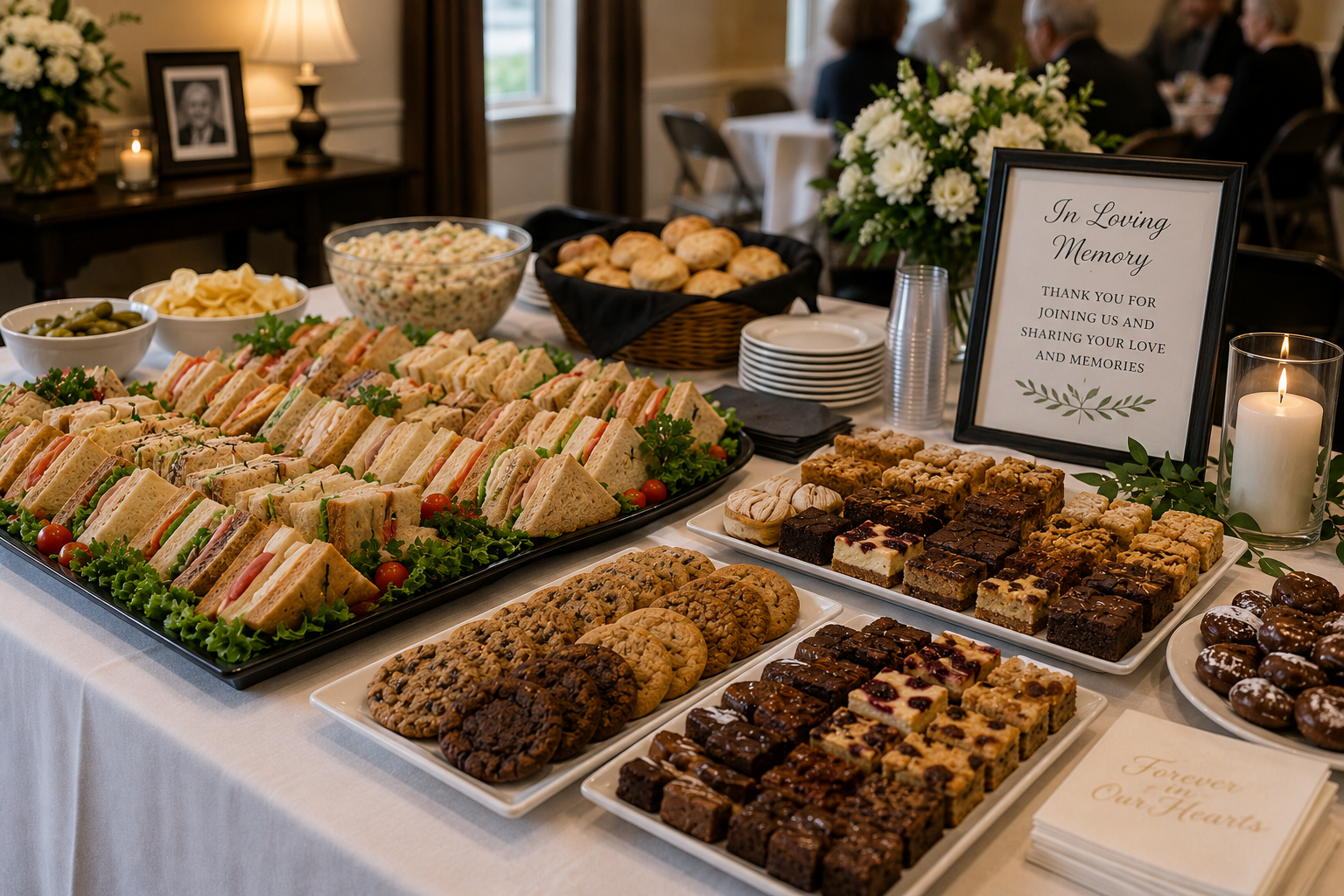
When planning food for a large group, simplicity is important. A buffet is often easier than a plated meal because guests can eat at different times and choose portions that suit them.
Useful large-group options include:
- Sandwich platters
- Pasta trays
- Fried or roasted chicken pieces
- Large salads
- Dinner rolls
- Casseroles
- Sheet cakes
- Cookie trays
- Coffee stations
- Bottled water
Use dishes that can be replenished in smaller amounts rather than placing all food out at once. This can help maintain food safety and keep the serving area organized.
For a large funeral reception, a simple buffet with two main options, several sides, dessert, and drinks is often easier to manage than an elaborate menu.
Affordable Funeral Food Ideas
A respectful funeral meal does not have to be expensive. Budget-conscious food can still be comforting and satisfying.
Affordable options include:
- Pasta dishes
- Rice dishes
- Soup and bread
- Sandwich trays
- Baked potatoes
- Homemade casseroles
- Seasonal fruit
- Sheet cake
- Coffee and tea
- Potluck contributions
Churches, relatives, employers, and community groups may be willing to provide food, serving supplies, setup, or cleanup assistance.
Disposable serving trays and recyclable plates can reduce cleanup, but check whether the venue has specific waste or catering requirements.
Funeral Food for a Small Gathering
A small gathering may only need:
- One main dish
- Two side dishes
- Bread or rolls
- One dessert
- Coffee, tea, and water
A simple example menu could include:
- Baked chicken
- Mashed potatoes
- Green beans
- Dinner rolls
- Sheet cake
- Coffee and water
A smaller menu reduces waste and allows the family to focus on guests rather than managing several dishes.
Funeral Buffet Menu Ideas
Sample menus can make funeral meal planning easier.
Traditional Funeral Buffet
- Fried or roasted chicken
- Macaroni and cheese
- Green beans
- Potato salad
- Dinner rolls
- Sheet cake
- Coffee and tea
Simple Cold Buffet
- Sandwich platter
- Pasta salad
- Garden salad
- Fruit tray
- Cookie tray
- Water and soft drinks
Comfort-Food Buffet
- Lasagna
- Garlic bread
- Green salad
- Roasted vegetables
- Brownies
- Coffee and tea
Light Memorial Reception
- Finger sandwiches
- Mini quiches
- Cheese and crackers
- Fruit
- Cupcakes
- Tea and lemonade
Food for a Wake or Visitation
Wake food is often lighter than food served at a full funeral luncheon. Guests may be standing, moving between rooms, or arriving at different times.
Suitable wake food ideas include:
- Finger sandwiches
- Cheese and crackers
- Vegetable trays
- Fruit trays
- Cookies
- Small pastries
- Coffee and tea
- Bottled water
Avoid messy food or meals that require knives, large plates, or complicated serving equipment unless adequate seating and staff are available.
HonorYou’s guide to what happens at a wake explains how this gathering may differ from a viewing or funeral service.
Food for a Celebration of Life
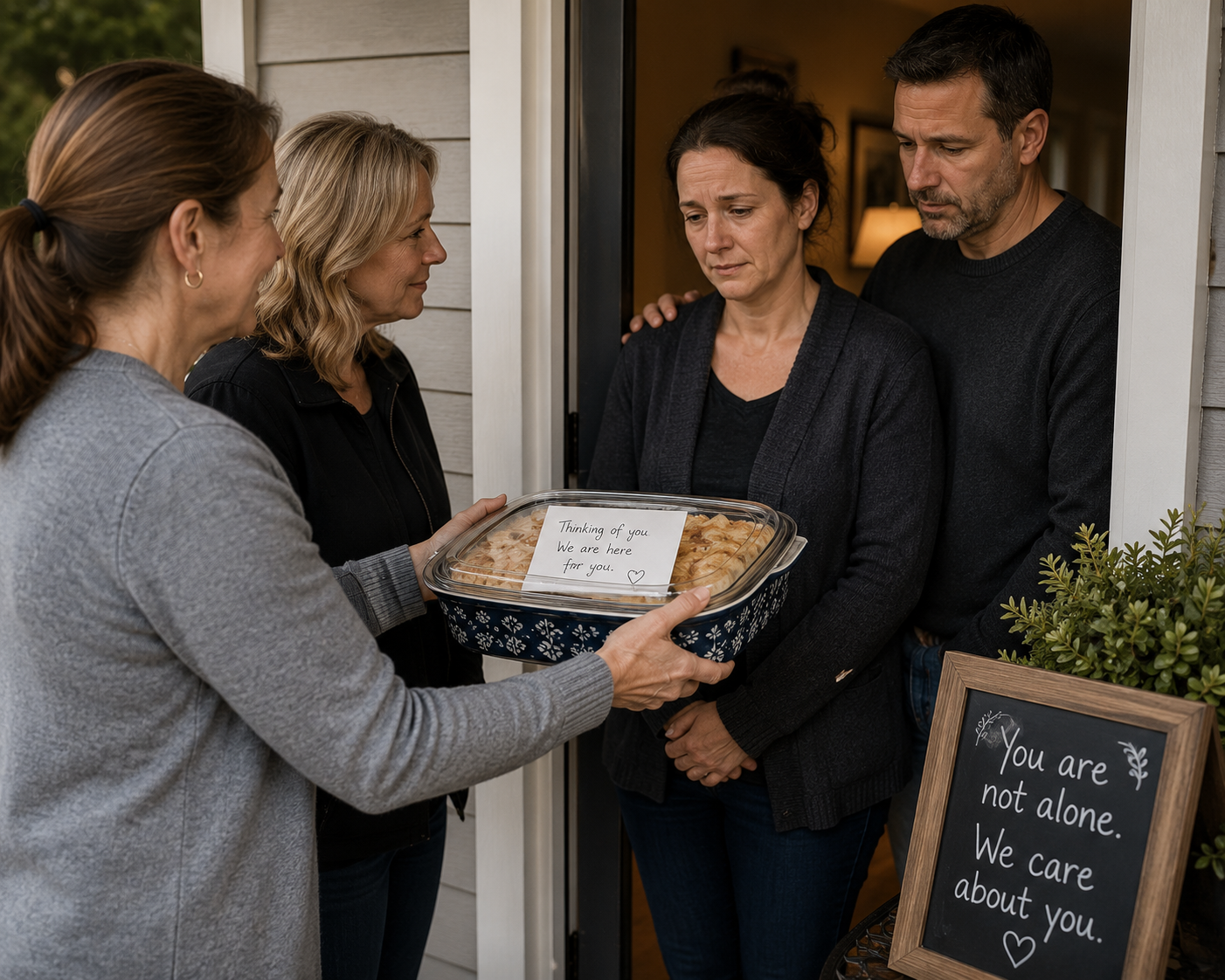
Celebration-of-life food can be more personalized than a traditional funeral luncheon.
Ideas include:
- The deceased’s favorite meal
- A favorite family recipe
- Regional dishes
- A barbecue
- A brunch buffet
- Afternoon tea
- A dessert table
- A menu connected to the person’s heritage
- Food inspired by a hobby, hometown, or family tradition
The menu should still be easy to serve and suitable for the expected number of guests.
Families planning a personalized gathering may also find HonorYou’s guide to celebration of life decorations useful.
Cultural and Religious Funeral-Food Traditions
Funeral-food traditions vary widely between families, faiths, and communities.
Examples may include:
- Church luncheons
- Jewish shiva meals
- Irish wake food
- African American funeral repasts
- Italian funeral meals
- Caribbean funeral dishes
- Southern funeral food
- Muslim condolence meals
- Hindu mourning meals
- Greek memorial foods
These descriptions are broad examples rather than universal rules. Customs may differ even within the same religion or cultural community.
When uncertain, ask relatives, clergy members, or community leaders which foods are appropriate and whether particular ingredients should be avoided.
What Food Should You Bring to a Grieving Family?
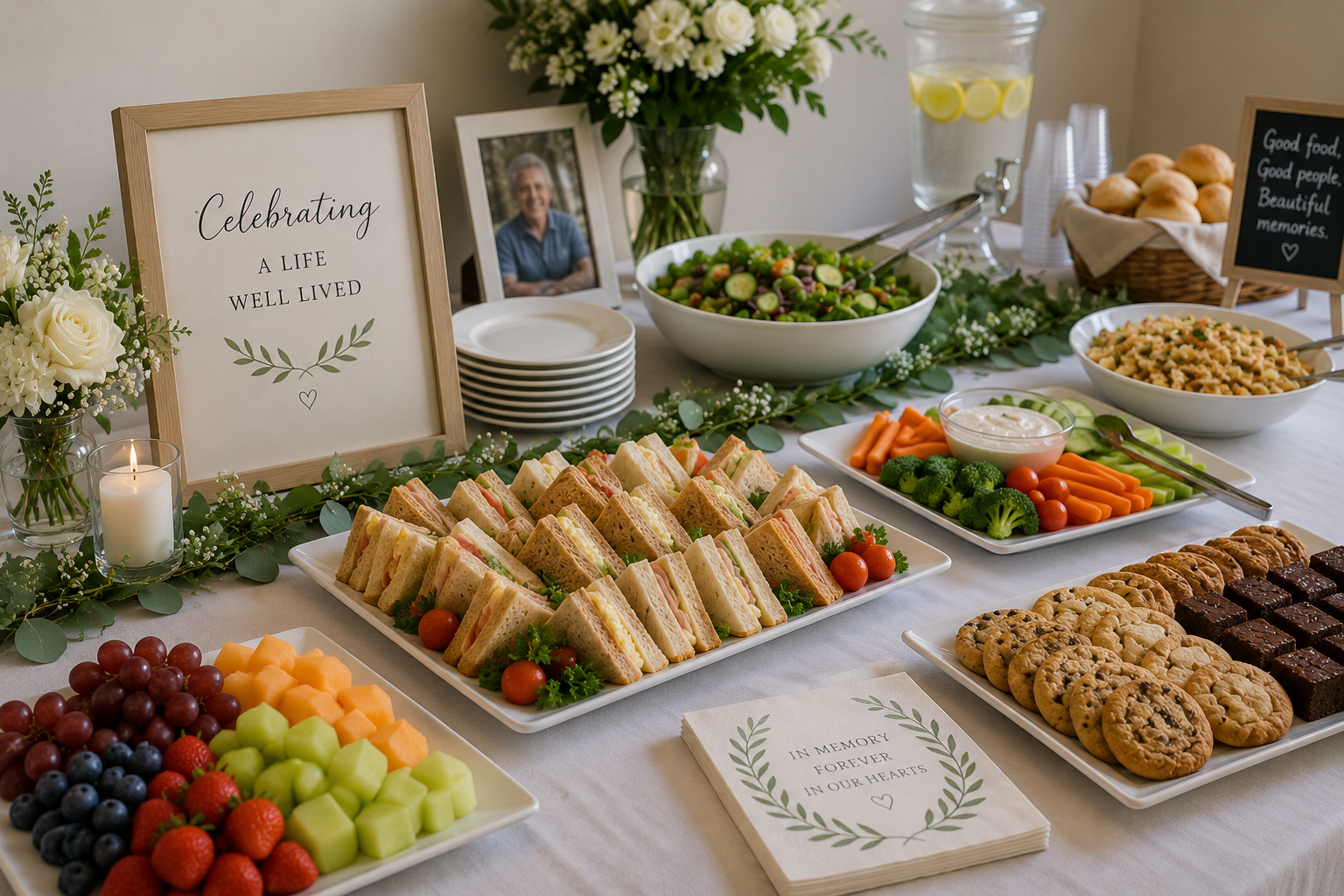
Food for a grieving family should be easy to store, freeze, reheat, or eat with minimal preparation.
Helpful options include:
- Lasagna
- Soup
- Casseroles
- Roasted chicken
- Sandwich ingredients
- Bread and rolls
- Breakfast foods
- Fresh fruit
- Individually packaged snacks
- Freezer meals
- Restaurant or grocery-store gift cards
Before delivering food:
- Ask about allergies and dietary restrictions.
- Confirm whether the family has refrigerator or freezer space.
- Use a disposable or clearly labeled container.
- Include reheating instructions.
- State whether the meal can be frozen.
- Do not expect the container to be returned quickly.
A gift card may be more useful than a prepared meal when the family has already received a large amount of food.
Funeral Food Etiquette
Thoughtful funeral-food etiquette can prevent the meal from creating additional work for the grieving family.
Helpful guidelines include:
- Ask before bringing food.
- Respect religious and cultural dietary rules.
- Label ingredients and common allergens.
- Do not pressure the family to host a reception.
- Do not expect immediate thanks or praise.
- Bring food in manageable portions.
- Avoid meals that create excessive cleanup.
- Coordinate with other helpers to prevent duplication.
- Include serving utensils when needed.
- Deliver food at the agreed time rather than arriving unexpectedly.
The goal is to reduce stress, not create another responsibility for the family.
How Much Food Should You Prepare?
The amount of funeral food required depends on:
- The expected number of guests
- The time of day
- Whether a full meal or light refreshments will be served
- The number of dishes available
- The length of the gathering
- Whether children will attend
- Whether guests are arriving at different times
General planning steps include:
- Confirm the best available guest estimate.
- Add a reasonable buffer for unexpected attendees.
- Plan smaller portions when several dishes are offered.
- Order extra water, coffee, napkins, plates, and utensils.
- Ask the caterer or venue for portion recommendations.
Avoid relying on one rigid serving formula. A lunchtime meal requires different quantities from an afternoon reception with only sandwiches and desserts.
Planning for Dietary Restrictions
A funeral reception menu should include options for guests with dietary, medical, religious, or personal food requirements.
Consider clearly labeled choices for:
- Vegetarian guests
- Vegan guests
- Gluten-free guests
- Guests with nut allergies
- Guests with dairy allergies
- Guests following religious dietary rules
- Children
- Older adults who may prefer softer food
Use separate utensils for allergen-friendly dishes. When a guest has a serious allergy, speak with the caterer or venue about preventing cross-contact.
Do not label food “allergy safe” unless its preparation and handling have been properly verified.
Should You Hire a Funeral Caterer?
Funeral catering can reduce the amount of work placed on the immediate family.
Catering may be especially useful when:
- The guest list is large.
- The family does not want to cook.
- The venue requires approved vendors.
- Serving staff are needed.
- Setup and cleanup support are important.
- Food must arrive at a specific time.
- Hot and cold food must be managed safely.
Questions to ask a caterer include:
- What is included in the quoted price?
- Are delivery and setup included?
- Are serving staff available?
- Do you provide plates, utensils, cups, and napkins?
- Can you accommodate dietary restrictions?
- How will hot and cold food be maintained?
- What happens to leftover food?
- Is cleanup included?
- What is the cancellation policy?
Request a written estimate so the family understands delivery fees, staff charges, taxes, gratuities, and rental costs.
Funeral Food at a Funeral Home
Some funeral homes have a reception room where families can serve light refreshments or a meal. Others restrict food to designated areas or require the use of an approved caterer.
Ask the funeral home:
- Is food permitted on the premises?
- Is there a reception room?
- Can we use an outside caterer?
- Is refrigeration available?
- Is there an oven, microwave, or warming equipment?
- Are tables and chairs included?
- Who is responsible for setup and cleanup?
- Are alcohol and open flames prohibited?
- Are there additional room or staff fees?
Understanding the reception arrangements in advance can prevent unexpected restrictions on the day of the service.
HonorYou’s guide to what to expect at a funeral or memorial service can help families understand how the reception may fit into the wider schedule.
Who Pays for Funeral Food?
The immediate family often pays for a funeral reception, but this is not a universal rule.
Support may also come from:
- Extended relatives
- Friends
- Churches
- Community groups
- Employers
- Funeral societies
- Potluck contributions
Clarify who is paying before placing catering or venue orders. The family should not receive unexpected charges because another person arranged food without confirming the cost.
When a church or community group provides a meal, ask what is included and whether the family is expected to supply drinks, desserts, serving items, or a donation.
Common Funeral-Food Mistakes to Avoid
Common planning mistakes include:
- Ordering food without confirming the expected guest count
- Ignoring allergies or dietary requirements
- Choosing dishes that are difficult to portion
- Providing too little water
- Selecting food that spoils quickly
- Forgetting serving utensils
- Creating excessive cleanup
- Serving alcohol without considering the venue or family’s wishes
- Failing to label ingredients
- Offering too many dishes for the available serving space
- Planning an elaborate meal that overwhelms the family
A shorter menu that is well organized is usually more useful than a large menu that requires constant attention.
Funeral Food Planning Checklist
Use this checklist when planning a funeral reception menu:
- Estimate the number of guests.
- Confirm the venue’s food policy.
- Decide between catering, home cooking, or a potluck.
- Choose a simple menu.
- Check allergies and dietary needs.
- Order drinks and serving supplies.
- Arrange tables, seating, and refrigeration.
- Confirm food delivery times.
- Assign setup and cleanup responsibilities.
- Label dishes and ingredients.
- Provide separate utensils for special-diet foods.
- Prepare containers for leftovers.
The best funeral reception menu is one the family can manage without added stress. Familiar food, clear planning, and practical support matter more than variety.
Final Thoughts
Funeral food can provide comfort and create a natural space for mourners to gather after a funeral, burial, wake, memorial service, or celebration of life.
The menu does not need to be expensive or elaborate. Sandwiches, casseroles, chicken, salads, rolls, desserts, coffee, and water are practical options that work well for many gatherings.
Families should consider the venue, guest count, budget, dietary needs, cultural traditions, and preferences of the person being honored. Including a favorite recipe or dessert can make the reception feel personal without making the planning more complicated.
Above all, funeral meal planning should reduce stress for the grieving family. A simple, organized menu served with care is often more meaningful than a formal meal requiring extensive preparation.
Frequently Asked Questions
What food is appropriate for a funeral?
Comforting and easy-to-serve food is generally appropriate. Common options include sandwiches, casseroles, chicken, pasta, salads, rolls, fruit, desserts, coffee, tea, and water.
What is the meal after a funeral called?
The meal may be called a funeral repast, funeral reception, funeral luncheon, memorial meal, or post-funeral gathering.
What should I bring to a funeral reception?
Only bring food when the family or organizer has requested it. Suitable options may include a casserole, sandwich platter, dessert, drinks, or disposable serving supplies.
What is a good dessert for a funeral?
Sheet cake, cookies, brownies, pie, fruit, cupcakes, and small pastries are practical funeral desserts because they are easy to portion and serve.
Can you serve the deceased’s favorite food?
Yes. Serving a favorite dish, family recipe, snack, or dessert can make the funeral reception or celebration of life more personal.
Is it appropriate to serve alcohol?
It depends on the family’s wishes, venue rules, religion, cultural traditions, and type of gathering. Alcohol should not be served without confirming that it is permitted and appropriate.
Should funeral food be served hot or cold?
Either can be appropriate. Cold food is often easier for a wake or informal reception, while hot casseroles and main dishes may be better for a full funeral luncheon. Consider the serving equipment and refrigeration available.
Should funeral food be catered?
Catering is optional. It can reduce stress when the gathering is large, the family does not want to cook, or the venue requires approved food providers.
What food can be delivered to a grieving family?
Freezer-friendly casseroles, soups, breakfast foods, roasted chicken, snacks, fruit, sandwich ingredients, and restaurant or grocery gift cards are practical choices.
How much food should be prepared per person?
The amount depends on the guest count, time of day, type of meal, and number of dishes being served. Ask the caterer or venue for recommendations and include a reasonable buffer for unexpected guests.
Who normally pays for funeral food?
The immediate family often pays, but relatives, friends, churches, employers, or community organizations may also provide financial or practical support.
Can funeral food be a potluck?
Yes. A potluck can be affordable and supportive when dishes are coordinated in advance, ingredients are labeled, and setup and cleanup responsibilities are clearly assigned.
