
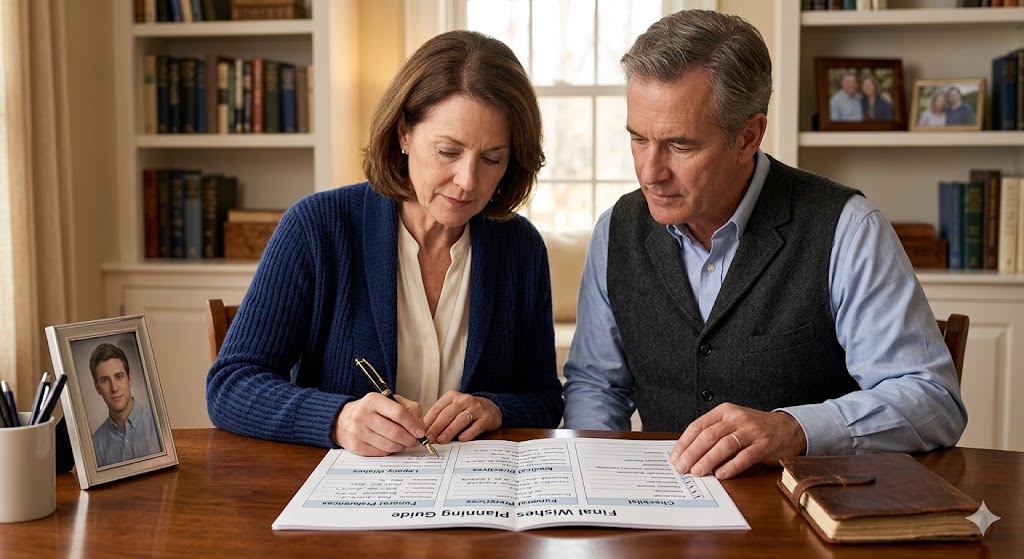
Thinking about the end of life is a deeply personal and emotional journey. It’s natural to feel a sense of hesitation when confronting these decisions, but taking the time to organize your thoughts is one of the most compassionate gifts you can leave for your family. If you find yourself wondering exactly how to plan final wishes, you are not alone. Having a clear, structured plan replaces uncertainty with peace of mind and ensures that your voice is heard when you can no longer speak for yourself.
Creating a final wishes document is more than just outlining logistics; it is an act of love. It removes the heavy burden of guesswork from your loved ones during their deepest moments of grief. The key to tackling this process without feeling overwhelmed is to break it down into manageable steps. This comprehensive final wishes planning guide provides clear direction, practical checklists, and the structure you need to document your preferences with confidence, clarity, and grace.
What Are Final Wishes?
At its core, a statement of final wishes is a comprehensive summary of how you want your end-of-life care, memorialization, and personal legacy to be handled. This end-of-life preferences checklist covers everything from your healthcare boundaries and funeral arrangements to who should care for your pets and how your digital life should be managed.
It is important to understand the fundamental difference between informal final wishes and formal legal documents. Legal documents—such as a Last Will and Testament or a Power of Attorney—dictate the rigid legal distribution of assets and exact healthcare proxy designations. A final wishes document, while not always legally binding, works alongside these documents to provide the deeply personal, operational roadmap that a will simply does not cover. It tells your family not just who gets what, but how you want to be remembered and celebrated.
Why Planning Your Final Wishes Is Important
Engaging intentionally with a funeral planning guide and documenting your desires serves vital emotional, financial, and logistical purposes. When a death occurs without a plan in place, surviving relatives are suddenly forced to make dozens of rapid decisions within a 24-to-48-hour window. This scenario frequently leads to profound stress and emotional overspending.
Formalizing your steps in advance eliminates last-minute family disagreements. When your preferences are written down clearly, survivors do not have to argue over what you “would have wanted.” Instead, they can take comfort in knowing they are executing a carefully designed plan, giving them the emotional space to focus on healing and supporting one another.
Compassionate Note: Grief significantly compromises human decision-making capacity. Establishing a clear framework ahead of time shields your family from administrative exhaustion when they are least equipped to handle it.

What to Include in a Final Wishes Plan
To make this process straightforward, your final wishes should be categorized into distinct, manageable areas. Here is exactly what you should outline.
Personal Information
Start with the basics. List your full legal name, date of birth, Social Security number, and the names and contact details of the people who should be notified immediately upon your passing. This includes immediate family, close friends, and professional contacts like your attorney or accountant.
Funeral and Memorial Preferences
Detail your exact preferences regarding your physical remains and the ceremonies surrounding them. Specify your choice between traditional burial, green burial, or cremation. Outline your vision for the service—would you prefer a solemn religious funeral, or a vibrant celebration of life? To help gather inspiration for the ceremony itself, review some creative funeral program ideas. It is also incredibly helpful to outline exactly what to include in your funeral program, such as specific hymns, secular music, or meaningful poems you want read aloud.
Financial and Estate Details
While your formal will handles the distribution, your final wishes document should act as a treasure map. List the locations of your life insurance policies, bank accounts, safe deposit boxes, and the contact information for your designated executor. Integrating these details simplifies the entire scope of estate planning final wishes.
Medical Preferences
Document your healthcare boundaries clearly. Advance directives planning is crucial. Include your living will, designated healthcare proxy, and specific Do Not Resuscitate (DNR) preferences. This ensures your medical boundaries are respected without forcing your family to make agonizing choices.
Digital Assets
In the modern age, a digital footprint outlives us. Provide instructions on what to do with your social media accounts (e.g., memorialization vs. deletion), email accounts, and digital subscriptions. Provide access to a password manager if you use one.
Messages and Legacy Wishes
Leave behind letters to specific loved ones, instructions for the care of your pets, or requests for charitable donations in lieu of flowers. You can also specify your preferences for a public announcement. If you’re unsure how this process usually works, our guide on who writes obituaries offers excellent insight to help you designate this task.
Step-by-Step Final Wishes Planning Guide
Knowing how to record final wishes doesn’t have to be a mystery. Follow these actionable steps to create a comprehensive plan:
- Reflect on your preferences: Take a quiet afternoon to think about what matters most to you. Do you want a traditional ceremony or a quiet ash-scattering?
- Gather important documents: Collect your will, insurance policies, and deeds so you can reference them easily.
- Write down your wishes clearly: Use simple, unambiguous language. Avoid vague terms.
- Use a structured template: Utilizing an end-of-life planning checklist prevents you from overlooking hidden details.
- Look into formal arrangements: Consider cementing your physical preferences by exploring pre-need funeral plans, which can lock in costs and logistics in advance.
- Store documents safely: Place physical copies in a fireproof safe, not a locked bank deposit box that your family can’t access upon your passing.
- Share plans with trusted family members: A plan is only useful if someone knows it exists.
- Review and update regularly: Life changes. Review your wishes every 3-5 years or after major life events.
Final Wishes Checklist
Use this concise, scannable checklist to track your progress through the vital decision points of the end-of-life planning process:
Essential Milestone Checklist:
- ✔ Funeral Preferences: Burial vs. cremation selected; venue and service tone documented.
- ✔ Legal Documents: Will and advance directives signed, witnessed, and properly stored.
- ✔ Financial Info: Master list of accounts, debts, and life insurance policies compiled.
- ✔ Contacts: Emergency notification list and executor contact details updated.
- ✔ Digital Assets: Social media instructions and password access clearly defined.
- ✔ Legacy Messages: Personal letters and specific charitable donation requests written.

Final Wishes Template (Fill-in-the-Blank)
If you are ready to start writing, you can copy the structure below to create your own localized final wishes document. Keep this with your important estate files.
| Category | Information to Record |
|---|---|
| Personal Details | Full Name, DOB, SSN, Location of Birth Certificate |
| Key Contacts | Next of Kin, Executor Name/Phone, Attorney Name/Phone |
| Service Preferences | Burial/Cremation choice, preferred funeral home, desired readings/music, clothing preferences |
| Asset Locations | Location of Will, Safe Deposit Box keys, Life Insurance policy numbers |
| Special Instructions | Pet care arrangements, preferred charities for donations, digital legacy instructions |
Where to Store and Share Your Final Wishes
The most beautifully constructed plan is entirely useless if no one can find it. Do not hide your final wishes document in a place where it might be easily overlooked. Physical copies should be kept in a fireproof home safe or a designated “In Case of Emergency” binder. You may also want to use secure digital storage or an encrypted vault to store backups.
Critically, provide exact copies to your designated executor, your estate attorney, and your closest family members. Have a transparent conversation with them about where these documents live so there is absolutely no confusion when the time comes.
Common Mistakes to Avoid
When working through your end-of-life arrangements, keep these common missteps in mind to ensure your plan is actually actionable:
- Not writing anything down: Verbal promises are easily forgotten or misinterpreted in the haze of grief. Always put your wishes in writing.
- Keeping it too vague: Saying “do whatever is cheapest” places immense emotional guilt on families. Be specific about your desires.
- Not informing family: Storing your wishes in a locked safe deposit box that no one has the legal authority to access is a common logistical nightmare.
- Forgetting to update documents: A plan written twenty years ago may reference outdated laws, closed bank accounts, or estranged relationships.
When Should You Start Planning Final Wishes?
The simplest answer is: right now. End-of-life planning is not exclusively for the elderly or the terminally ill. Taking the time to document your wishes is a powerful, proactive step for any adult. Key life stages—such as getting married, welcoming a child, buying a home, or receiving a medical diagnosis—are natural milestones that should trigger the creation or updating of your plans. Early planning gives you the ultimate luxury of time, allowing you to reflect on your legacy without the pressure of an impending crisis.
Final Thoughts
Organizing your final resting details and legacy preferences is an undeniable act of courage and profound care. By translating complex, emotional thoughts into clear, actionable steps, you replace your family’s future anxiety with a sense of calm and order. Remember that taking even small steps today makes an immeasurable difference tomorrow. Focus on the choices that carry the most meaning for you, and take comfort in knowing that your legacy will be honored exactly as you envisioned.
Honoring Their Legacy with Personalized Care
A beautifully customized service keeps precious memories alive forever. Browse our collection of custom-designed acknowledgment cards, registration books, and funeral service programs to create a deeply meaningful tribute for your loved one.
