Planning a memorial service or celebration of life involves coordinating countless personal details during a time of profound emotional exhaustion. Among these responsibilities, designing and printing the memorial program is one of the most meaningful tasks. A funeral program is more than an itinerary or an order of service; it is a tangible tribute that guests hold in their hands during the ceremony and take home to cherish for years as a keepsake.
When creating a program—especially when taking a do-it-yourself (DIY) approach—selecting the right funeral program paper types is just as vital as choosing the photographs, poems, and tributes inside. The physical paper you select determines whether photos print with crisp clarity, whether text remains readable under dim chapel lights, and whether the finished handout feels dignified and durable.
Navigating terms like “text weight,” “cover stock,” “scoring,” and “paper finish” can feel daunting when you are on a tight timeline. This practical guide breaks down the best paper for funeral programs, helping you select the ideal paper weight, finish, and fold for home or professional printing.
A Tangible Keepsake of Remembrance: A funeral program bridges the ceremony and the days that follow. Long after the flowers have faded, attendees keep programs tucked inside family Bibles, scrapbooks, and bedside drawers. Choosing durable, quality paper ensures that this physical tribute endures without fading, tearing, or creasing.
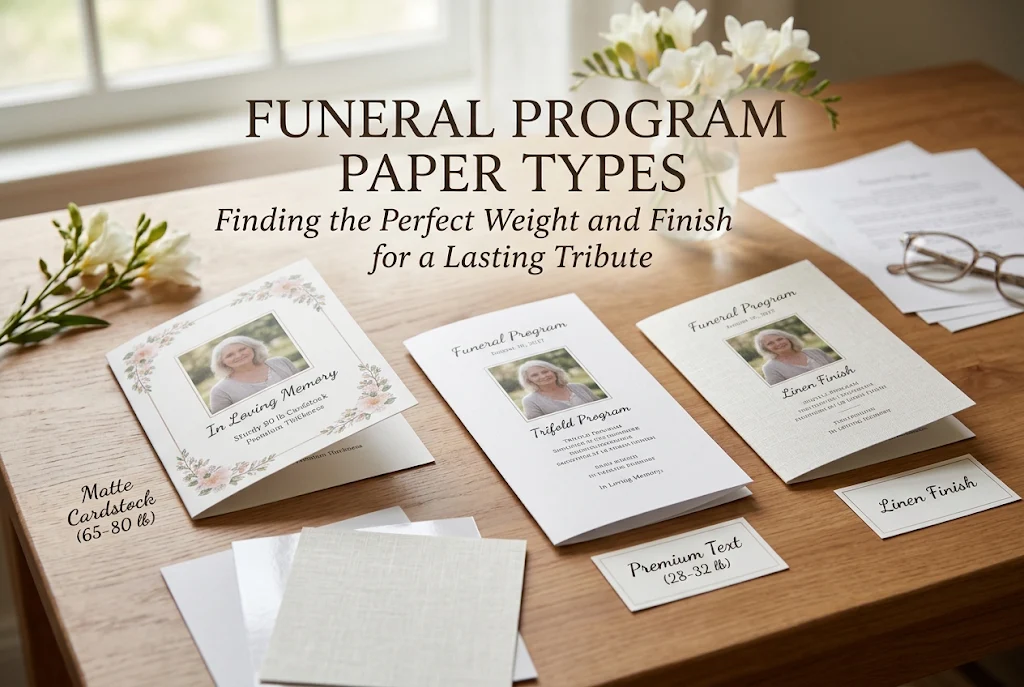
For standard single-fold (bifold) programs, the best choice is 65 lb to 80 lb cover cardstock in a matte or satin finish. For multi-page booklet programs, opt for 28 lb to 32 lb premium text paper. Avoid everyday 20 lb home copy paper, which is too thin, causes ink bleed-through, and tears easily.
Understanding Paper Weight: Text vs. Cover
The most critical factor in paper selection is the funeral program paper weight. Paper in North America is generally divided into two main categories: text weight (thinner, flexible sheets used for internal pages and flyers) and cover weight (stiffer, thicker cardstock used for covers and postcards).
Standard everyday office printer paper is typically 20 lb bond. While fine for everyday documents, it should never be used for a memorial service. Standard 20 lb paper is translucent, causing dark ink and portrait photos on one side to bleed visibly through to the reverse. It also wrinkles easily under heavy moisture from inkjet cartridges and feels flimsy.
| Paper Weight | Best Used For | Key Characteristics |
|---|---|---|
| 28 lb – 32 lb Text | Multi-page booklets, trifold brochures, inserts | Smooth and substantial; folds cleanly without creasing equipment; eliminates back-to-back ink bleed-through. |
| 65 lb – 80 lb Cover | Standard bifold (single-fold) programs | Sturdy, professional cardstock for funeral programs. Feels substantial in hand; requires scoring before folding to prevent ink cracks. |
| 100 lb+ Cover | Flat memorial cards, bookmarks, prayer cards | Extremely rigid and premium; cannot be folded cleanly without commercial equipment and often jams standard desktop printers. |
The Best Paper Weight for Multi-Page Booklets
If your service includes extensive musical lyrics, multiple scripture readings, and a detailed obituary, you may be designing an 8-page or 12-page booklet. In this case, choose 28 lb to 32 lb premium text paper. Using heavy cardstock for every interior page makes a multi-page booklet stiff, bulky, and impossible to staple or close flat. A 32 lb presentation paper provides opacity so full-color photos do not show through, while allowing pages to turn smoothly.
The Best Paper Weight for Standard Bifold Programs
The classic funeral handout is an 8.5″ x 11″ sheet folded in half to create four distinct panels. For this layout, 65 lb to 80 lb cover cardstock is the industry gold standard. It provides a firm, dignified weight that does not flop over when held, protecting the tribute against hand moisture and wrinkling.
Choosing the Right Paper Finish: Matte vs. Glossy vs. Linen
The finish of your paper dramatically affects how portraits, graphics, and typography appear under chapel lighting:
- Matte Finish: Smooth, non-reflective, and elegant. Matte paper reduces harsh glare under direct chapel spotlights, ensuring that hymns, prayers, and tributes are easy for elderly guests to read. It also resists fingerprint smudges. Matte is the top recommendation for text-heavy layouts and classic layouts.
- Glossy Finish: Coated with a reflective sheen similar to a magazine or photo album page. A glossy or semi-gloss (satin) finish makes photographic colors pop with richness and contrast. It is the premier choice for photo-heavy programs and visual collages, though it can reflect bright overhead light and show thumbprints.
- Linen or Uncoated Textured Finish: Features a subtle woven fabric texture that communicates traditional sophistication and understated luxury. Linen finish works wonderfully for minimalist or religious designs, though intricate, high-resolution portrait photographs may look slightly softer on textured paper.
When finalizing your typography and layout, review these practical tips for designing a funeral program to ensure your selected paper finish complements your visual balance.
Matching Paper Types to Program Folds
The geometric structure of your program must dictate the paper stock you purchase:
- Bifold (Single Half-Fold): Works best with 65 lb to 80 lb cardstock. A single fold provides structural support, allowing the program to stand upright on a memory table.
- Trifold (Brochure Fold): Works best with 28 lb to 32 lb text paper. Because a trifold requires two distinct parallel folds, heavy cardstock will resist staying closed and spring open on seats.
- Graduated / Step Fold: Features staggered page tabs that reveal different sections. This intricate design requires 32 lb text paper to ensure clean, precise cuts and easy page turning.
If you are exploring diverse layout structures for your service, browse these creative funeral program ideas for inspiration.
Need Ready-to-Print Memorial Templates?
Save time and eliminate layout stress during a difficult week. Download our professionally formatted, fully customizable design files today.
Home Printing vs. Professional Printing
Executing DIY funeral program printing can save money and accommodate rapid turnaround deadlines, but technical preparation is vital.
Inkjet vs. Laser Printer Compatibility
Always check your packaging before feeding specialty paper into a desktop printer:
- Inkjet Printers: Use liquid ink that must absorb into the sheet. Only use paper labeled specifically for inkjet printing. Feeding laser glossy paper into an inkjet printer will cause the ink to pool and smear permanently.
- Laser Printers: Use intense heat to fuse dry toner powder to the surface. Never feed standard inkjet photo paper into a laser printer, as the plastic-based coating can melt onto the heated fuser drum and destroy the printer.
The Essential Technique: Scoring Cardstock
If you print your programs on 65 lb or 80 lb cardstock at home, do not simply fold the paper with your fingers. Bending thick cardstock across the grain cracks the paper fibers and fractures dried printer ink, leaving an unsightly white, jagged line along the spine of the program.
To prevent this, “score” your paper first:
- Align a metal ruler along the center fold line on the inside of the program.
- Run a bone folder, dull butter knife, or empty ballpoint pen firmly along the edge to press a shallow groove into the paper.
- Gently fold along the indented groove. The fold will be crisp, straight, and completely free of cracked ink.
Frequently Asked Questions About Funeral Program Paper
Can ordinary home printers feed 80 lb cardstock?
Most modern home inkjet and laser printers can handle up to 65 lb or 80 lb cardstock, provided you load the paper through the rear manual-feed tray rather than the bottom paper drawer. The rear tray provides a straight paper path, preventing the thick sheets from curling or jamming inside internal rollers.
Should memorial prayer cards be printed on the same paper?
No. Smaller handouts like prayer cards, memorial bookmarks, and mass cards require heavier paper than a folding program. Flat cards should ideally be printed on 100 lb to 120 lb heavy cover stock, or sealed with a protective matte lamination to withstand being carried in wallets, purses, and books.
How do I decide how many programs to print?
A general rule of thumb is to print one program for every attendee, plus an additional 15% to 20% to account for keepsakes. Many families send copies to out-of-town relatives who could not attend the service in person. For comprehensive guidance on structuring the contents, review our checklist detailing what to include in your funeral program.
Creating a memorial program is an enduring act of love that preserves the story and milestones of a cherished life. By selecting a substantial 65 lb to 80 lb cardstock for standard bifolds or a smooth 32 lb text paper for detailed booklets, you ensure that every photograph, prayer, and tribute is presented with dignity.
Whether you are assembling DIY handouts at home or coordinating professional printing, high-quality materials create a lasting tribute that attendees will treasure for decades. For more compassionate planning advice, explore our comprehensive network at local provider reviews to connect with memorial specialists dedicated to honoring your loved one with grace and care.