
A funeral mortician holds one of the most vital funeral home jobs, serving as a trained funeral-service professional who helps care for the deceased and guides families through the practical decisions that follow a death. Depending on the funeral home and local licensing rules, a mortician may help prepare the deceased, arrange burial or cremation, complete paperwork, coordinate the service, and support the family throughout the planning process.
The terms mortician, funeral director, and undertaker are often used interchangeably. However, exact job titles, responsibilities, and licensing requirements can vary by state and funeral home.
Understanding what a mortician does can help families feel more prepared when meeting with funeral-home staff and making arrangements for a loved one.
What Is a Funeral Mortician?
A funeral mortician is a professional who helps manage the care of the deceased and the organization of funeral arrangements. The role combines practical planning, legal documentation, service coordination, and compassionate communication with grieving families.
Depending on the funeral home, a mortician may be responsible for:
- Arranging transportation of the deceased
- Meeting with the family
- Discussing burial and cremation options
- Coordinating a funeral, memorial, or graveside service
- Helping prepare the deceased for viewing or burial
- Completing permits and funeral-related paperwork
- Coordinating with cemeteries, crematories, clergy, and other providers
- Directing the service on the day of the funeral
- Supporting the family before, during, and after arrangements
In some funeral homes, one person performs many of these duties. In larger establishments, responsibilities may be divided among funeral directors, embalmers, funeral arrangers, attendants, administrative staff, and other trained professionals.
“A mortician helps families manage both the personal and practical details of a death, from caring for the deceased to coordinating a meaningful farewell.”
What Does a Mortician Do?
The duties of a funeral home mortician begin shortly after the funeral home is contacted and may continue until the burial, cremation, or memorial arrangements have been completed.
Transfers the Deceased Into the Funeral Home’s Care
After a death, the funeral home may arrange transportation from a hospital, hospice facility, nursing home, private residence, or medical examiner’s office. If you are unsure who picks up dead bodies or how the transfer is handled under different circumstances, the mortician or a trained transport team coordinates the logistics to bring the deceased safely into care. The exact process depends on where the death occurred and whether the death must first be reviewed by a coroner or medical examiner.
The exact process may depend on where the death occurred and whether the death must first be reviewed by a coroner or medical examiner.
Meets With the Family
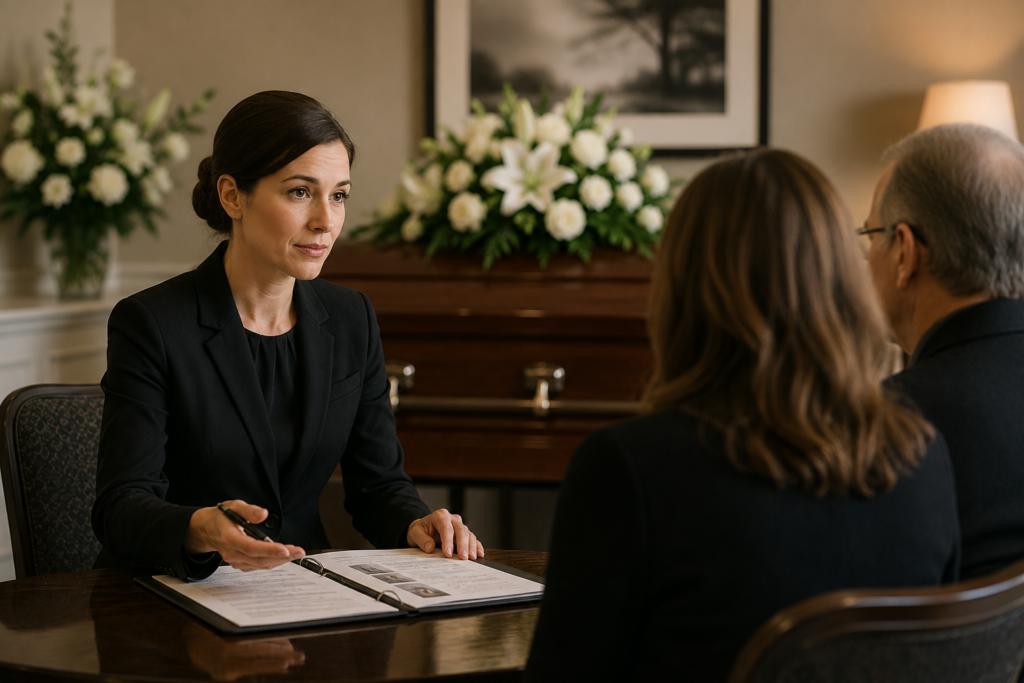
One of the most important mortician responsibilities is meeting with the family to discuss funeral arrangements. This meeting is commonly called an arrangement conference.
During the meeting, the mortician may discuss:
- Whether the family prefers burial or cremation
- The type of funeral or memorial service
- Religious and cultural traditions
- Viewing or visitation plans
- The preferred date and location of the service
- Casket or urn options
- Clothing for the deceased
- Flowers, music, readings, and speakers
- Transportation for the family and deceased
- Obituary information
- Printed memorial materials
- Budget and payment options
Families who are unsure how to select a provider may find HonorYou’s guide on how to choose a funeral home helpful before making arrangements.
Prepares and Cares for the Deceased
Many people asking “what does a mortician do?” are trying to understand who prepares a body for a funeral.
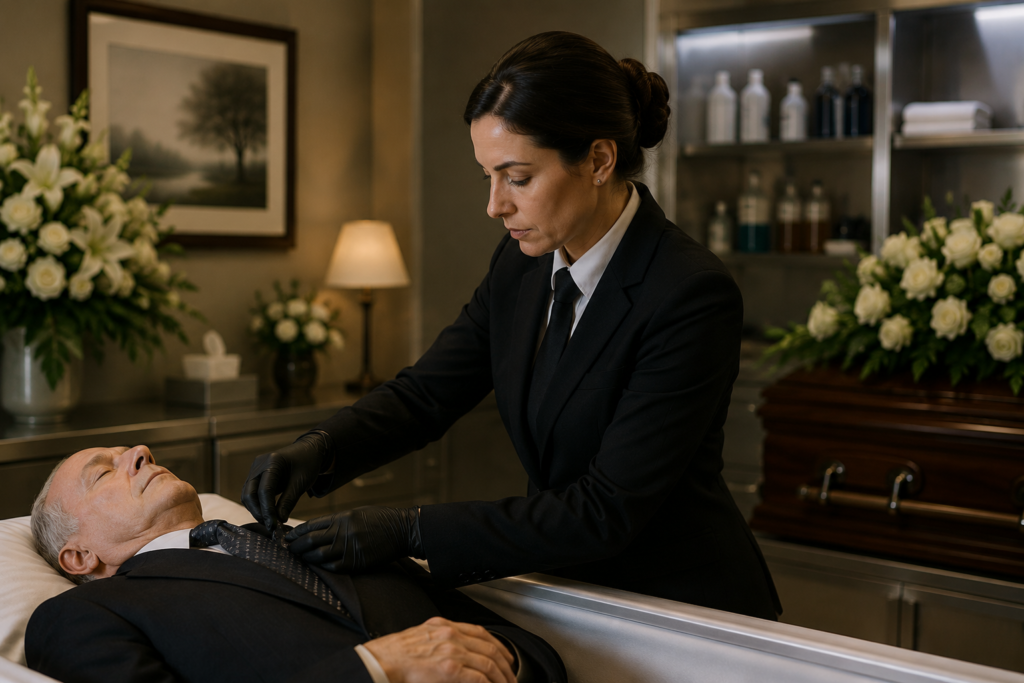
Depending on the funeral home, the mortician may personally complete some preparation duties or coordinate with a licensed embalmer and other trained staff.
Preparation may include:
- Washing and disinfecting the deceased
- Refrigeration when appropriate
- Dressing the deceased
- Hair care and cosmetic preparation
- Placing the deceased in the casket
- Embalming when selected or required
- Restorative preparation when necessary
These services are carried out with care and respect. Families should feel comfortable asking who will prepare their loved one and what each recommended service involves.
HonorYou’s guide on what embalming is explains the purpose and general process in more detail.
Coordinates the Funeral Service
A mortician may coordinate with multiple people and organizations to make sure the service reflects the family’s wishes.
This can include:
- Clergy members or celebrants
- Cemeteries
- Crematories
- Florists
- Musicians
- Military honor representatives
- Transportation providers
- Newspapers or obituary websites
- Funeral program and memorial product providers
The mortician may also help organize the order of service, schedule the visitation, confirm the procession route, and make sure everyone involved understands the timing.
Handles Legal Documents and Permits
Funeral arrangements often require several legal and administrative documents. A mortician may help the family gather information and coordinate paperwork related to:
- Death certificates
- Burial permits
- Transit permits
- Cremation authorization forms
- Cemetery paperwork
- Insurance documents
- Veteran benefit applications
- Obituary submission
The exact documents required vary by location and by whether the family chooses burial, cremation, or transportation to another state.
Directs the Funeral or Memorial
On the day of the service, the mortician or funeral director helps keep everything organized.
Mortician duties may include:
- Welcoming and directing guests
- Guiding the immediate family
- Coordinating pallbearers
- Confirming the order of service
- Managing transportation
- Coordinating the funeral procession
- Working with the cemetery or crematory
- Responding to unexpected changes
Families who have not attended a funeral recently may benefit from reviewing what to expect at a funeral or memorial service.
Supports the Family
Morticians regularly work with people who are grieving, overwhelmed, or making decisions under time pressure. A good funeral service professional communicates calmly, explains options clearly, and allows the family time to ask questions.
A mortician may provide practical and emotional support, but they do not replace a licensed grief counselor or mental health professional.
The mortician’s role is to guide, explain, and coordinate. The family should remain in control of the decisions whenever possible.
Mortician vs. Funeral Director
In the United States, the terms mortician and funeral director are commonly used to describe the same or very similar roles.
Both may:
- Meet with families
- Plan funeral services
- Coordinate burial or cremation
- Handle funeral paperwork
- Direct visitations and ceremonies
- Supervise care of the deceased
In some workplaces, “funeral director” may refer more specifically to the person handling arrangements and service coordination. The word “mortician” may be used more broadly for a professional involved in both family arrangements and care of the deceased.
However, job titles and legal licensing categories vary. Families should focus less on the title and more on whether the professional is properly licensed and able to explain who will perform each service.
Mortician vs. Embalmer
A mortician and embalmer may work closely together, but their primary responsibilities can differ.
A mortician or funeral director typically focuses on:
- Meeting with the family
- Planning the funeral
- Coordinating service providers
- Managing paperwork
- Directing the service
An embalmer specializes in:
- Temporary preservation
- Sanitation
- Physical preparation of the deceased
- Cosmetic and restorative care
The same person may be licensed as both a funeral director and an embalmer, especially in a smaller funeral home. In larger funeral homes, these responsibilities may be handled by separate professionals.
Mortician vs. Undertaker
“Undertaker” is an older term for a person who cares for the deceased and arranges funerals. Historically, the term described someone who undertook responsibility for funeral and burial arrangements.
Today, “funeral director” and “mortician” are more commonly used. However, undertaker, mortician, and funeral director may still refer to similar professionals depending on the region and context.
Is Embalming Always Part of a Mortician’s Work?
No. Embalming is not automatically required for every funeral, and not every deceased person is embalmed.
Whether embalming is recommended or required may depend on:
- The family’s wishes
- Whether there will be a public viewing
- The time between death and burial
- Transportation requirements
- Religious or cultural beliefs
- Local regulations
- Funeral-home policies
- The physical condition of the deceased
Alternatives may include refrigeration, direct burial, immediate burial, or direct cremation.
Families should ask why embalming is being recommended and whether another preparation option may be suitable.
What Happens During a Meeting With a Mortician?
A meeting with a mortician usually begins with gathering essential information about the deceased and the family’s wishes.
The mortician may ask about:
- Burial or cremation preferences
- Religious and cultural traditions
- Viewing or visitation plans
- The preferred service date and location
- Clothing for the deceased
- Obituary information
- Casket, urn, and memorial product preferences
- Cemetery or crematory arrangements
- Music, readings, flowers, and speakers
- Budget and payment options
- Required authorizations
The family may also be asked to provide personal information needed for the death certificate, such as the deceased’s full legal name, date of birth, marital status, occupation, parents’ names, and other identifying details.
It is reasonable to take notes, bring another family member, and ask for written estimates before making final decisions.
Questions to Ask a Funeral Mortician
Asking clear questions can help families understand their options and avoid unexpected costs.
Helpful questions include:
- Which services are included in the basic funeral-home fee?
- Is embalming necessary in this situation?
- Who will prepare the deceased?
- Can we hold a viewing without embalming?
- What burial and cremation options are available?
- Can we purchase a casket or urn from another provider?
- Which legal documents will the funeral home handle?
- Are there additional transportation or facility fees?
- Can the service include our religious or cultural customs?
- How many certified death certificates should we order?
- When will the death certificates become available?
- Which services are optional?
HonorYou’s complete list of questions to ask a funeral home can help families prepare before an arrangement meeting.
A trustworthy mortician should be willing to explain what is required, what is optional, and how each choice affects the total cost.
How Morticians Help With Burial and Cremation
Morticians commonly help families coordinate both burial and cremation arrangements.
Burial Arrangements
For a burial, the mortician may help coordinate:
- Casket selection
- Preparation of the deceased
- Viewing or visitation
- Cemetery scheduling
- Burial permits
- Transportation to the cemetery
- Funeral procession arrangements
- Graveside service details
- Coordination with cemetery staff
The funeral home may also explain which cemetery costs are separate from the funeral-home charges.
Cremation Arrangements
For cremation, the mortician may assist with:
- Cremation authorization
- Identification procedures
- Transportation to the crematory
- Coordination with the cremation provider
- Planning a viewing or memorial service
- Urn selection
- Return of the cremated remains
- Burial, scattering, or placement options
Exact cremation procedures vary by provider and local requirements. Families should ask how identification is confirmed and when the cremated remains will be returned.
What Qualifications Does a Mortician Need?
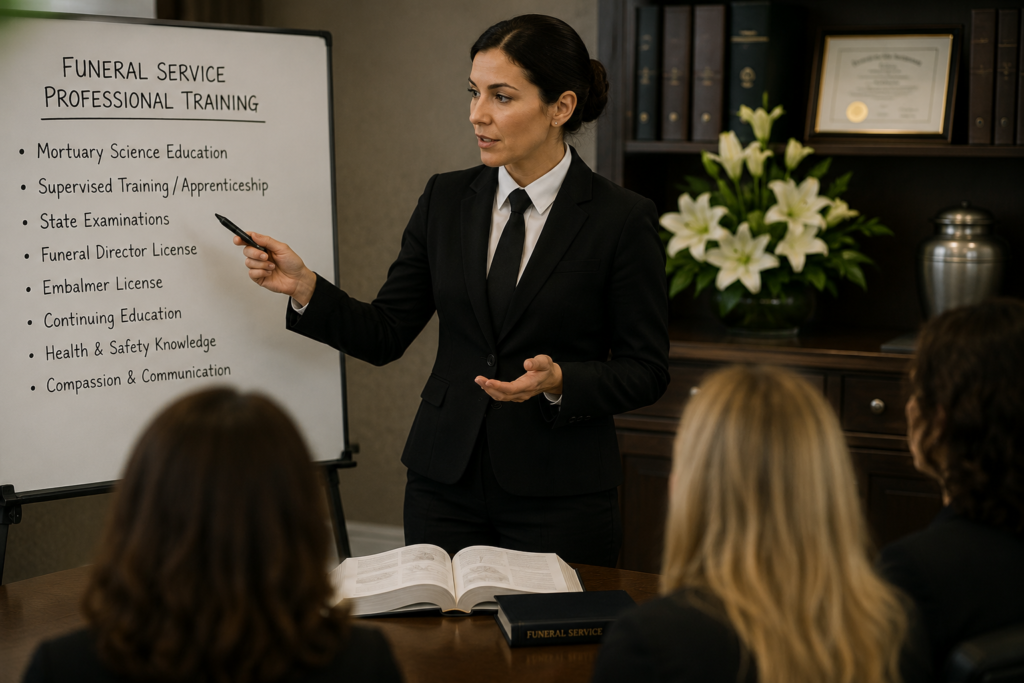
The requirements for becoming a mortician vary by state, but the process commonly includes a combination of education, supervised training, examinations, and licensing.
A funeral service professional may need:
- Mortuary-science or funeral-service education
- Supervised training or an apprenticeship
- State or national examinations
- A funeral director or embalmer license
- Continuing education
- Knowledge of health and safety procedures
- Knowledge of funeral laws and documentation
Morticians also need strong communication, organizational, and time-management skills. They regularly coordinate several tasks at once while supporting families during emotionally difficult circumstances.
Anyone researching how to become a mortician should check the licensing requirements in the state where they intend to work.
Qualities of a Good Mortician
A family should feel respected and supported by the mortician assisting them.
Important qualities include:
- Compassion: The mortician should communicate with sensitivity and patience.
- Clear communication: Services, costs, and timelines should be explained in understandable language.
- Attention to detail: Names, dates, documents, and service arrangements must be handled carefully.
- Cultural respect: The mortician should listen to and accommodate religious and cultural traditions when possible.
- Transparent pricing: Families should receive clear information about required and optional costs.
- Organization: Transportation, paperwork, service providers, and schedules must be coordinated effectively.
- Professionalism: The deceased and family should always be treated with dignity.
- No-pressure guidance: Families should be allowed to make informed decisions without being pushed toward unnecessary services.
Common Misconceptions About Morticians
Several misunderstandings surround the mortician profession.
Morticians Only Embalm Bodies
Embalming may be one part of funeral service work, but morticians also meet with families, complete paperwork, coordinate services, arrange transportation, and direct funerals.
Every Deceased Person Must Be Embalmed
Embalming is not required in every situation. Refrigeration, direct burial, and direct cremation may be available depending on the circumstances and local requirements.
The Mortician Makes All Decisions
The mortician explains options and coordinates arrangements, but the family generally makes the decisions about the funeral, burial, cremation, and memorial details.
A Mortician and Medical Examiner Do the Same Work
A medical examiner investigates certain deaths and may determine the cause and manner of death. A mortician works for a funeral home and helps care for the deceased and arrange funeral services.
Morticians Are Grief Therapists
Morticians provide compassionate practical support, but they are not necessarily licensed grief counselors or mental health professionals.
Families Must Purchase Every Service Offered
Many funeral services and products are optional. Families should ask for an itemized price list and request an explanation of which charges are legally or practically required.
Final Thoughts
A funeral mortician helps families manage the many practical and personal responsibilities that follow a death. Their work may include transferring and caring for the deceased, meeting with relatives, arranging a funeral or memorial service, completing paperwork, and coordinating burial or cremation.
The terms mortician, funeral director, and undertaker are often used interchangeably, although exact responsibilities and licensing titles vary by state and employer. An embalmer may be a separate professional or the same person may hold licenses for both roles.
A good mortician should provide clear information, transparent pricing, compassionate support, and enough time for the family to understand its choices. Families should feel comfortable asking questions about preparation, embalming, documents, costs, and who will perform each service.
Frequently Asked Questions
Is a mortician the same as a funeral director?
The terms mortician and funeral director are often used interchangeably in the United States. However, exact job titles, responsibilities, and licensing categories may differ by location and funeral home.
Does a mortician perform embalming?
Some morticians are licensed embalmers and perform embalming themselves. In other funeral homes, a separately licensed embalmer handles preservation and preparation of the deceased.
Does every funeral home have a mortician?
Funeral homes employ licensed funeral-service professionals, although their titles may include funeral director, mortician, funeral arranger, or embalmer.
Can a mortician arrange a cremation?
Yes. Morticians commonly help families complete cremation authorizations, coordinate with the crematory, plan memorial services, select an urn, and arrange the return of the cremated remains.
Does a mortician write the obituary?
A mortician may help gather, format, or submit obituary information. However, the family usually provides the personal details and approves the final wording.
Can families decline embalming?
In many circumstances, families can decline embalming. Alternatives may include refrigeration, direct burial, immediate burial, or direct cremation, depending on the planned service and local requirements.
Who prepares a body for a funeral?
Preparation may be completed by a licensed embalmer, mortician, funeral director, or another trained funeral-home professional, depending on the services selected and the funeral home’s staffing structure.
Can a mortician help with death certificates?
Yes. Funeral homes commonly gather the necessary information, submit death-certificate paperwork, and help families order certified copies.
What should families bring to a meeting with a mortician?
Families may need identification, personal information about the deceased, clothing, cemetery details, insurance documents, military discharge papers, obituary information, and any written funeral wishes.
How long does a meeting with a mortician take?
The length of the arrangement meeting depends on the services being planned and the number of decisions required. Families should allow enough time to review options, ask questions, and understand the written estimate.
