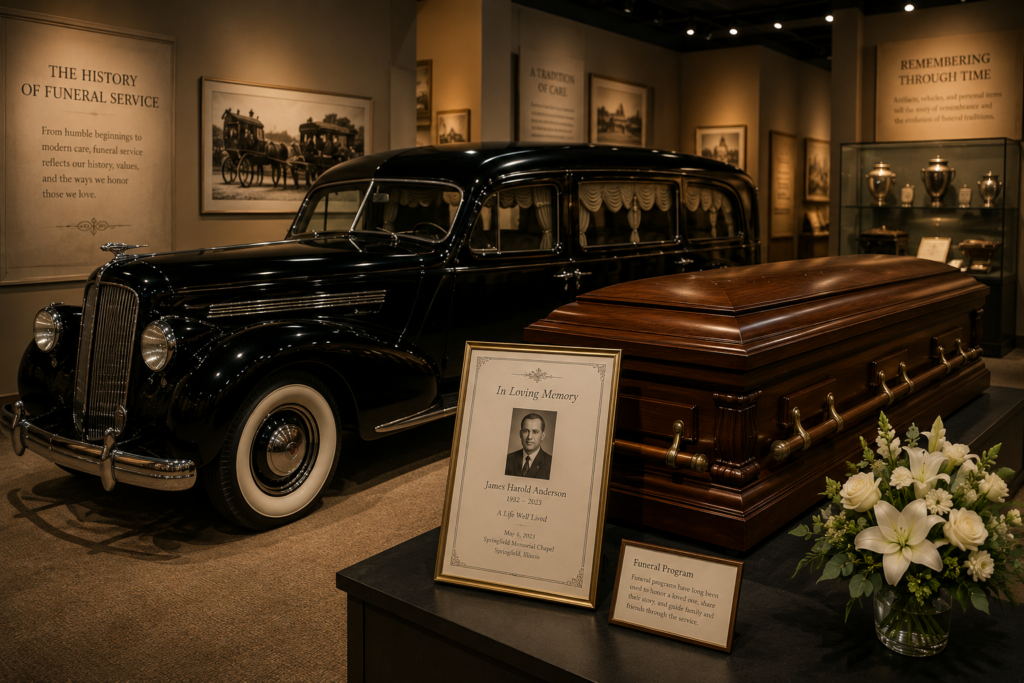
A funeral museum may sound unusual at first, but these museums offer a meaningful look at how people across history, cultures, and communities have honored the dead. Rather than focusing only on death, a funeral museum often explores love, remembrance, tradition, faith, craftsmanship, and the many ways families say goodbye.
Funeral museums may preserve items such as historic caskets, hearses, mourning clothing, memorial objects, embalming tools, funeral programs, prayer cards, and cultural artifacts. These exhibits help visitors understand how funeral customs have changed over time and why memorial traditions continue to matter today.
This guide explains what a funeral museum is, what visitors may see, why these museums exist, and how they connect to modern funeral planning, grief, and remembrance.
What Is a Funeral Museum?
A funeral museum is a museum dedicated to preserving, displaying, and interpreting funeral-related history, artifacts, customs, and traditions. These museums may focus on funeral service history, cultural death rituals, mourning customs, burial practices, cremation, embalming, memorial keepsakes, and the role funerals play in society.
A funeral museum may include exhibits about:
- Funeral service history
- Caskets and coffins
- Hearses and funeral cars
- Mourning clothing and accessories
- Embalming history
- Cultural death rituals
- Memorial keepsakes
- Famous funerals
- Religious funeral traditions
- Funeral home history
“A funeral museum helps visitors understand how people have honored death, grief, and remembrance throughout history. Rather than being only about death, these museums often focus on love, memory, tradition, craftsmanship, and the many ways families say goodbye.”
For visitors, a funeral museum can be educational, reflective, and surprisingly moving. It shows that while funeral customs may differ across time and culture, the desire to honor loved ones is deeply human.
Why Do Funeral Museums Exist?
Funeral museums exist to preserve the history of death care and help people better understand funeral traditions. Many funeral customs that seem familiar today developed over many years, shaped by culture, religion, technology, family needs, and changing views about grief.
These museums help preserve important parts of funeral history that might otherwise be forgotten. They also give visitors a respectful space to learn about subjects that are often difficult to discuss.
Funeral museums exist for several reasons:
- To preserve funeral artifacts and historical objects
- To document the history of funeral homes and funeral directors
- To educate people about death care and memorial traditions
- To show how funeral customs have changed over time
- To highlight cultural and religious funeral practices
- To reduce discomfort around conversations about death
- To honor the role funerals play in family and community life
A funeral museum can also help people see funerals as more than ceremonies. They are moments of storytelling, care, ritual, support, and remembrance.
What Can You See at a Funeral Museum?
The exhibits inside a funeral museum can vary, but many focus on the history of funeral service, mourning traditions, burial customs, cremation, memorial items, and funeral-related artifacts. Some displays may be historical, while others may focus on culture, religion, or modern memorial practices.
Historic Caskets and Coffins
Many funeral museums include historic caskets and coffins from different time periods. These displays may show how materials, shapes, finishes, and design styles have changed over time.
Some caskets may be simple and practical, while others may include detailed craftsmanship, religious symbols, decorative hardware, or personalized design elements. These exhibits help visitors understand how families and communities used caskets not only for burial, but also as expressions of dignity, faith, and remembrance.
Hearses and Funeral Cars
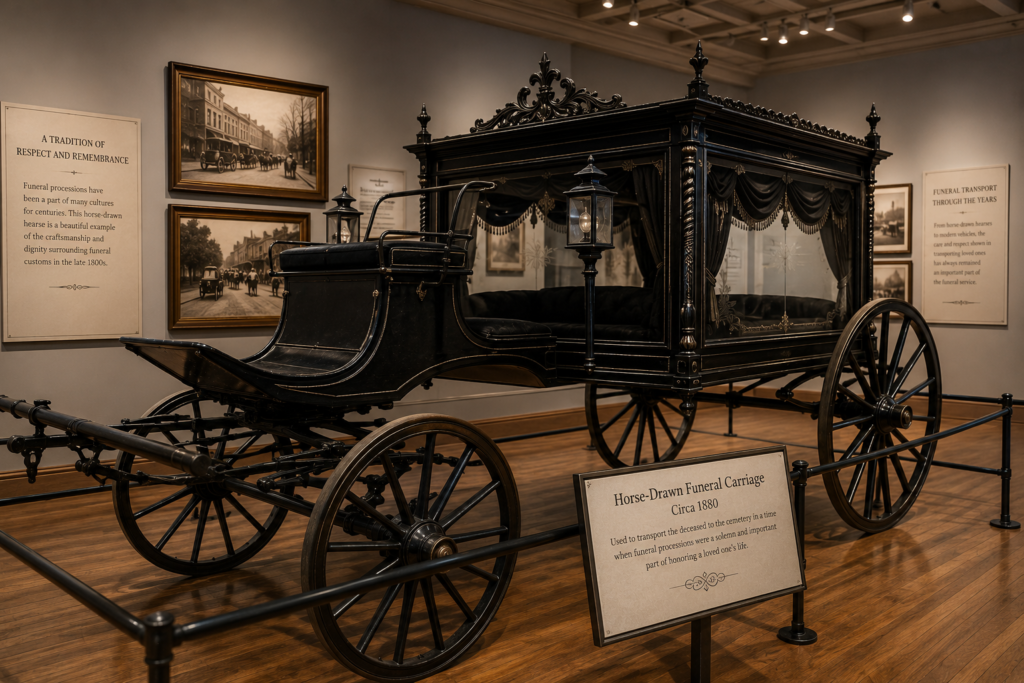
Hearses and funeral cars are often among the most visually striking funeral museum exhibits. Visitors may see horse-drawn hearses, early motorized funeral vehicles, and examples of modern funeral transportation.
These displays show how funeral processions have evolved. They also highlight the importance of transportation in funeral traditions, especially when moving a loved one from the funeral home to a church, cemetery, crematory, or memorial location.
Mourning Clothing and Accessories
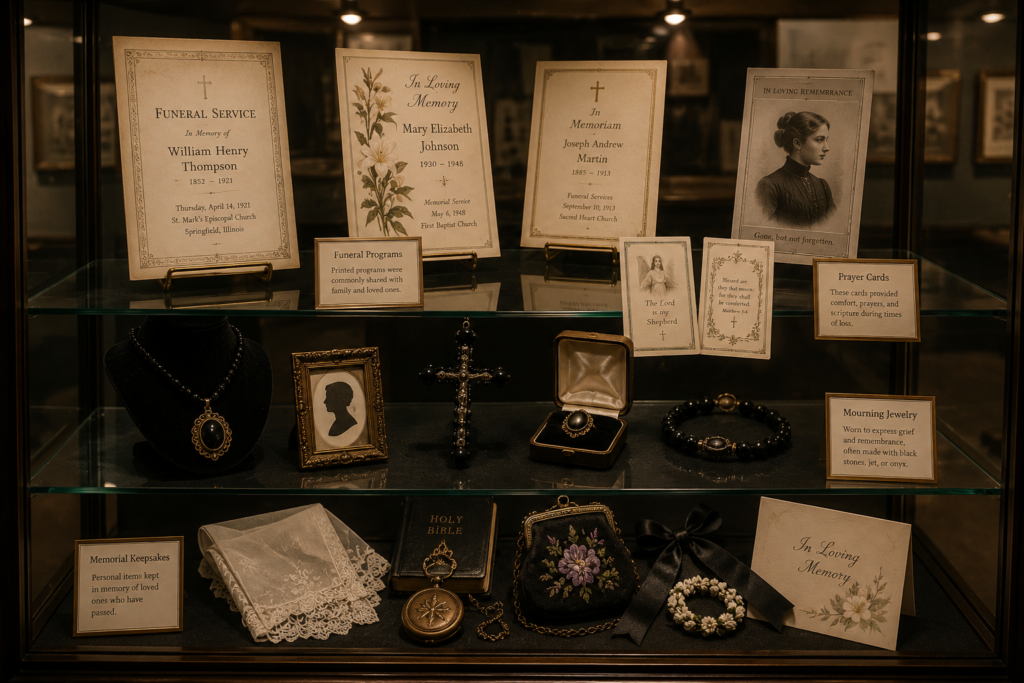
Some funeral museums display mourning clothing, veils, gloves, jewelry, and accessories used during different historical periods. Victorian mourning customs, for example, included specific clothing styles and social expectations for how grief was publicly expressed.
These exhibits show how grief was once communicated through clothing, fabric, color, and personal items. They also reveal how mourning customs were shaped by culture, family roles, religion, and social traditions.
Embalming and Funeral Preparation Tools
A funeral museum may include historical embalming tools, preparation room equipment, or educational displays about the development of funeral care. These exhibits can help visitors understand how professional death care changed over time.
Modern embalming and preparation practices are very different from earlier methods. Learning about this history can help people better understand the work funeral professionals do to care for the deceased and support grieving families.
For more background on this topic, HonorYou’s guide on what embalming is explains the meaning, process, and common questions families may have.
Funeral Programs, Prayer Cards, and Printed Memorials
Funeral museums may also display printed memorial items such as funeral programs, prayer cards, memorial folders, register books, and remembrance cards. These items often preserve important details about a person’s life, family, service, prayers, poems, photos, and final tribute.
Printed memorials show how families have long used words and images to honor loved ones. Even today, funeral programs and prayer cards remain meaningful keepsakes that guests can take home after a service.
If you are planning a memorial, HonorYou’s guide to funeral program ideas can help you create a thoughtful printed tribute.
Famous Funerals and Historical Figures
Some funeral museums include exhibits about famous funerals, presidents, religious leaders, public figures, or culturally significant memorial services. These exhibits can show how public funerals differ from private family services and how communities come together to mourn well-known figures.
Famous funeral exhibits may include photographs, programs, processional details, ceremonial objects, or historical records that show how the public remembered a person’s life and legacy.
Cultural Funeral Traditions
Funeral museums may also highlight funeral customs from different countries, religions, and communities. These exhibits can include burial rituals, cremation traditions, mourning practices, memorial objects, and symbolic items used in ceremonies.
These displays remind visitors that there is no single way to grieve or say goodbye. Across cultures, funeral traditions often reflect shared values such as respect, family, faith, ancestry, memory, and community support.
Funeral Museums and the History of Death Care
Funeral museums help tell the larger story of death care. They show how families, religious communities, funeral directors, and societies have cared for the dead across different time periods.
In earlier generations, many funerals were held at home, with family members and local communities playing a larger role in preparation and ceremony. Over time, funeral homes, funeral directors, embalming, hearses, caskets, cremation services, and memorial products became more common.
A funeral museum may show the development of:
- Home funerals
- Funeral directors and funeral homes
- Embalming practices
- Caskets and urns
- Cremation traditions
- Burial customs
- Memorial services
- Printed memorials
- Digital memorials
These changes show how funeral traditions adapt while still serving the same purpose: helping families honor a loved one, gather support, and create a meaningful farewell.
Families learning about modern arrangements may also find HonorYou’s funeral planning guide helpful when thinking through service details, memorial options, and practical decisions.
Why People Visit Funeral Museums
People visit funeral museums for many different reasons. Some are interested in history, while others are curious about unusual museums, cultural traditions, or the funeral industry. For some visitors, the experience may also feel personally meaningful after losing someone they love.
Common reasons people visit funeral museums include:
- Curiosity about funeral history
- Interest in unusual or educational museums
- Studying funeral traditions and mourning customs
- Learning about cultural practices
- Understanding grief and remembrance
- Funeral industry education
- Travel and tourism
- Genealogy or family history research
- Personal reflection after loss
A funeral museum can make visitors think about their own family traditions, cultural background, and the ways they want to remember loved ones. It can also help make conversations about death and funeral planning feel less uncomfortable.
Are Funeral Museums Sad or Morbid?
Many people wonder whether a funeral museum is sad, morbid, or uncomfortable to visit. While the subject does involve death, most funeral museums are designed to be educational, historical, and reflective rather than frightening.
In many cases, visitors are surprised by how much these museums focus on art, culture, faith, family, memory, and craftsmanship. A funeral museum may include beautiful vehicles, detailed casket designs, historical photographs, handwritten records, personal keepsakes, and cultural objects that show how people have cared for one another in times of loss.
Many visitors are surprised to find that funeral museums are not only about death. They are also about art, culture, faith, family, history, and the human need to remember.
A funeral museum can feel emotional, but it can also be comforting. It shows that grief has always been part of human life and that people have always created rituals to honor those they love.
Funeral Museums Around the World
Funeral-related museums and death care exhibits can be found in different parts of the world. Some focus on local funeral traditions, while others explore broader topics such as mourning, burial, cremation, coffins, hearses, embalming, and cultural approaches to death.
One well-known example is the National Museum of Funeral History in Houston, Texas. It is known for exhibits related to funeral service history, caskets, coffins, hearses, and notable funerals.
Other museums and exhibits around the world may focus on:
- Death culture and mourning history
- Ancient burial practices
- Coffin and casket design
- Hearses and funeral transportation
- Cremation and embalming history
- Religious funeral traditions
- How different societies honor the dead
These museums show that funeral customs are deeply connected to culture. While the details may vary, most traditions share a common goal: to honor the person who has died and support those who are grieving.
What Funeral Museums Teach Us About Grief and Remembrance
Funeral museums show that grief and remembrance have always been part of human life. Different cultures may use different rituals, symbols, flowers, clothing, prayers, songs, and memorial objects, but the purpose is often similar.
Funeral traditions help people:
- Honor the person who died
- Support grieving family members
- Create a meaningful goodbye
- Preserve memory and family stories
- Connect with faith, culture, and community
- Give grief structure through ritual
Memorial objects also play an important role. A funeral program, framed photo, prayer card, flower arrangement, register book, or keepsake can help keep a loved one’s story alive.
For families planning a service today, HonorYou’s funeral flower arrangement ideas can offer inspiration for creating a peaceful and meaningful memorial setting.
Funeral Museums and Modern Memorial Planning
Many items seen in funeral museums still have modern versions today. While styles and technology have changed, families continue to use memorial items to tell stories, honor traditions, and create lasting reminders of a loved one’s life.
Modern versions of funeral museum artifacts may include:
- Funeral programs
- Prayer cards
- Register books
- Memorial photos
- Funeral flowers
- Urns
- Keepsakes
- Caskets
- Funeral cars
- Digital memorials
A funeral museum can remind visitors that memorial planning is not only about logistics. It is also about preserving a person’s story. The details families choose, from flowers and programs to photos and keepsakes, can help create a tribute that feels personal and meaningful.
Funeral traditions may change over time, but the heart of remembrance remains the same: honoring a life, supporting the grieving, and preserving memory.
HonorYou helps families continue this tradition through meaningful printed and digital memorial items that celebrate a loved one’s life and give guests something thoughtful to remember them by.
Tips for Visiting a Funeral Museum
If you are planning to visit a funeral museum, it can help to approach the experience with curiosity and respect. Some exhibits may be emotional, while others may be historical, artistic, or educational.
Helpful tips for visiting a funeral museum include:
- Check the museum’s hours and ticket information before visiting.
- Review current exhibits so you know what to expect.
- Allow time to read exhibit descriptions.
- Be respectful around sensitive displays.
- Consider the cultural and religious context of each exhibit.
- Visit with an open mind.
- Use the experience to reflect on family history or memorial traditions.
A funeral museum can be a thoughtful place to learn, reflect, and better understand the many ways people have honored life after death.
Final Thoughts
A funeral museum may seem unusual at first, but it offers a meaningful look at history, culture, grief, remembrance, and the ways people honor loved ones. These museums preserve funeral artifacts, explain mourning customs, and show how death care traditions have changed over time.
They also remind us that funerals are not only about loss. They are about memory, family, faith, community, and love. Whether someone visits out of curiosity, historical interest, professional study, or personal reflection, a funeral museum can offer a deeper appreciation for the traditions that help people say goodbye.
Funeral practices may continue to evolve, but the purpose remains similar: to remember a life, support the grieving, and create a meaningful farewell.
Frequently Asked Questions
What is a funeral museum?
A funeral museum is a museum that preserves and displays artifacts, history, and information related to funerals, mourning customs, death care, memorial traditions, and cultural rituals.
What can you see in a funeral museum?
You may see historic caskets, coffins, hearses, mourning clothing, embalming tools, funeral programs, memorial items, famous funeral exhibits, and displays about cultural funeral traditions.
Why would someone visit a funeral museum?
People may visit a funeral museum to learn about history, funeral traditions, cultural customs, death care, grief, memorial practices, or unusual museum collections.
Are funeral museums scary?
Most funeral museums are not designed to be scary. They are usually educational, historical, and reflective, focusing on how people honor loved ones and preserve memory.
Where is the National Museum of Funeral History?
The National Museum of Funeral History is located in Houston, Texas, and is known for its large collection of historical funeral service items.
What do funeral museums teach us?
Funeral museums teach us how different cultures and time periods have approached death, grief, burial, cremation, mourning, and remembrance.
Do funeral museums include modern funeral traditions?
Some funeral museums include both historic and modern funeral traditions, including exhibits on cremation, embalming, hearses, caskets, memorial items, and cultural practices.
Is a funeral museum appropriate for families to visit?
Many funeral museums are designed to be educational and respectful, but families should review the museum’s exhibits before visiting with children or anyone who may be sensitive to the topic of death.
How are funeral museums connected to memorial planning?
Funeral museums show how memorial traditions have changed over time. Many items displayed in museums, such as funeral programs, prayer cards, flowers, register books, and keepsakes, still have modern versions used in memorial services today.