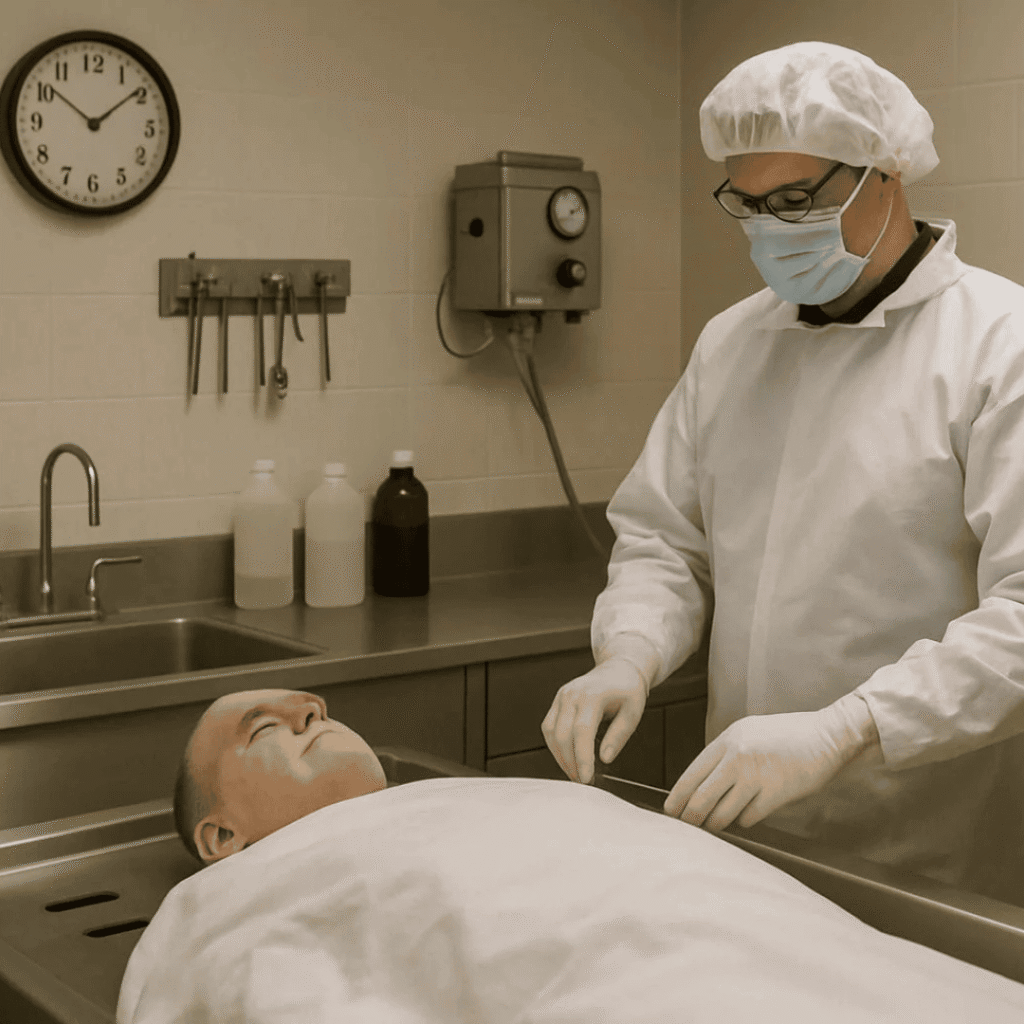
When someone passes away, families are suddenly faced with many decisions. As you begin to navigate this process and learn what do funeral homes do, one of the terms you will often have to learn is embalming. It can sound unfamiliar or even a little intimidating at first.
Embalming is a method used to preserve a person’s body after death to give loved ones time to plan a funeral and gather to say goodbye.
Embalming, a key responsibility within specialized funeral home jobs, is most commonly chosen when there will be a viewing or open-casket service. It helps slow down natural changes in the body and can create a more peaceful appearance, which many families find comforting. While it isn’t required in every situation, it may be recommended if there will be a delay before burial or cremation, or if the body needs to be transported.
It’s natural to have questions or concerns about the process. Many people want to understand what happens, whether it’s necessary, and what their options are. The embalming process usually includes cleaning and sanitizing the body, replacing certain fluids with preservative solutions, and preparing the person for viewing. There are also different types of embalming depending on cultural traditions and funeral preferences.

What Is Embalming?
If you want to know what is embalming, it’s simply a way of temporarily preserving a person’s body after death. The process is carried out by a trained professional who uses special fluids to slow down natural decomposition. It’s not meant to preserve the body forever, just long enough to allow time for funeral arrangements and services to take place.
One of the main reasons embalming is done is to give families more time. When loved ones need to travel or when funeral plans take several days to organize, embalming helps maintain the body during that period. It also includes thorough cleaning and disinfection, which helps ensure a safe and respectful environment. For families who choose an open-casket service, embalming can help create a calm, natural appearance, which many people find comforting during a difficult time.
It’s important to know that embalming isn’t always required. In many cases, it’s a personal decision based on the type of service being planned. However, it may be necessary if there will be a public viewing, if the body must be transported over a long distance, or if there is a longer gap between death and the funeral. Requirements can vary depending on local laws, but often the choice comes down to what feels right for the family. For those interested in the long history of death care, historical preservation techniques, and how customs have shifted over generations, visiting a funeral museum can offer fascinating and educational insights.
Requirements can vary depending on local laws, but often the choice comes down to what feels right for the family.
What Is the Embalming Process?
After learning what is embalming, many people naturally start to wonder what is embalming process and what actually happens during it. While it may sound complicated, the steps are carried out carefully and professionally to ensure the body is treated with dignity and respect. Here’s a simple breakdown of how the process usually works:
Preparation of the body
The embalmer begins by gently washing and disinfecting the body. The eyes and mouth are carefully closed, and the body is positioned in a natural, peaceful way. This first step focuses on cleanliness and respectful care.
Removal of blood
A small incision is made to access a major blood vessel, and the blood is slowly drained. This helps slow decomposition and prepares the body for the preservative solution.
Injection of preservative chemicals
A special preservative fluid is then injected into the circulatory system. This solution travels through the arteries, helping preserve the body’s tissues and maintain its appearance for a period of time.
Cosmetic restoration
After preservation, the embalmer may apply light cosmetics, style the hair, and make small adjustments to create a calm and natural look, especially if there will be an open-casket viewing.
Final preparation for viewing
The body is dressed in clothing chosen by the family and placed in the casket. Final touches are made to ensure everything looks dignified and appropriate for the service.
What Is Embalming Fluid?
When people wonder what is embalming fluid, they’re usually asking about the chemicals used to preserve a body after death. Simply put, embalming fluid is a special solution that helps slow down decomposition and keeps the body safe and presentable for funeral services.
Most embalming fluids are formaldehyde-based. They are usually mixed with water, alcohol, and other ingredients that prevent the body from drying out and may include dyes to improve appearance. While the exact formula can vary, formaldehyde is the main ingredient that preserves the tissues.
The chemicals in embalming fluid have a few important purposes. They help preserve the body, reduce bacteria, and give the body a more natural look for viewings. By stabilizing the tissues, the fluid keeps the body intact long enough for family and friends to gather and say goodbye.
Safety is a big part of using embalming fluid. Licensed embalmers are trained to handle it carefully, following strict rules about protective equipment, ventilation, and proper storage. These regulations help make the process safe for professionals and the environment.
There are also common myths about embalming fluid. Some people think it preserves a body forever, but it only slows decomposition for a limited time. Others worry that it is used in large amounts, but in reality, the fluids are measured carefully and used professionally. Learning about what embalming fluid is helps clear up misconceptions and shows that the process is safe and controlled.
Who Does Embalming?
When families are planning a funeral, they want to know who does embalming and what kind of professionals handle this important process. Typically, a licensed funeral mortician or embalmer is responsible for preparing the body with the utmost care and respect.
- Licensed embalmers – professionals specially trained to perform the embalming process safely and respectfully.
- Funeral directors – often oversee embalming and may perform it if properly licensed and trained.
- Required training and certifications – embalmers complete formal education, apprenticeships, and pass exams to obtain certification or licensure.
- State regulations – each state sets rules about who can perform embalming, ensuring proper safety, hygiene, and professional standards are followed.
Are Organs Removed During Embalming?
Many people wonder – are organs removed during embalming? And the answer is usually no. In standard embalming, the body’s organs remain in place. The process focuses on preserving the tissues and slowing decomposition, not removing internal organs.
Embalmers do perform a procedure called cavity treatment, where a small amount of preservative fluid is injected directly into the body’s cavities to ensure proper preservation. This is different from organ removal and does not affect the body’s overall structure.
There are common misconceptions about this topic. Some people assume embalming involves taking out organs or altering the body significantly, but for most funerals, this is not true.
Organs are only removed in special situations, such as after an autopsy or when required for medical research or transplant purposes. In these cases, embalming can still be performed afterward, and the body is treated with the same care and respect.
Types of Embalming
There are several types of embalming, each designed for a specific purpose or situation:
- Arterial embalming – the most common method, where preservative fluid is injected into the body’s arteries to preserve tissues throughout the body.
- Cavity embalming – involves treating the body’s internal cavities with special preservative chemicals to prevent decomposition in organs and hollow spaces.
- Hypodermic embalming – used when certain areas of the body need extra preservation; fluid is injected directly into tissues with a needle and syringe.
- Surface embalming – applied to the skin’s surface, often for areas that are damaged, decomposed, or not fully reached by other embalming methods.
Is Embalming Required?
Whether embalming is necessary depends on several factors. Legally, embalming is not always required. Under federal regulations like the FTC Funeral Rule, funeral homes are required to explain pricing details transparently and are prohibited from falsely claiming that embalming is a legal requirement. Most states only require it in specific situations, such as when a body must be transported across state lines.
Religious beliefs can also influence the decision, as some faiths discourage or prohibit embalming. The type of final disposition matters too. Bodies for cremation rarely need embalming, while burial, especially with an open-casket service, often makes it desirable to preserve the body for viewing.
How Long Does Embalming Preserve a Body?
Embalming provides temporary preservation rather than permanent protection. In most cases, it helps keep the body in a natural and presentable state for several days, which is usually enough time for funeral arrangements and viewings.
The timeline for viewing can vary depending on how soon the service is planned, but embalming generally allows families to hold an open-casket or visitation without concern for rapid decomposition.
Environmental factors like temperature, humidity, and the condition of the body can affect how long embalming is effective, so funeral professionals take these into account to ensure the body remains well-preserved for the necessary period.
Pros and Cons of Embalming
Embalming comes with benefits and limitations, and understanding them can help families make informed choices.
Benefits include preservation of the body for viewings or delayed services, sanitation through the reduction of bacteria, and a more natural appearance that can be comforting for loved ones during open-casket funerals. It also allows for the transportation of the body over longer distances when needed.
Limitations are that embalming only provides temporary preservation. It does not stop decomposition indefinitely. The process involves chemicals like formaldehyde, which some people may prefer to avoid, and it is not required by law in many cases.
Alternatives to embalming include refrigeration to slow decomposition, immediate burial, or direct cremation. These options may align better with personal, religious, or environmental preferences while still allowing families to hold meaningful services.
Overall, weighing the pros and cons helps families decide whether embalming is the right choice for their situation.