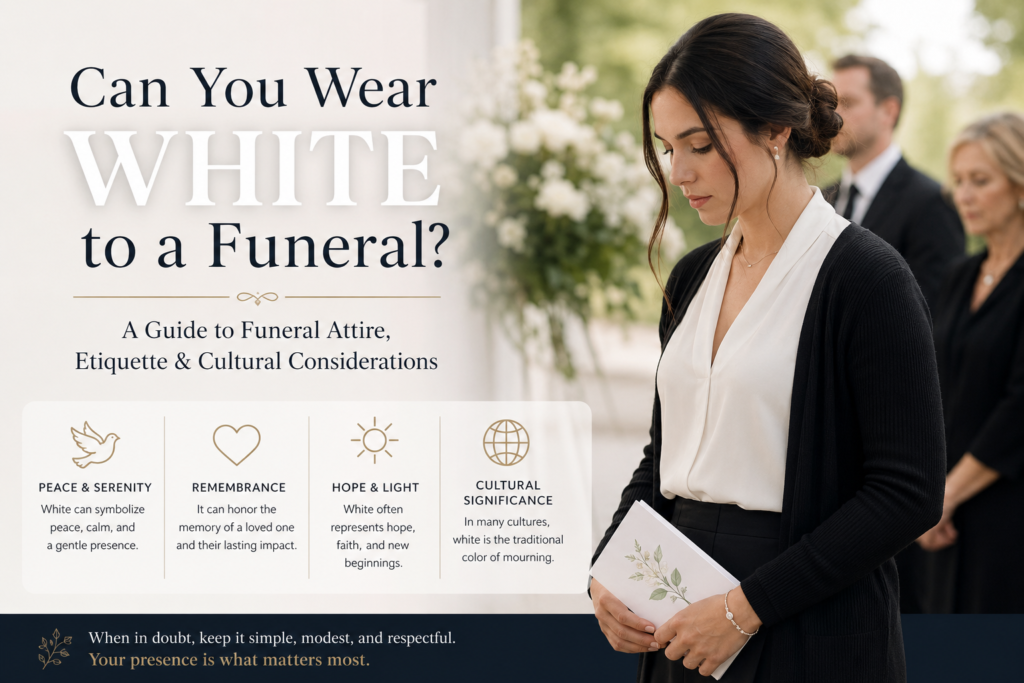
Walking into a funeral home, church sanctuary, or memorial garden can be an incredibly inspiring yet emotionally intimidating experience. As a guest navigates unfamiliar hallways, attempts to grasp specific family customs, and searches for a place to sit, they are often quietly worrying about whether their presence and attire show the proper level of respect. Grieving families are managing an immense weight, and the last thing an attending guest wants to do is cause a distraction or break an unspoken rule of etiquette. Because of this sensitive window of opportunity to show support, choosing an appropriate outfit requires a thoughtful approach.
One of the most dependable, time-tested traditions in Western society is wearing dark, somber colors—specifically black—to signal shared sorrow and deference to the family. However, modern customs are evolving. More frequently, families are choosing to focus on the celebration of a life beautifully lived rather than a purely static mourning ritual. This shift leaves many attendees asking a common question: is wearing white to a funeral acceptable, or will it be seen as insensitive?The primary guideline for funeral attire is to ensure your clothing choices never draw visual attention away from the deceased or their immediate family.
The comprehensive answer depends heavily on culture, religion, the specific wishes of the family, and how the garment is structurally styled. While black remains a standard anchor for mourning, white can also symbolize peace, purity, remembrance, and spiritual transition. This guide dives deep into the strategic art of navigating funeral clothing choices, cultural nuances, and respectful wardrobe configurations so you can honor your loved one with complete confidence, dignity, and grace.
Can You Wear White to a Funeral?
To answer clearly: yes, you can wear white to a funeral, but it must be done thoughtfully, modestly, and with an understated aesthetic. While showing up in a bright, all-white party suit might look out of place or overly casual at a traditional service, integrating white into your ensemble is widely accepted. For example, wearing a crisp white dress shirt, a tailored cream blouse, or a simple ivory knit sweater layered under darker or neutral tones is universally appropriate.
The primary guideline for funeral attire is to ensure your clothing choices never draw visual attention away from the deceased or their immediate family. Visual complications arise when a white outfit feels flashy, loud, or bridal. Pieces featuring heavy lace overlays, sequins, or semi-sheer fabrics can easily send the wrong message. When deciding what to wear, prioritize items with clean lines, minimal embellishments, and conservative coverage.
What Does Wearing White to a Funeral Mean?
Colors carry a powerful psychological and emotional shorthand, especially in spaces dedicated to remembrance. While deep black represents the heavy, solemn reality of loss—explaining historically why people wear black to funerals—white taps into an entirely different emotional spectrum. It shifts the atmospheric focus away from static sorrow and toward a sense of enduring legacy.
In many modern memorial settings, wearing white symbolizes:
- Peace and Serenity: Offering a calming, gentle visual presence that breaks up the heavy darkness of a traditional mourning crowd.
- Purity and Innocence: Honoring the untainted, beautiful spirit of the deceased, or marking the passing of a young child or infant.
- Hope and Transition: Celebrating the spiritual journey of a soul moving into a peaceful, pain-free realm.
- Remembrance and Light: Commemorating the positive, lasting impact the individual left on the world around them.
“A shorter card with clear whitespace and fewer requirements will consistently outperform a congested, overly detailed questionnaire by reducing a guest’s cognitive friction during a service.”
*Note: Just as a clean layout reduces friction for church visitors, a clean, modest outfit reduces visual friction for a grieving family, letting them focus entirely on community comfort.*
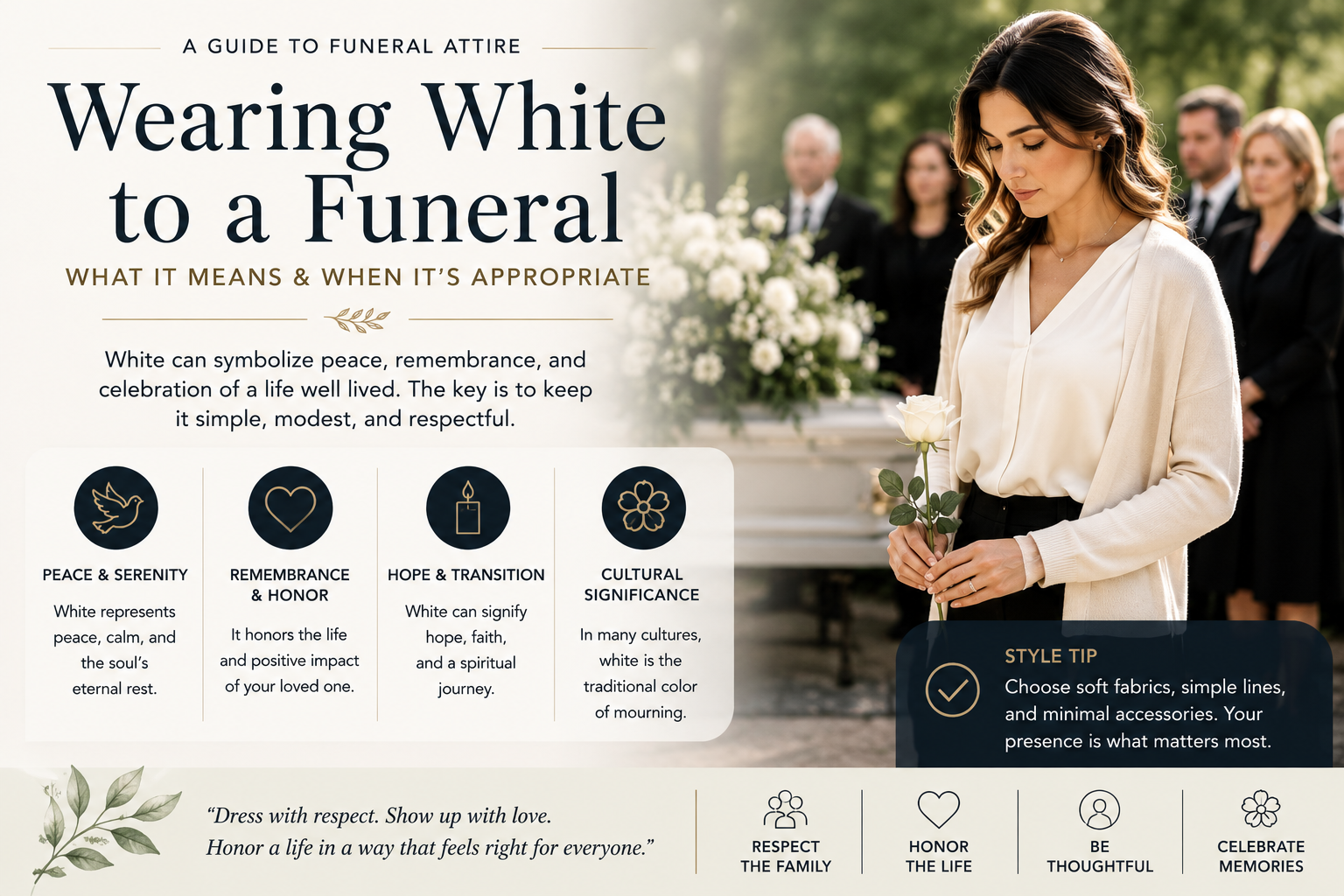
When Is Wearing White Appropriate?
Failing to read the tone of a service ahead of time can lead to an uncomfortable wardrobe misstep. Understanding when white is fully appropriate depends entirely on evaluating the context of the arrangements. You can confidently choose a white or light-colored outfit in the following scenarios:
- The Family Requests Light Attire: Many modern obituaries feature an explicit request asking guests to wear white, pastels, or bright colors to reflect the joyful personality of the deceased.
- The Event Is a Celebration of Life: If the gathering is intentionally framed as a joyful tribute rather than a somber wake, adhering to a contemporary celebration of life dress code opens the door to whites, creams, and soft earth tones.
- The Customs Require It: Certain cultural and religious backgrounds explicitly mandate white as the official color of mourning.
- It Is Used as a Neutral Accent: Wearing a white shirt or ivory blouse underneath a dark jacket or cardigan is universally respected across almost all global traditions.
When Should You Avoid Wearing White?
While strict traditional boundaries have relaxed over the years, there are definitive moments where prominent white clothing should be avoided out of respect. Steer clear of an all-white ensemble if the service is a highly traditional, high-church, or ultra-conservative religious funeral where guests are strictly expected to wear traditional black or dark clothing.
Additionally, you should avoid white if the garment features an avant-garde cut, athletic materials, or elements that look closely akin to bridal wear. If you are unsure about the location or format of a service, opting for a clean, respectful casual funeral outfit built around dark grays, navy blues, or deep olives is always the safest path to avoid standing out uncomfortably.
Wearing White in Different Cultures and Traditions
To master funeral clothing etiquette, one must look beyond Western historical frameworks. Global mourning customs are remarkably diverse, and assuming black is a universal requirement can easily lead to cultural misunderstandings when supporting a family from a different background.
- Hindu, Buddhist, and South Asian Traditions: In Hindu and Buddhist cultures, white is the official, traditional color of mourning. It represents purity, detachment from worldly distractions, and the ultimate liberation or reincarnation of the soul. Mourners actively wear simple, unembellished white garments to show deep respect, whereas wearing black to these services is often seen as highly inappropriate or unsupportive.
- East Asian Traditions: Historically, in traditional Chinese communities, white is associated directly with death and is worn by immediate family members during formal funeral rites to denote their lineage and grief.
- Western and Christian Frameworks: While Western culture traditionally defaults to black to express sorrow, white accents—like white altar cloths or white vestments—are frequently used by officiating clergy to represent the promise of eternal peace and spiritual renewal.
White Funeral Outfit Ideas for Women
If you are wondering, can women wear white to a funeral?, the answer is a definitive yes, provided the styling remains structured, modest, and understated. Here are a few practical examples to help you assemble a respectful outfit from your wardrobe:
- The Muted Separates Combination: Pair a tailored white or cream blouse with sharp charcoal dress pants, a dark gray trousers ensemble, or a pleated navy midi skirt. This configuration keeps a bright, clean tone near your face while grounding the look in respectful dark shades.
- The Layered Shift Dress: Choose a simple, unembellished white or ivory knee-length dress, but immediately balance the brightness by layering it under a structured black blazer, navy trench coat, or dark knit cardigan.
- The Monochromatic Dark Look with White Accents: Wear a high-quality monochrome suit (black or navy) and break up the heavy tone with a modest white silk scarf, an ivory shawl, or classic white pearl jewelry.
White Funeral Outfit Ideas for Men
When evaluating if can men wear white to a funeral?, masculine style naturally integrates white as a core foundational color for formal, respectful occasions. Men can easily navigate these expectations using these classic combinations:
- The Traditional Formal Standard: A crisp, well-pressed white dress shirt tucked neatly under a dark tailored suit (such as charcoal or navy blue) paired with a solid, conservative tie is the absolute gold standard of funeral respect across the globe.
- The Clean Business Casual Approach: For less formal chapel, civic, or graveside services, wear a premium white button-down shirt paired with dark gray chinos or tailored navy trousers, completed with clean leather dress shoes and a matching belt.
- The Subtle Pocket Square: If wearing a complete dark suit without a white shirt, a simple, flat-folded white linen pocket square adds a touch of formal reverence and clean elegance to your blazer lapel without drawing excessive focus.
Can You Wear White to a Memorial Service or Celebration of Life?
Yes, wearing white to a memorial service or an upbeat celebration of life is highly encouraged in modern event planning. Unlike immediate visitations, traditional wakes, or graveside burials that focus primarily on the immediate shock of loss, these gatherings are frequently organized weeks or months later to honor a person’s lasting legacy, passions, and joy.
Because the overarching atmosphere of these events leans toward gratitude and storytelling, families often intentionally banish dark, somber clothing entirely. If the invitation or memorial announcement notes a light, colorful, or joyful dress code, an elegant all-white outfit, cream linen shirt, or soft pastel ensemble is completely appropriate and aligns perfectly with an uplifting atmosphere.
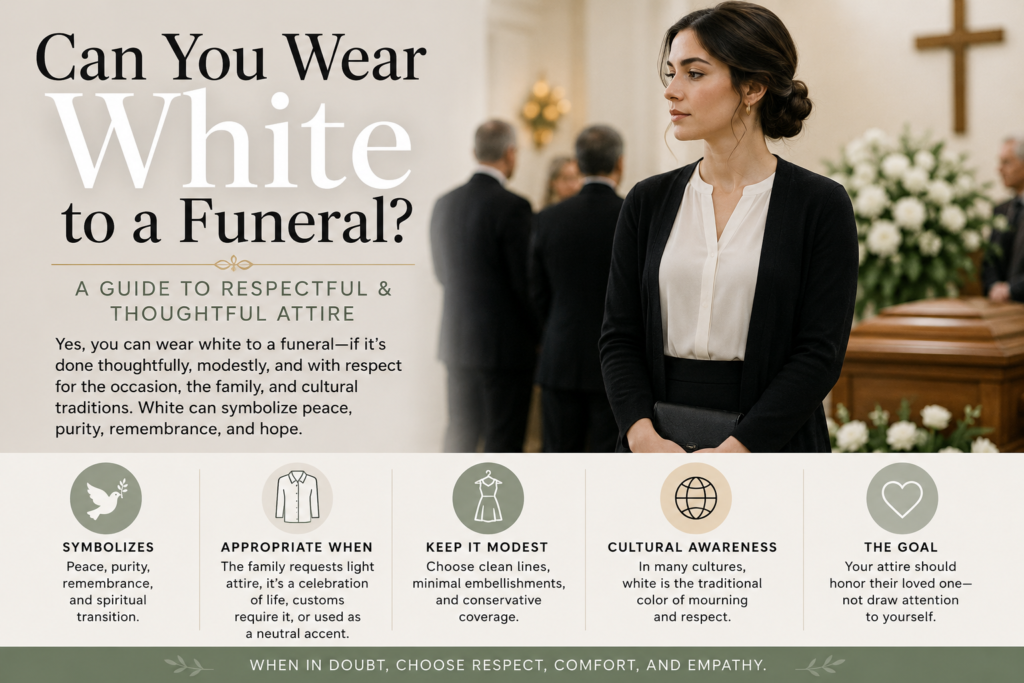
What Colors Pair Well With White for a Funeral?
When putting together an outfit from your wardrobe, the easiest way to make white clothing look intentional, grounded, and respectful is to pair it with soft, understated complementary shades. Refer to this quick-reference table for balanced funeral styling combinations:
| Primary White Base | Recommended Shade | Visual Impression | Suitable Venue Style |
|---|---|---|---|
| Crisp Pure White | Dark Charcoal or Jet Black | Classic, formal, highly reverent | Traditional sanctuaries, formal chapel wakes |
| Soft Cream or Ivory | Deep Navy Blue | Elegant, warm, balanced, approachable | Funeral home chapels, indoor visitations |
| Warm Alabaster | Slate Gray or Muted Taupe | Contemporary, soft, calming | Outdoor memorial parks, graveside gatherings |
| Off-White or Bone | Olive Green or Earthy Brown | Natural, soft, understated | Green burials, casual celebration of life events |
What to Avoid When Wearing White to a Funeral
To completely avoid unintended wardrobe missteps during a sensitive time, ensure your garment choices steer completely clear of these colors not to wear to a funeral traps, fabric styles, and formatting errors:
- Bridal Silhouettes: Avoid full-length white maxi dresses made of heavy lace, tulle, or satin that visually mimic a wedding gown.
- Flashy Embellishments: Steer completely clear of white shirts or blouses adorned with loud sequins, glittering metallic threads, or heavy embroidery.
- Revealing Cuts: Ensure hemlines remain at or below the knee, shoulders are covered, and necklines are conservative. Tight, sheer, or athletic white fabrics are inappropriate.
- Bright, Distracting Accessories: Do not pair a white base outfit with neon shoes, loud chunky jewelry, or casual graphic accessories that draw attention away from the service.
Quick Funeral Outfit Etiquette Tips
Before you head out to attend the service, run through this concise practical checklist to ensure your wardrobe selections strike the perfect note of comfort and consideration:
- Verify the Service Details First: Check the online obituary, memorial website, or physical invitation for explicit notes regarding special color requests or unique thematic guidelines.
- Proactively Ask a Family Representative if Unsure: If you are close with the family or an event coordinator, a brief, polite text confirming the tone of the dress code can eliminate hours of guesswork.
- Prioritize Modesty Over Fashion Trends: A memorial gathering is not a runway. Choose timeless, clean, and simple profiles that emphasize respect over style trends.
- Master the Broader Etiquette Rules: Ensure your attire coordinates smoothly with the behavioral and procedural expectations of the venue. You can study essential memorial etiquette rules to feel completely anchored and prepared for the flow of the entire day.
Common Mistakes to Avoid
Even with excellent intentions, simple missteps in choosing your attire can accidentally create awkward barriers or discomfort during a service. Reviewing this quick operational checklist will keep your presentation polished, respectful, and appropriate.
| Common Mistake | Why to Avoid It | What to Do Instead |
|---|---|---|
| Over-accessorizing with bright white items | Loud, heavy white sunglasses, chunky belts, or neon-white sneakers look flashy and distract from the service. | Keep your jewelry minimal, classical, and quiet, opting for matte leather or simple metals. |
| Ignoring regional or cultural religious dress codes | Wearing standard black to a traditional Hindu service or bright white to an ultra-orthodox chapel breaks sanctuary rules. | Take five minutes to research the specific religious denomination or venue rules before finalizing your outfit. |
| Choosing highly casual white athleisure wear | Graphic white t-shirts, distressed white jeans, or hoodies look overly informal and dismissive of the family’s grief. | Stick to woven, structured fabrics like cotton, linen, or lightweight wool in professional cuts. |
Final Thoughts
When you boil funeral growth and community support strategies down to their core, your choice of attire is much more than a simple fashion decision. It serves as a vital hospitality and care tool that bridges the gap between individual grief and community solidarity. It tells the mourning family that you see them, value them, and are ready to support them on their emotional path through a difficult milestone.
By keeping your layout clean, choosing tasteful and modest garment pieces, removing pressure from your style choices, and matching the specific cultural tone of the room, you can confidently show up with open arms. Prioritizing simple, elegant, and balanced attire ensures that the structural focus of the day remains exactly where it belongs—on honoring a beautifully lived life and remembering a legacy that will endure forever.
Frequently Asked Questions
Can you wear white to a funeral?
Yes, wearing white to a funeral is acceptable if the garment is styled modestly, paired with darker or neutral tones, or worn to align with the specific cultural traditions or requests of the deceased’s family.
Is a white shirt okay for a funeral?
Yes, a white dress shirt or structured button-down is one of the most common, respectful, and universally accepted choices for both men and women, especially when worn underneath a dark suit jacket, blazer, or cardigan.
Can women wear a white dress to a funeral?
A simple, tailored white dress can be appropriate if it features a conservative silhouette and is paired with dark layers, like a navy blazer or black cardigan, to tone down the overall brightness. Avoid fabrics that appear bridal, casual, or flashy.
Is wearing all white to a funeral disrespectful?
Not inherently. In Eastern cultures like Hinduism and Buddhism, all-white attire is the traditional sign of mourning. In Western contexts, however, all-white can look out of place or bridal unless the family has explicitly requested a light color palette for a celebration of life.
What colors should you avoid at a funeral?
As a general rule, avoid overly bright, neon, or flashy colors like hot pink, vibrant orange, or neon green, along with loud graphic prints and casual athletic wear, unless the family has specifically asked for a colorful dress code.