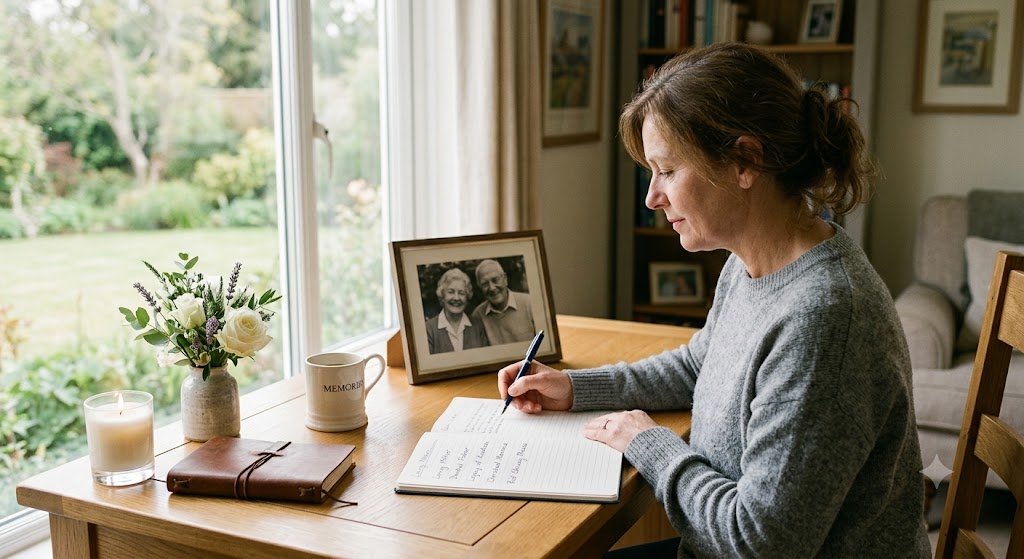
Standing in front of a blank page trying to write a tribute for someone you love can feel completely overwhelming. When we lose a family member or friend, finding the perfect balance between honoring their unique spirit and managing our own grief is an incredibly heavy task. You might be staring at the screen wondering exactly what to say in a funeral message or how to summarize an entire lifetime in just a few paragraphs.
An obituary is more than just a formal notice of passing; it is a lasting historical record and a final gift of love. The expressions you choose hold immense power—they give readers a way to remember, smile, and connect over a shared legacy. This comprehensive guide provides the **best obituary phrases**, categorized by personality and relationship, alongside copy-and-paste templates to help you learn how to write an obituary with confidence, grace, and clarity.
Traditional Obituary Openings
The opening line of an obituary sets the structural tone for the entire piece. Classic funeral phrases offer a sense of dignity, comfort, and timeless respect, making them universally fitting choices for announcing a passing.
In traditional notices, clarity and reverence are prioritized. These openings clearly state the departure while grounding the announcement in peaceful, respectful language. Depending on your family’s personal preferences or traditions, you can use these foundational opening lines to begin your tribute:
- “Passed away peacefully on [Date] surrounded by loved ones.”
- “Went to be with the Lord on [Date], entering into eternal rest.”
- “Surrounded by family, [Name] left us on [Date] after a courageous battle.”
- “It is with deep sorrow that we announce the passing of [Name] on [Date].”
- “Peacefully, and on [his/her/their] own terms, [Name] departed this life on [Date].”
If you are looking to infuse a deeper spiritual element into these opening lines, you can pair them with a dedicated selection of comfort verses, such as those found in our guide to meaningful funeral bible verses.
Meaningful Phrases for Different Personalities
A beautiful obituary does not just list dates and historical facts; it captures the true essence of who the person was. Choosing specific, descriptive words of remembrance ensures that their unique spark shines through the text.
### For a Loving Parent or Grandparent
When honoring a matriarch or patriarch, the focus naturally shifts to legacy, nurturing care, and the deep roots they planted within the family unit.
“Their family was their world, and they built a lifetime of beautiful memories together.”
“He leaves behind a legacy of love and kindness that will guide our family for generations.”
“A devoted mother and fierce protector, her warmth extended to everyone who walked through her door.”
### For a Passionate Creative or Adventurer
For individuals who spent their lives exploring, creating art, or marching to the beat of their own drum, use vibrant, energetic, and vivid descriptions.
“She lived life to the absolute fullest, treating every single day as a brand-new adventure.”
“A vibrant spirit who brought color to the world, creating beauty out of the simplest things.”
“An unforgettable force of nature, his passion for discovery knew no boundaries.”
### For Someone Who Loved Humor and Wit
If your loved one was known for making people smile, a stiff, formal obituary might feel out of place. Use lighthearted expressions to capture their joyful spirit.
“Best known for their quick wit and infectious laugh, they could brighten the darkest of rooms.”
“She never met a stranger and could strike up a meaningful conversation with anyone she met.”
“They left the world a little brighter and much louder than they originally found it.”
To find further inspiration for balancing different tones, you can review our curated collection of meaningful obituary quotes and remembrance verses.

Closing Phrases & Expressions of Gratitude
The concluding section of an obituary serves a dual purpose: it offers a final sentiment of love and shares practical details for surviving family and friends. It is the place to outline service logistics, honor charitable wishes, and provide comforting sign-offs.
Using structured closing expressions helps transition smoothly into practical instructions while maintaining a respectful tone:
- “In lieu of flowers, donations may be made to [Name of Charity] in honor of [Name].” (A helpful phrase to direct support toward causes your loved one cared about deeply).
- “Though they are gone, they will remain forever in our hearts.” (A simple, beautiful emotional sign-off).
- “A celebration of life will be held on [Date] at [Location]. All who knew them are welcome.” (Clear navigational language for attendees).
- “The family wishes to extend their heartfelt gratitude to [Hospice/Hospital staff] for their compassionate care.” (An elegant expression of appreciation).
Short Obituary Examples & Fill-in-the-Blank Templates
To reduce your mental load during this stressful time, you can copy, paste, and customize these fill-in-the-blank **short obituary examples**. They are designed to fit standard newspaper constraints or online memorial pages.
### Template 1: The Traditional Notice
“[Name], age [Age], of [City, State], passed away peacefully on [Date], surrounded by [his/her/their] loving family. Born in [Birthplace] to [Parents’ Names], [Name] spent [his/her/their] career working as a [Profession] and was a dedicated member of [Community Group/Church]. A devoted mother/father/spouse, [Name]’s family was [his/her/their] world. [He/She/They] will be remembered for [his/her/their] unmatched kindness and unwavering integrity. [Name] is survived by [Spouse, Children, Siblings]. A traditional service will be held at [Location] on [Date] at [Time]. In lieu of flowers, donations may be made to [Charity].”
### Template 2: The Modern Celebration of Life
“It is time to celebrate a spectacular soul. [Name] of [City, State] finished [his/her/their] earthly journey on [Date] at the age of [Age]. [Name] lived life to the absolute fullest, always looking for the next adventure and spreading joy wherever [he/she/they] went. Known for [his/her/their] quick wit and infectious laugh, [Name] never met a stranger and left the world a little brighter than [he/she/they] found it. A proud [Creative/Adventurer/Hobbyist], [Name] left an indelible mark on everyone lucky enough to know [him/her/them]. Family and friends are invited to swap stories and laugh together at a celebration of life on [Date] at [Time] at [Venue].”
### Template 3: The Short & Concise Form
“[Name], [Age], went to be with the Lord on [Date], while residing in [City, State]. Born on [Birth Date], [Name] lived a quiet and dignified life focused on hard work, family, and simple pleasures. [He/She/They] left a lasting legacy of love and kindness that will be cherished forever by [his/her/their] surviving children, [Names], and grandchildren. Though [he/she/they] will be missed deeply, [Name] will remain forever in our hearts. Graveside services will be private. The family appreciates your ongoing prayers and support.”

Common Writing Pitfalls to Avoid
When managing grief, it is easy to make simple structural oversights. Reviewing this quick comparison table can help you keep your text polished, safe, and meaningful.
| Common Mistake | Why to Avoid It | What to Do Instead |
|---|---|---|
| Including Sensitive Details | Publishing home addresses or full birth dates can attract identity thieves or home burglars during the funeral. | List only the city/state and the birth year rather than the full date. |
| Dense Walls of Text | Grieving readers find it highly stressful to navigate unorganized, long paragraphs. | Use bullet points and bold headers to improve visual scannability. |
| Forgetting Spiritual Context | Omitting personal faith can leave out a central element of a loved one’s comfort system. | Integrate meaningful scripture lines, such as those featured in our guide on bible verses for prayer cards. |
Frequently Asked Questions
How long should an obituary be?
An obituary is typically between 200 and 500 words long. Print publications in local newspapers charge by the line or word, making a shorter, concise summary best for print. Online memorial pages allow for extended tributes that can cross into 1,000 words or more.
What should you omit from an obituary for safety?
To protect your family against identity theft and security concerns, omit specific residential home addresses, mother’s maiden names, and precise birth dates. You should also ensure that the notice does not leave a house visibly empty during public service times.
Should the cause of death be listed?
Listing the cause of death is completely optional and remains a deeply personal family choice. It is entirely acceptable to share details openly, use a gentle phrase like “passed away after a courageous illness,” or leave it out completely to protect personal privacy.
Final Thoughts
When drafting an obituary, sincerity and authentic remembrance matter far more than a perfectly polished literary performance. The people reading this tribute are not looking for complex prose—they want to see the real character, warmth, and enduring impact of the person they lost.
By building your text around these foundational templates, using descriptive phrases that truly reflect their personality, and keeping the layout clear and scannable, you will create a beautiful historical tribute that honors their memory for years to come.