

Standing at the front of a room to lead a service for someone who has passed away is one of the most significant honors you can be given. Whether you are a member of the clergy, a professional celebrant, or a close friend asked to step into the role, officiating a funeral carries an emotional weight that can feel overwhelming. It is a moment where the community looks to you for structure, comfort, and a path through their initial waves of grief.
If you are feeling nervous, remember that you do not need to be a professional orator to do this well. The most meaningful services are rarely the most polished; they are the ones delivered with sincerity, presence, and a clear heart. By focusing on the life of the deceased and providing a steady hand for the family, you are performing a profound act of service.
Before you begin writing your remarks, it can be helpful to understand the flow of the day. Learn what to include in your funeral program to ensure every transition is accounted for.
What Does It Mean to Officiate a Funeral?
To officiate a funeral is to serve as the master of ceremonies for a final farewell. While many people associate this role with a priest, pastor, or rabbi, it is increasingly common for families to choose a secular celebrant or a loved one to lead the proceedings. Regardless of your title, your primary objective is to guide the service, set a respectful tone, and support the family by managing the logistics of the ceremony.
You are the bridge between the formal structure of the service and the raw emotions of the attendees. Your presence provides a “container” for the grief in the room, allowing others to focus on their personal reflections while you handle the “what comes next.”
Responsibilities of a Funeral Officiant
The role begins long before you step up to the lectern. A successful officiant manages several key moving parts:
- Meeting with the Family: This is the foundation. You must listen to their needs, understand their relationship with the deceased, and identify the specific tone they want to achieve.
- Planning the Service Structure: You are responsible for the funeral service order. This includes deciding where music, readings, and the eulogy fit best.
- Writing and Delivering Remarks: You will provide the “connective tissue” of the service, from the opening welcome to the closing benediction.
- Coordinating Speakers: If friends or coworkers are giving tributes, you will introduce them and ensure they know their time limits.
- Leading Transitions: You ensure there are no awkward silences, guiding the audience from a somber reading into a celebratory musical piece with grace.

How to Prepare for Officiating a Funeral
Meet With the Family
When learning how to officiate a funeral, the first step is always the family meeting. Ask open-ended questions: What did they love? What would they have wanted people to remember most? This is also where you clarify the religious or secular nature of the event. Even if you are not religious, if the family is, you may need to incorporate specific funeral messages or scriptures to honor their traditions. It is also worth asking the family whether the service will include a graveside component, as understanding what interment involves and what to expect during that part of the day will help you prepare remarks and transitions that cover every stage of the farewell.
Gather Personal Stories and Details
Don’t just stick to the obituary facts. Ask for the “inside” stories—the person’s unique values, their sense of humor, or their favorite quotes. These details are what make the service feel personal and real. If the person was a gardener, a quote about the changing seasons might be more fitting than a generic poem.
Decide on the Type of Service
The structure changes based on the event. A traditional funeral usually occurs with the body present and follows a more formal script. A memorial service often happens without the body present and can be more flexible. Finally, a celebration of life focuses more on joy and legacy than on the solemnity of death. Knowing which one you are leading will dictate the funeral speech examples you choose to emulate. If you are leading a celebration of life, celebration of life poster board ideas can help you and the family create a meaningful visual display that gives guests something personal and heartfelt to gather around during the service.
Order of Service: A Typical Funeral Structure
Having a clear funeral service order is your best defense against nerves. Here is a standard outline that works for most services:
- Welcome and Opening Remarks: Set the tone and thank people for coming.
- Opening Prayer or Reflection: A moment of silence or a spiritual invocation.
- Reading or Scripture: A poem, passage, or religious text.
- The Eulogy: The main life story (often delivered by the officiant or a close family member).
- Music or Special Tribute: A time for contemplation.
- Additional Speakers: Short tributes from friends or colleagues.
- Closing Remarks: Reiterate the legacy of the deceased.
- Final Blessing or Farewell: A formal “goodbye” and instructions for the reception.
If you are organizing the event at a private residence, our step-by-step guide to planning a memorial at home can help you manage the logistics.
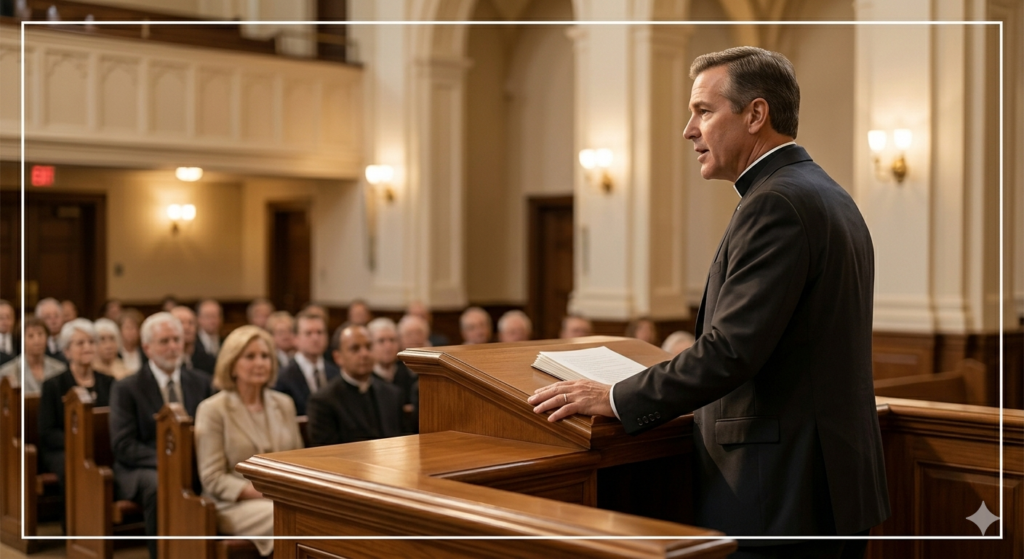
What to Say When Officiating a Funeral
Opening Remarks Example
Your opening should acknowledge the pain of the moment but also the purpose of the gathering. “We are gathered here today to honor the life of [Name]. While our hearts are heavy with loss, we are also here to witness the incredible impact [Name] had on each of us.”
Transition Phrases
Transitions keep the flow natural. “To further reflect on [Name]’s legacy, I’d like to invite [Speaker Name] to share a few words,” or, “Let us now take a moment of quiet reflection as we listen to a piece of music that held great meaning for [Name].”
Closing Remarks Example
End with a sense of hope or completion. “As we leave this place, let us carry [Name]’s spirit with us—in the kindness we show others and the stories we continue to tell. May you find peace in the days ahead.”
Sample Funeral Officiant Script
Welcome: Good afternoon. My name is [Your Name], and it is a privilege to lead us in this farewell to [Name].
Reflection: [Name] was many things to many people—a teacher, a friend, a steady hand. Today, we don’t just mourn a death; we celebrate the 80 years of life that preceded it.
Eulogy: [Name] was born in… (Insert biography and anecdotes).
Closing: We thank you for being here to support the [Family Name] family. Please join us for a reception at [Location] following the service.
Tips for First-Time Funeral Officiants
leading a funeral service is different from giving a corporate presentation. Here are a few practical tips to keep in mind:
- Speak Slowly: Grief makes it harder for people to process information. Give your words space to land.
- Keep Notes Handy: Even if you know the deceased well, emotions can cause your mind to go blank. Use a printed script or detailed bullet points.
- Practice Aloud: Read your remarks at least three times. This helps you identify tongue-twisters and manage your breathing.
- It’s Okay to Show Emotion: If your voice cracks or you need to pause for a second, it’s alright. It shows you are human and that you care.
Religious vs. Non-Religious Funerals
Religious Services
These are centered on the afterlife and divine comfort. You will likely include specific liturgies, traditional hymns, and prayers. Ensure you consult with the family’s place of worship to follow any required protocols.
Secular Services
A secular service focuses entirely on the person’s earthly life, legacy, and the memories they left behind. These are often more “story-heavy” and may include non-religious poetry or favorite pop songs instead of hymns.
Common Mistakes to Avoid
- Speaking Too Long: A funeral service should generally stay under 60 minutes. Keep your own remarks concise to allow room for other speakers.
- Overloading with Personal Stories: While anecdotes are great, ensure they serve the wider audience. Avoid “inside jokes” that leave half the room confused.
- Lack of Preparation: “Winging it” is disrespectful to the family. Have a written funeral officiant script ready.
- Ignoring Family Wishes: Even if you disagree with a choice, remember that you are there to serve the family’s vision, not your own.

How to Personalize the Service
Personalization is what turns a generic ceremony into a healing experience. Use the deceased’s name frequently. If they had a specific ritual—like always ending a conversation with a specific phrase—incorporate that into your closing. You can also suggest rituals for the audience, such as placing a flower on the casket or signing a unique guest book.
If you are looking for ways to invite guests to a more modern service, consider celebration of life invitations that reflect the person’s unique style and vibrancy.
Handling Emotions While Officiating
You may feel the urge to “be strong” for everyone else, but accepting your own emotions is part of being an authentic leader. If you feel overwhelmed, take a deep breath and focus on a point at the back of the room. Your job is not to be a statue; it is to be a steady guide. If you get stuck, simply pause, take a sip of water, and continue when you are ready.
Why Officiating a Funeral Matters
At the end of the day, you are providing the community with a “start” to their healing process. By leading a funeral service with care, you help loved ones find closure and ensure that the life of the deceased is honored with the dignity it deserves. Your words become a part of the family’s history—a final, beautiful gift given during their darkest hour.
Need Help Finding the Right Words?
If you’re struggling to draft the perfect tribute, exploring our collection can provide the inspiration you need to honor your loved one’s memory with sincerity.
Final Thoughts
Officiating is a journey of empathy. By following a clear funeral service order and speaking from a place of genuine respect, you will succeed. Don’t worry about being perfect—just be present. The family will remember your kindness long after they forget the specific words you spoke.
