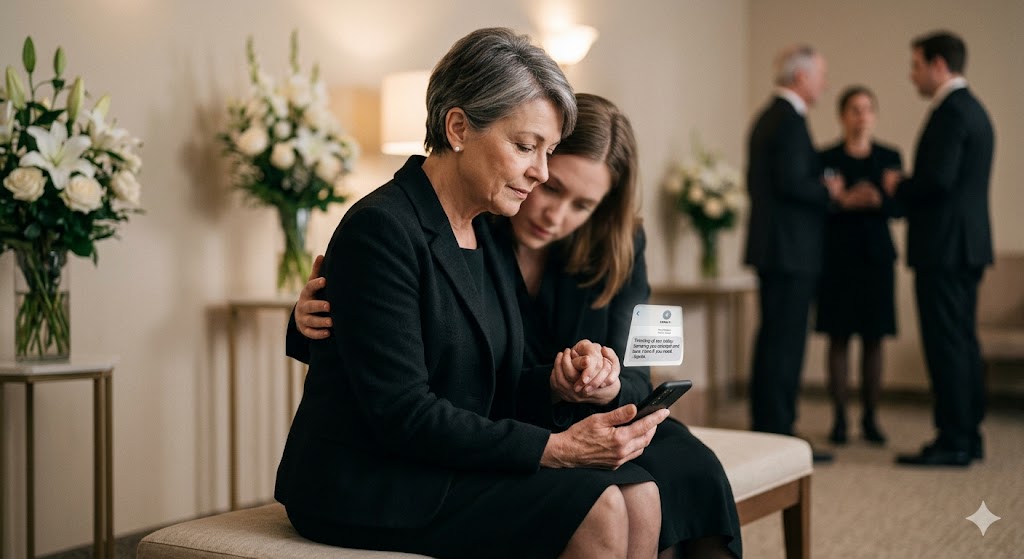
Waking up on the morning of a final farewell is one of the heaviest moments a grieving person will ever experience. As a supportive friend, family member, or colleague, you want to remind them that they are not walking this difficult path alone. Yet, standing over your phone trying to compose a message can feel completely paralyzing. You might worry about interrupting a sacred moment, causing additional emotional distress, or struggling with exactly what to say in a funeral message when words seem entirely inadequate.
A text message sent on the day of a funeral is not meant to replace a long-term condolence letter or a formal card. Instead, it serves as a digital embrace—a brief, quiet assurance that your thoughts are trailing them through the day’s upcoming services. This comprehensive guide provides practical advice on modern mourning etiquette, specialized messaging templates categorized by your relationship with the bereaved, and tips on how to use the target phrase what to text someone on the day of a funeral to show deep, unconditional support with total grace.
Should You Text Someone on the Day of a Funeral?
The short answer is yes, but it must be done with intentional care. In our highly connected digital landscape, a brief text message is widely recognized as an acceptable and compassionate way to offer condolences. Unlike a phone call, which demands immediate verbal energy and can interrupt frantic service preparations, a text message allows the recipient to read your words in their own time, absorbing your comfort without the social obligation of an immediate reply.
When preparing your text, keep these core principles at the center of your approach:
- Keep the message short and gentle: Today is not the time to ask deep, probing questions or write sprawling paragraphs of text.
- Do not expect an immediate response: The recipient’s phone may be deeply buried in a pocket, silenced, or being managed by someone else entirely. Explicitly free them from the pressure of replying.
- Avoid asking too many logistical questions: Refrain from asking where to park, what time the service begins, or where the reception is being held. Find that information elsewhere.
- Offer support without adding pressure: Focus entirely on their comfort rather than your own desire to fix or resolve their intense grief.
What to Text Someone on the Day of a Funeral
When deciding exactly what to text someone on the day of a funeral, standard sympathy expressions that balance love with structured boundaries work best. These general messages work perfectly across a wide array of situations and social circles, offering a solid foundation of reassurance.
“I’m thinking of you today and sending you so much love. Please don’t feel any need to reply.”
“I know today will be incredibly hard. Please know I’m here for you every single step of the way.”
“Wishing you strength and peace as you honor [Name] today. Their beautiful soul will never be forgotten.”
“You and your family are in my deepest thoughts today. Sending you peace during this incredibly heavy time.”
“I’m so sorry for your loss. I hope today brings gentle moments of comfort, remembrance, and shared love.”
Short Text Messages for the Day of a Funeral
Sometimes, minimalism is the highest form of respect. If you are an acquaintance or simply want to keep your message entirely unobtrusive, a ultra-short phrase can clearly deliver your support without cluttering a busy notification screen. These direct texts are deeply meaningful in their simplicity:
- “Thinking of you today.”
- “Sending love and strength.”
- “I’m here for you, always.”
- “Holding you and your family in my heart today.”
- “Wishing you peace today.”
What to Text a Friend on the Day of a Funeral
When a close friend faces a devastating loss, your tone should shift to mirror your history of shared vulnerability. A close friend needs to know that you are ready to hold space for their tears, anger, or exhaustion, and that you are waiting in the wings to help them rebuild whenever they are ready.
“I wish I could take some of this pain away from you. Just know that I’m standing by, ready for anything you need today or next week.”
“You absolutely don’t have to reply to this, but I wanted you to know I’m thinking of you every single hour today.”
“I love you so incredibly much, and I’m right here beside you whenever you’re ready to talk or just sit in silence.”
“Today must feel so unbearably heavy. I’m sending you all my love, thoughts, and strength to get through the services.”
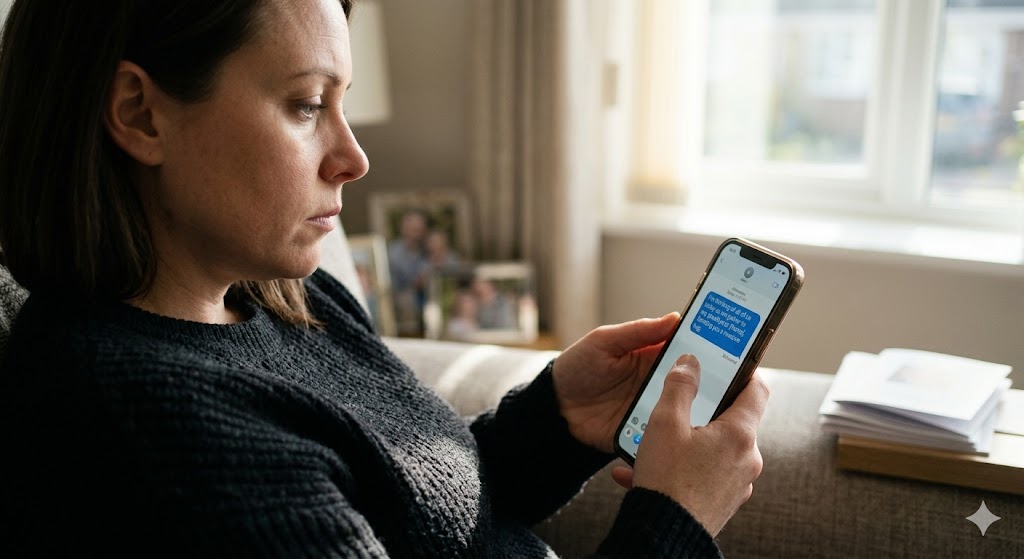
What to Text a Family Member on the Day of a Funeral
Family communication during a time of mourning often hinges on shared grief, collective memory, and ancestral unity. Whether you are messaging an extended relative or a close family member, emphasize the bond that holds your family together during this monumental transition.
“I’m thinking of all of us today as we gather to say goodbye to [Name]. Sending you a massive hug.”
“I’m so deeply grateful we can honor [Name]’s extraordinary life together today. Keeping you in my prayers.”
“Sending you endless love and strength across the miles. We will get through today together as a family.”
“Today is going to be incredibly hard, but we will carry [Name]’s enduring memory with fierce love and pride.”
What to Text a Coworker on the Day of a Funeral
Texting a colleague requires a careful balance between deep corporate respect and human empathy. You want to offer sincere support without crossing professional boundaries or making them feel anxious about their occupational responsibilities while they are trying to process their personal tragedy.
- “Thinking of you and your family today. Please take all the time you need away from the office.”
- “I’m so deeply sorry for your loss. Wishing you complete comfort and peace during today’s services.”
- “You’re in my thoughts today. Please don’t spend a single second worrying about work—we have everything completely covered.”
- “Sending sincere, heartfelt condolences to you and your family on this difficult day.”
What to Text Someone Before the Funeral Starts
The hour directly preceding a funeral is often filled with anxious pacing, logistical rushing, and emotional building. Your text should be a quiet anchor of solidarity that sits gently in their inbox without causing any audible distraction or demanding cognitive processing space.
“I’ll be thinking of you constantly during the service today. You are surrounded by so much silent support.”
“Wishing you profound strength as you take this step to say your final goodbyes today.”
“I hope you feel entirely surrounded by love, community, and support as you walk in today.”
“No need to reply at all. I just wanted you to know I’m holding you close in my thoughts as the service begins.”
What to Text Someone After the Funeral
When the funeral concludes and the crowds begin to thin, a secondary wave of exhaustion and profound emptiness frequently sets in. Checking in during the evening hours shows that you realize their grief does not end when the casket is lowered or the ceremony finishes.
- “I know today must have been utterly exhausting. I’m right here if you want to talk tonight, or just sit in silence.”
- “I hope the service brought some small moments of comfort. Thinking of you as you rest tonight.”
- “You don’t have to go through this heavy aftermath alone. I’m here whenever you need a home-cooked meal or a listener.”
- “I’ll check in again in a few days, but please know I’m sending you love as you process tonight.”
What Not to Text Someone on the Day of a Funeral
Even the most well-meaning phrases can inadvertently cause emotional damage or feel entirely dismissive to someone actively walking through the depths of fresh sorrow. It is vital to recognize how certain clichés minimize a person’s pain during a critical mental health moment.
Review this comparison guide to ensure your text avoids common phrasing pitfalls:
| What to Avoid Saying | Why it Can Be Harmful | What to Text Instead |
|---|---|---|
| “They’re in a better place.” / “Everything happens for a reason.” | This can minimize their immediate pain and feel like toxic positivity. | “I am so deeply sorry for your heartbreak today.” |
| “I know exactly how you feel.” | Every relationship and grief journey is completely unique; this shifts the focus onto you. | “I cannot imagine how hard today is, but I am here for you.” |
| “At least they lived a long life.” | Age does not make the permanent absence of a loved one any less agonizing. | “Celebrating the beautiful legacy they left behind today.” |
| “You need to be strong right now.” | This places an unfair emotional expectation on them to suppress their natural grief. | “Please allow yourself to feel whatever you need to today.” |
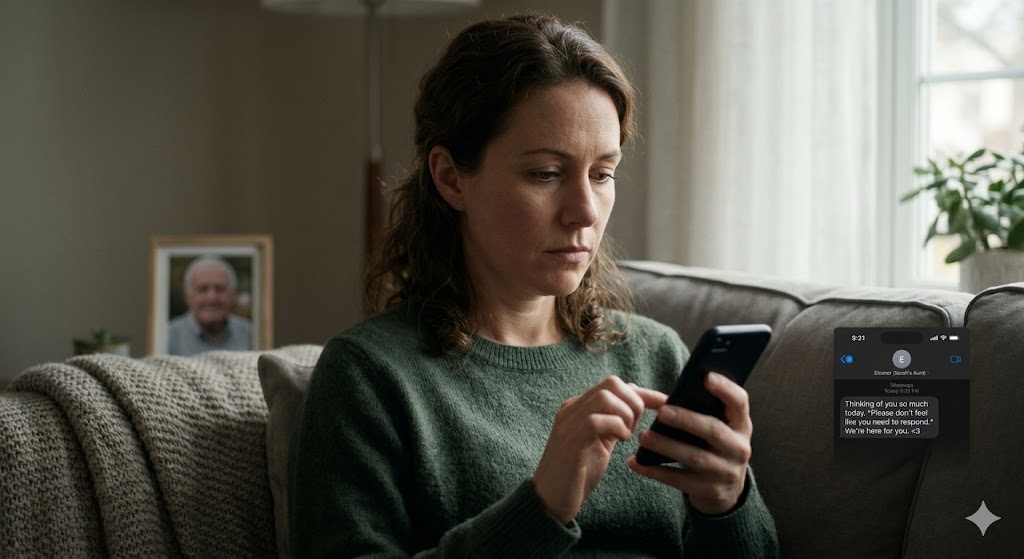
Tips for Writing a Thoughtful Funeral Day Text
If you prefer to compose a fully customized message from scratch, keeping a few foundational guidelines in your mind will guarantee that your message lands with maximum comfort and zero intrusion:
“The most effective sympathy text message combines targeted personalization with absolute freedom from conversational obligations.”
- Use the person’s name: If appropriate, mentioning the deceased’s name honors their individual identity and keeps your tribute personal.
- Keep it incredibly simple: Avoid flowery, complex prose. Sincerity always shines brighter than high literary performance.
- Explicitly grant a reply exemption: Conclude your message with a phrase like: “Please don’t feel like you need to respond to this right now. I just wanted you to know I’m thinking of you today.”
- Offer specific post-funeral help: Instead of saying “let me know if you need anything,” offer specific assistance for later dates, such as dropping off dinner or running a specific errand. For more foundational card inspiration, look at our companion guide on what to write on a sympathy card.
When to Send the Text
Timing your text correctly is just as critical as choosing the right words. Ideally, you want your message to arrive during natural structural windows when the recipient is looking at their phone but not actively walking into a ceremony.
The early morning hours (between 7:00 AM and 9:00 AM) are excellent, as it gives them a boost of supportive energy right as they start their day. Alternatively, sending a message roughly one to two hours before the service begins works beautifully. Crucially, avoid sending any text messages during the exact service window if you know the scheduling details. You do not want your text to inadvertently trigger a chime or vibration during a silent eulogy or prayer. If you miss the daytime window, waiting until late in the evening (around 8:00 PM or 9:00 PM) is a wonderful opportunity to check in as the day winds down.
Final Thoughts
When parsing through options for what to text someone on the day of a funeral, remember that compassion matters far more than a flawless literary composition. A brief, heart-centered message acts as a vital reminder that they are grounded by a supportive network on one of the single most difficult days of their entire life.
By keeping your message short, acknowledging the immense difficulty of the hour, removing any expectations of a reply, and speaking from a place of genuine sincerity, your message will provide a comforting blanket of peace. If you want to expand your long-term sympathy practices or find beautiful prose for programs, explore our library of meaningful quotes for funeral bookmarks to continue providing thoughtful aftercare.
Frequently Asked Questions
What is a good text to send on the day of a funeral?
A good text is brief, sincere, and completely free of expectations. A classic option is: “I’m thinking of you so much today and sending you love and strength. Please don’t worry about replying to this.”
Should I text someone during a funeral?
No. You should always avoid sending text messages during the active hours of the funeral service. Send your message either early in the morning before the ceremonies begin or later in the evening after the events have completely concluded.
What do you say to someone before a funeral?
Focus entirely on offering them comfort and endurance. You can say: “Wishing you immense strength and peace today as you walk through the services. I’ll be keeping you and your family in my heart.”
What should you not say on the day of a funeral?
Avoid phrases that accidentally minimize grief or offer platitudes, such as “everything happens for a reason,” “they’re in a better place,” or demanding that they “be strong.” Let them feel their grief naturally.
Is it okay if they do not reply to my text?
Yes, it is completely normal. Grieving individuals are dealing with intense emotional exhaustion and physical demands. Your text is a gift of support that requires absolutely nothing in return.