Korean funeral customs bring together family duty, community support, religious belief, and remembrance. A funeral in South Korea often follows a three-day schedule, while Korean-American families in the United States may use a shorter funeral-home or church service.
Some families bow and offer incense. Others pray, sing hymns, place a flower, or combine Korean and American practices.
There is no single ceremony that every Korean family follows. The family’s faith, wishes, region, and level of tradition all shape the service. If you are attending a Korean funeral, dark modest clothing, a brief condolence, and attention to the family’s cues are respectful starting points.
If you are planning one, ask which customs feel meaningful instead of assuming that every tradition must be included.
“Korean funeral customs vary by family, faith, region, and level of tradition. Respectful participation matters more than performing every ritual perfectly.”
Quick answer: Korean funerals may include a portrait altar, family-hosted visitation, bowing, incense, prayer, flowers, condolence money, shared meals, burial or cremation, and later remembrance. In South Korea, a three-day funeral is common, while Korean-American families may adapt the schedule and rituals to U.S. funeral homes, churches, cemeteries, and local customs.
Korean Funeral Customs at a Glance
Common elements may include:
- A portrait or memorial altar for the person who died
- A family member serving as the chief mourner or primary host
- Visitation that welcomes relatives, friends, coworkers, and community members
- Bowing, incense, prayer, flowers, or another faith-appropriate gesture
- Condolence money in a plain envelope, especially in South Korea and in some Korean-American communities
- Food offered to visitors as part of the family’s hospitality and the community’s support
- Burial, cremation, or placement of cremated remains in a columbarium
- Later remembrance through a family, church, or Buddhist observance
These are possibilities, not requirements.
A Protestant service may replace incense and deep bows with hymns and prayer. A Catholic family may blend a funeral Mass with Korean gestures. A Buddhist family may hold additional rites after the funeral. A nonreligious family may keep the portrait, bowing, meals, and communal visitation without a formal religious ceremony.
Korean Funerals in South Korea and the United States
Many descriptions of Korean funeral etiquette explain the hospital funeral halls used in South Korea. Those details can be helpful, but they do not always transfer directly to a Korean-American service.
| Aspect | Common in South Korea | Possible Korean-American Adaptation |
|---|---|---|
| Timing | A three-day funeral, called samiljang, is common | A one-day or two-day visitation and service may fit U.S. schedules |
| Setting | A hospital funeral hall often has an altar room and a separate reception room | A funeral home, church, cemetery chapel, or community space may be used |
| Guest visits | Visitors may arrive throughout the visitation period, often on the second day | Families may set specific visitation hours and a scheduled service |
| Ritual gesture | Incense, a white chrysanthemum, and two deep bows may be part of the altar sequence | Prayer, a flower, a head bow, or quiet reflection may replace or accompany traditional gestures |
| Condolence gift | Cash in a plain envelope is widely recognized | Some families welcome an envelope, while others may welcome flowers, cards, charitable gifts, or no gift |
| Service language | Korean is usually the main language | Korean and English may both appear in readings, programs, announcements, and prayers |
| Final disposition | Cremation is common, with burial and natural burial also used | Families choose among burial, cremation, and cemetery options available in their state |
Treat the invitation, obituary, funeral-home instructions, and family preferences as the guide. A trusted relative, community member, or funeral director can clarify unfamiliar customs.
The Common Three-Day Funeral Tradition
The Korean term samiljang refers to a funeral completed on the third day after death.
Under the inclusive counting used in Korea, the date of death is Day 1. This is a common modern framework in South Korea, although the timing and details vary by the time of death, the venue, the family’s faith, and local arrangements.
Korea JoongAng Daily’s reported guide to modern funeral etiquette describes the familiar pattern of one envelope, two bows, and three days, but it should not be read as a fixed script for every family.
Day 1: Arrangements and the Mourning Room
The family confirms the funeral hall, establishes the memorial altar, and announces the death.
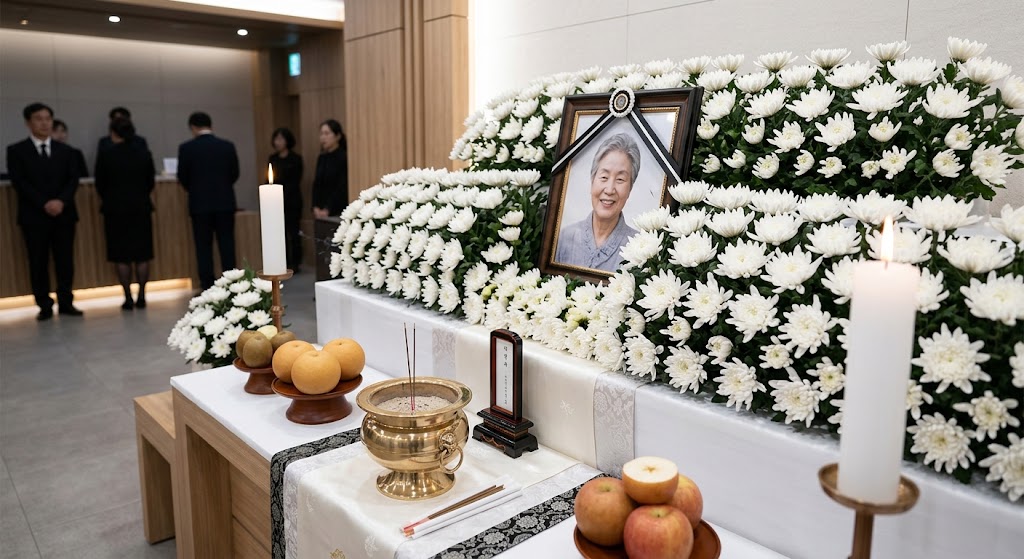
The altar often includes a framed portrait, flowers, and a place for incense or another ritual gesture.
Washing and shrouding the deceased, called yeomseup, and placing the body in the coffin, called ipgwan, may take place during the first or second day depending on the circumstances.
The mourning or visitation room is called a binso.
A family member may act as the sangju, often translated as chief mourner. Historically this role was commonly assigned to the eldest son, but modern families may name another relative or share the responsibilities.
Day 2: Visitation and Community Support
Most guests visit during this period.
They may sign a register, present a condolence envelope when that custom is being observed, approach the altar, and offer condolences to the family.
Visitors may then sit in a separate reception area and share a meal.
The altar room and reception room can feel very different. Quiet ritual near the portrait may be followed by conversation and food in another room. That social atmosphere reflects the communal work of mourning, not a lack of respect.
Day 3: Departure and Final Disposition
On the third day, the departure or procession, called balin, leaves for the place of burial or cremation.
Close relatives and friends may accompany the family.
The day can include prayers, a committal ceremony, and a final farewell before burial, cremation, or placement in a columbarium.
Korean-American families may preserve the same general sequence within fewer hours. A visitation, worship service, and graveside or cremation committal can take place in one or two days.
What to Expect When Attending a Korean Funeral
Concern about making a mistake is common, especially for a first-time guest.
Respect matters more than perfect ritual performance. Observe the setup, follow an attendant’s direction, and let the family’s faith determine what happens at the altar.
What to Wear
Choose black or another dark, subdued color.
A suit, modest dress, skirt or trousers, and quiet shoes are appropriate.
Avoid bright colors, prominent logos, casual athletic wear, and flashy accessories unless the family has asked guests to dress differently.
Traditional Korean funeral rites included white or hemp mourning clothes. Today, family members may wear black clothing, a black armband, a white ribbon, traditional garments, or ordinary formal attire.
What Happens When You Arrive
A guest’s sequence may look like this:
- Enter quietly and silence your phone.
- Sign the guest register if one is provided.
- Present a condolence envelope or other gift if the family is receiving one.
- Approach the portrait, casket, or altar.
- Follow the indicated gesture, such as offering incense, placing a flower, bowing, praying, or observing a moment of silence.
- Turn to the family and offer a short condolence.
- Join the reception meal if invited.
Photography is usually inappropriate unless the family has clearly invited it.
Avoid asking how the person died or pressing the family for details.
Bowing, Incense, Flowers, and Prayer
At a Confucian-influenced or nonreligious Korean funeral, a guest may offer incense and make two deep bows toward the portrait of the deceased.
The guest then acknowledges the family, often with a bow.
The procedure changes with religion.
At many Protestant funerals, guests do not burn incense or make ritual bows to the altar. They may place a flower, pray, or stand silently.
Catholic and Buddhist practices can include different combinations of prayer, bowing, flowers, incense, chanting, or scripture.
If you are unsure: You do not need to memorize exact hand positions or flower placement. Follow an attendant or another guest. A respectful head bow, quiet reflection, or prayer according to your own beliefs can also be appropriate.
Condolence Money and Other Gifts
Condolence money is often called bu-ui-geum or jo-ui-geum.
In South Korea, guests commonly place cash in a plain white envelope and write their name on it. The gift is a practical expression of support for the family.
In the United States, expectations vary widely.
Some Korean-American families keep the envelope tradition. Others follow local customs and receive flowers, sympathy cards, charitable donations, meals, or no gifts.
Do not apply a won-based amount to a U.S. service or assume that money is required. Check the obituary or invitation, follow funeral-home guidance, or quietly ask someone close to the family.
Large standing wreaths are often sent by businesses, organizations, or groups in South Korea. Individual guests at a U.S. funeral may see different flower customs.
The family’s instructions should take priority over a general rule.
What to Say to the Family
Keep your words short and sincere.
In English, you might say:
- “I am so sorry for your loss.”
- “Please accept my condolences.”
- “I am thinking of your family.”
- “It was an honor to know them.”
If you know the family welcomes Korean condolence language, ask a fluent speaker to help with wording and pronunciation.
Religious fit matters, so an honest sentence in your own language is better than a memorized phrase you are not comfortable using. Quiet presence is also meaningful.
Why Food Is Served
Food helps the family welcome guests during a long visitation and gives visitors a place to sit together.
In South Korea, a funeral meal may include yukgaejang, a spicy beef soup, along with rice, boiled pork, pancakes, fruit, and side dishes.
Menus vary by region, venue, religion, and family.
If the family invites you to eat, accepting at least a small amount can be a gracious way to receive their hospitality.
The meal also gives friends and coworkers time to support the mourners beyond a brief exchange at the altar.
How Faith Changes Korean Funeral Traditions
Korean culture has been shaped by Confucian family ethics, Buddhism, Christianity, and folk practice.
Modern families may draw from several of these influences or none of them.
Confucian-Influenced and Nonreligious Services
These services may emphasize filial respect, family roles, a portrait altar, bowing, incense, and communal visitation.
Calling the service “Confucian” does not always mean the family formally follows Confucianism. The term often describes cultural practices tied to ancestry, family duty, and ritual respect.
Protestant Services
Protestant Korean funerals commonly include hymns, scripture, a sermon, and prayer.
The family may avoid incense and deep altar bows because of its religious beliefs.
A standing bow, flower placement, or silent prayer may be used instead.
Catholic Services
A Catholic funeral may include a vigil, rosary, funeral Mass, and committal.
Korean gestures, language, food, and family roles may appear alongside Catholic liturgy.
Ask the church or family before assuming that incense or bowing is included.
Buddhist Services and the 49-Day Rite
A Buddhist funeral may include chanting, incense, offerings, and prayers for the deceased.
Some families observe 49jae, a series of memorial rites associated with the 49 days after death and the hope for a favorable rebirth.
A peer-reviewed study of the 49-day rite in modern Korean Buddhism explains both its religious function and its role in bereavement.
The 49-day rite is a Buddhist practice, not a requirement for every Korean family.
It should also be distinguished from jesa, a broader term for ancestral or memorial rites that families may hold on an anniversary or another significant date.
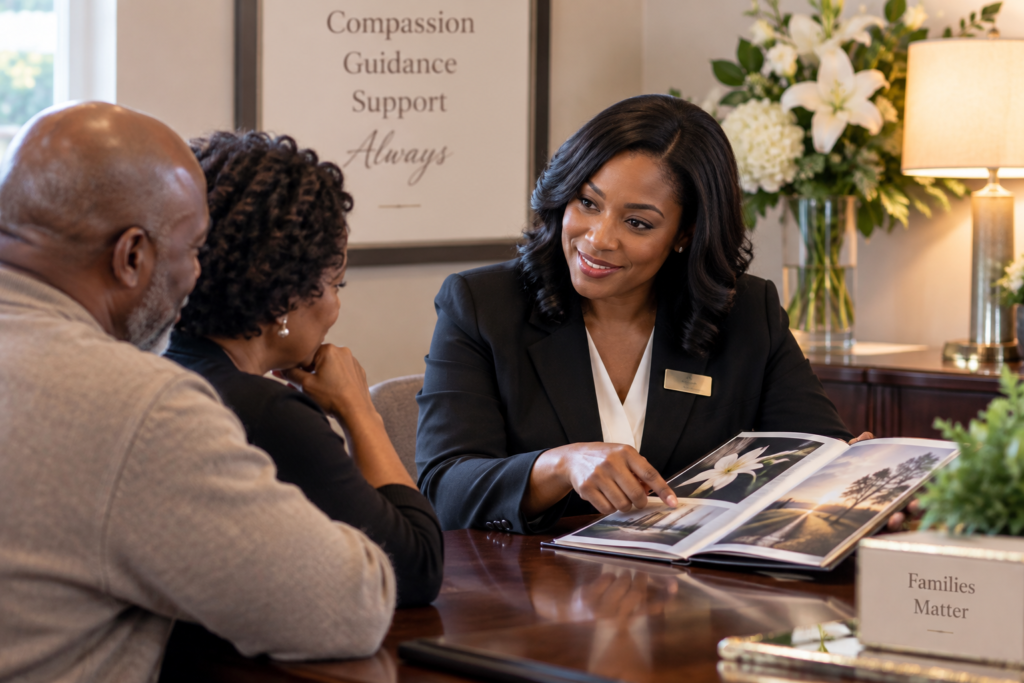
Planning a Culturally Respectful Korean-American Funeral
A Korean-American funeral can honor heritage without recreating every practice used in South Korea.
Start with the family, then build a service around the customs and beliefs that matter to them.
Ask Which Traditions the Family Wants
Discuss:
- The preferred faith tradition
- Service length
- Korean, English, or bilingual language use
- Altar setup
- Bowing or prayer
- Incense
- Condolence gifts
- Food
- Burial or cremation preferences
Ask who will greet visitors and who will coordinate with the funeral home or church.
Clear decisions prevent relatives and staff from relying on conflicting assumptions.
Make the Service Easy to Follow
A bilingual funeral program can list the order of service, names of participants, readings, hymns, prayers, and a short explanation of unfamiliar gestures.
Clear signs near the guest register or condolence table can help visitors understand what the family welcomes.
For relatives who cannot attend, a digital funeral announcement or memorial scan can share accurate times, locations, livestream details, obituary information, and later memorial plans.
Coordinate Cultural Details With the Venue
Confirm whether the funeral home or church allows:
- Incense
- Food service
- Overnight visitation
- Floral stands
- Livestreaming
- Multilingual signage
Ask about ventilation, fire rules, catering areas, technology, and time limits before printing the final schedule.
Personalize the Memorial Materials
Portraits, funeral programs, prayer cards, announcements, register books, and digital tributes can reflect Korean language, Christian or Buddhist readings, favorite photographs, family history, and the person’s individual life.
Cultural respect should support a personal tribute, not reduce someone to a checklist of traditions.
Burial, Cremation, and Remembrance After the Funeral
Burial has deep historical importance in Korean culture, including family graves and continuing family remembrance at the burial place.
Cremation has become common in modern South Korea, with remains placed in a columbarium, memorial park, family site, or another location allowed by law.
Korean-American families choose among burial and cremation options available in the United States.
Religion, family preference, cemetery rules, cost, distance, and plans for future visits may all influence the decision.
Remembrance may continue through:
- Church services
- Cemetery visits
- Buddhist rites
- Jesa
- An annual family gathering
- A private practice created by the family
Not every family observes a formal milestone. Ask rather than assume.
A Short Glossary of Korean Funeral Terms
- Samiljang: A funeral completed on the third day after death.
- Binso: The mourning or visitation room where guests pay respects.
- Sangju: The chief mourner or principal family representative.
- Yeomseup: Washing and shrouding the deceased.
- Ipgwan: Placing the deceased in the coffin.
- Balin: The departure or funeral procession for burial or cremation.
- Bu-ui-geum or jo-ui-geum: Condolence money offered to the family.
- Sangbok: Mourning clothing.
- Jesa: A broad term for ancestral or memorial rites.
- 49jae: A Buddhist memorial observance associated with the 49 days after death.
Romanization varies, so readers may see these terms spelled differently in English.
Frequently Asked Questions About Korean Funeral Customs
How Long Does a Korean Funeral Last?
In South Korea, a three-day funeral is common.
Korean-American families may hold a one-day or two-day visitation and service because of venue schedules, travel, religious practice, or family preference.
What Should I Wear to a Korean Funeral in the United States?
Wear black or dark, modest clothing unless the family requests something else.
Formal or businesslike attire is a sound choice. Historical white mourning garments are generally associated with family or traditional practice, not a default dress code for every guest.
Do I Need to Bring Money to a Korean-American Funeral?
Not always.
Some families receive condolence money in a plain envelope, while others prefer flowers, cards, charitable donations, meals, or no gift.
Follow the obituary and invitation, or ask a trusted contact. Do not assume a specific dollar amount.
How Many Times Should I Bow?
Two deep bows to the deceased are common in some Confucian-influenced and nonreligious services.
Christian and other services may use prayer, flower placement, a standing bow, or silence instead. Follow the family and venue.
Can a Non-Korean Guest Attend?
Yes, when the service or visitation is open to you.
You do not need to perform every custom perfectly. Dress respectfully, keep your phone silent, offer a brief condolence, and observe the family’s cues.
Are Korean Funerals Open Casket?
Some are, especially in certain U.S. funeral-home settings, but others center on a portrait altar and do not display the body.
The family’s beliefs, the condition of the deceased, the venue, and local practice determine the arrangement.
Are Flowers Appropriate?
They can be, but the form differs.
Organizations in South Korea may send large standing wreaths, while U.S. families may accept sympathy arrangements or ask for donations instead.
At the altar, a flower may be provided as part of the ritual. Follow the family’s instructions.
What Should I Do If I Am Unsure About a Ritual?
Pause, watch, and follow an attendant or another guest.
You can also offer a head bow, stand silently, or pray according to your own beliefs. A sincere presence is more important than perfect choreography.
Prepare Guests Without Turning Customs Into Rules
For families preparing a service, a short explanation in the program or announcement can reduce uncertainty for guests.
Note the dress code, gift preference, service language, altar gesture, livestream details, and meal or reception plans that apply to your ceremony.
Honor You can help create personalized funeral programs, announcements, and memorial pieces that carry those details while keeping the person’s story at the center.