After a funeral or memorial service, you can take the flowers home, share them, place them at a gravesite, donate them if a local organization accepts them, preserve a few blooms, or compost them.
There is no required choice. You can keep one flower, photograph the arrangements and message cards, and let the rest go.
The best next step depends on the type of arrangement, how fresh the flowers are, and how much time or energy you have.
“You do not have to save every funeral flower. Keeping one bloom, one photograph, or one message card can be enough.”
Quick answer: Funeral flowers can be taken home, shared with relatives, placed at a gravesite, donated when a local organization accepts them, preserved as keepsakes, replanted if they are living plants, composted, or simply let go. Start by photographing the arrangements and cards, then decide what feels manageable and meaningful.
Start Here: Four Things to Do Before You Decide
1. Ask What Will Happen to the Flowers
Before moving an arrangement, check with the funeral home, place of worship, crematorium, or cemetery.
Some flowers may belong to the family, while a venue may have a process for removing unclaimed arrangements. Cemetery rules can also limit how long flowers may remain at a grave.
If you are helping a family, ask the closest relative or the person coordinating the service before taking any flowers.
2. Photograph the Arrangements and Message Cards
Take a clear photo of each arrangement and its card before separating or giving away the flowers.
This preserves the sender’s message and makes personalized thank-you cards easier to prepare later.
A close-up of a favorite bloom can also become part of a memorial page or family album.
3. Sort the Flowers by Type
Separate the flowers into a few practical groups:
- Vase arrangements and loose stems: These can usually be refreshed, divided, or preserved.
- Standing sprays and casket pieces: These may contain wire, picks, floral foam, or a frame that needs to be removed before reuse or composting.
- Potted plants: These can often be cared for indoors or replanted if the species and local climate allow.
- Damaged flowers: Blooms that are bruised, moldy, or shedding heavily may be ready for composting or disposal.
4. Protect the Flowers You Want to Keep
Choose your best blooms while they are still fresh.
Trim damaged stem ends, place cut flowers in clean water, and keep them in a cool area away from direct sun and heat.
If you are considering a professional preservation service, contact the provider promptly and follow its packing instructions.
A Quick Guide to Your Options
| Choice | Best When | Time Sensitivity | First Step |
|---|---|---|---|
| Take them home | You want a few more days with the flowers | Same day | Refresh the water and trim stems |
| Share them | Several people would value a small bouquet | Same day | Divide arrangements and keep sender cards with them |
| Place them at a gravesite | The cemetery permits fresh flowers | Same day | Confirm placement and removal rules |
| Donate them | A nearby organization accepts used arrangements | Usually within a day | Call before delivering anything |
| Preserve them | One or more blooms feel especially meaningful | As soon as possible | Choose the final keepsake and preservation method |
| Keep a potted plant | The tribute is living and healthy | Within a few days | Check the care label and light needs |
| Compost them | The flowers are untreated and free of nonplant materials | When they begin to fade | Remove wire, foam, ribbon, plastic, and picks |
| Let them go | A project would feel like another obligation | Any time | Save a photo or one bloom if you wish |
1. Share Flowers With Family and Friends
Large funeral arrangements can become several small bouquets.
Use clean vases or jars, remove wilted stems, and divide the flowers among relatives, friends, caregivers, or people who could not attend.
A single rose, lily, or sprig of greenery may carry as much meaning as a full arrangement.
Include the sender’s card or share a photo of it.
2. Place Flowers at the Gravesite or Another Memorial Place
Some families take a casket spray or smaller bouquets to the cemetery after the service.
Others place flowers near an urn, a home memorial, or another place connected to the person who died.
Ask before leaving flowers at a cemetery, public garden, park, shoreline, or other shared space.
Rules vary, and staff may remove flowers on a set schedule.
Avoid scattering petals or leaving ribbon, wire, plastic, floral foam, or containers where they could become litter.
3. Donate Funeral Flowers, If a Local Organization Accepts Them
Fresh arrangements may bring comfort to people in a hospice, nursing home, assisted-living community, church, shelter, or community center.
Acceptance is never guaranteed, so call first.
Hospitals and care facilities may decline flowers because of allergies, infection-control rules, patient needs, or limited space.
When an organization says yes, ask how it wants the flowers prepared.
You may need to:
- Remove sympathy cards, funeral ribbons, or personal messages.
- Transfer flowers from large sprays into small, stable containers.
- Remove wire, pins, floral foam, or damaged stems.
- Deliver to a specific entrance or during set hours.
4. Make Smaller Arrangements for Home
You do not have to turn the flowers into a permanent object.
Use clean vases, remove leaves below the waterline, and replace the water regularly.
Place one arrangement near a photograph or memory book, or give a small bouquet to someone who provided practical support.
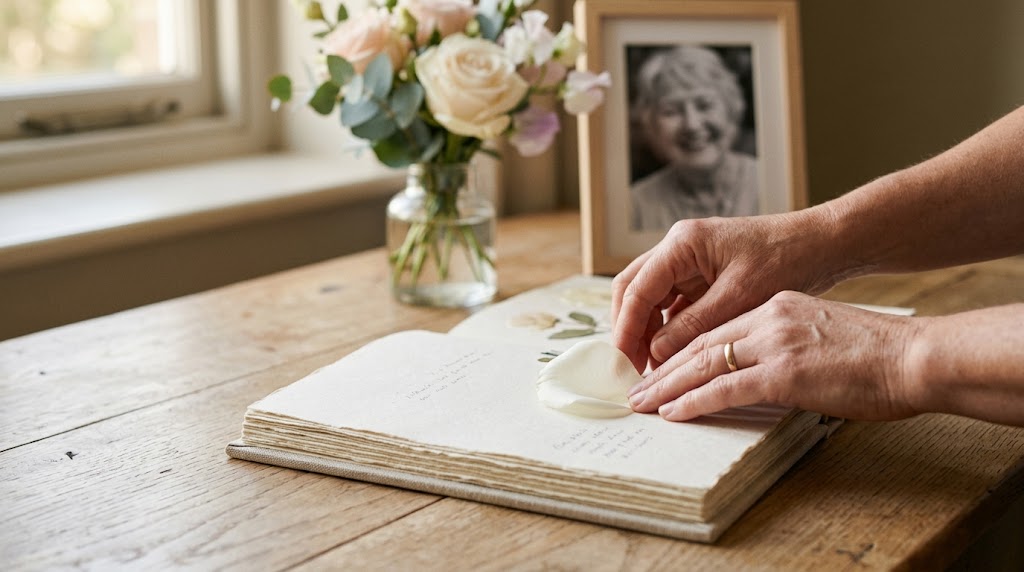
5. Press Flowers for a Frame, Bookmark, or Memory Book
Pressing works well when you want a flat keepsake for a frame, memory book, or card.
Choose flowers or individual petals that are dry on the surface and still in good condition.
Flatter blooms and leaves are generally easier to press than thick, tightly layered flowers.
To press a flower with a heavy book:
- Place the flower between sheets of plain, absorbent paper.
- Put the paper inside a heavy book, away from moisture and direct sunlight.
- Add weight on top and leave the flower undisturbed until it is completely dry.
- Lift it carefully. Pressed petals can be brittle.
Avoid glossy paper because it does not absorb moisture well.
Plant moisture can mark pages, so use a flower press instead of a valuable book.
A pressed bloom can be framed beside a photo, handwritten note, prayer card, or personalized memorial bookmark.
The combination holds both the flower and its story.
6. Air-Dry Flowers for a Shadow Box or Vase
Air-drying is a simple choice for sturdy stems.
Remove damaged leaves, tie loose, small bundles, and hang them upside down in a dark, dry, ventilated place.
Colors often darken or fade, stems become brittle, and full blooms may shrink.
Keep air moving around the bunches, and discard flowers that develop mold or a musty smell.
Once fully dry, the flowers can go into a vase, shadow box, memory jar, or covered display.
Keep them out of humid rooms and direct sunlight.
7. Use Silica Gel to Keep More of a Flower’s Shape
Flower-drying silica gel draws moisture from blooms while supporting their three-dimensional form.
It can suit flowers you want to display whole.
Use a product sold for flower drying and follow its instructions.
Container size, material depth, drying time, and preparation vary.
Handle dried flowers gently and avoid breathing dust.
Silica drying can retain more shape than pressing or air-drying, but freshness, bruising, moisture, and flower variety still affect the result.
8. Choose Professional Preservation for Irreplaceable Flowers
A professional flower-preservation artist may offer pressed frames, shadow boxes, freeze-dried displays, resin pieces, ornaments, jewelry, or paperweights.
This option can make sense when the flowers are irreplaceable, the desired design is technically difficult, or the family does not want a DIY project.
Contact a provider promptly.
Ask about:
- Flower condition
- Suitable designs
- Packing or shipping
- Proofs
- Expected color changes
- Turnaround time
- Care instructions
- Written policies
For resin keepsakes, flowers must be fully dried first.
Resin also requires careful measuring, ventilation, protective equipment, and temperature control.
A specialist may be the better choice for an irreplaceable bloom.
9. Create a Memorial Display That Preserves the Story
The meaning of funeral flowers often lives in the people and messages around them.
A thoughtful display might combine one pressed petal with:
- A portrait
- The sender’s card
- A line from the obituary
- A copy of the funeral program
- A handwritten memory
Create a shadow box with dried flowers and a service card, a memory-book page with pressed petals and family notes, or a digital memorial with photographs of the floral tributes and their stories.
Honor You’s memorial print and digital products can help preserve and share those details.
Memorial products do not replace flower preservation. They give the flower, photograph, sender’s message, and memory a place in the larger story of the person being remembered.
10. Replant a Living Funeral Plant
If the tribute is a potted plant, you may be able to keep it indoors or transplant it later.
Check the care label, identify the plant, and confirm that it suits your climate before moving it outdoors.
Cut flowers are different.
Most cut stems from bouquets and sprays cannot simply be planted in soil and expected to grow.
If a particular stem can be propagated, its method will depend on the plant species.
Ask a local nursery or extension service before treating a cut flower as a living plant.
11. Compost Flowers That Are Ready to Let Go
Composting can return untreated plant material to the soil.
First remove:
- Wire
- Staples
- Plastic wrap
- Ribbon
- Water tubes
- Picks
- Glitter or paint
- Floral foam
Follow local composting rules.
Put decorative coatings or materials you cannot separate in the appropriate household waste.
12. Let the Flowers Go Without Guilt
Funeral flowers are expressions of care, not obligations.
You do not have to save every stem or complete a craft project while grieving.
Take a photograph, keep one flower, or save a message card.
Then compost or discard the rest when you are ready.
The tribute has already served its purpose.
How to Choose a Preservation Method
Choose the finished keepsake first, then select the method that supports it.
| Method | Best For | Effort | What to Expect |
|---|---|---|---|
| Pressing | Frames, cards, bookmarks, memory books | Low to moderate | Flat, delicate flowers with some color change |
| Air-drying | Vases, shadow boxes, memory jars | Low | Three-dimensional but more faded and brittle |
| Silica gel | Whole blooms and shape-sensitive displays | Moderate | Better shape retention, with results that vary by flower |
| Professional preservation | Resin, freeze-dried work, designed frames, jewelry | Low DIY effort, higher cost | Specialist handling and a custom result, with no guarantee of original color |
If you are undecided: Keep a few fresh blooms in clean water and contact a preservation specialist, or press a few petals while you decide what you want the finished keepsake to become.
Frequently Asked Questions
Can You Take Funeral Flowers Home After the Service?
Often, the family can take home flowers that were sent for the service.
Ask the funeral director, venue, or family coordinator before moving anything, especially casket flowers or arrangements designated for the gravesite.
Is It Bad Luck to Bring Funeral Flowers Home?
There is no universal rule that bringing funeral flowers home is bad luck.
Customs, faith traditions, and family beliefs vary.
Follow the practice that feels respectful to your family, and ask a faith or cultural leader if you are unsure.
What Can You Do With Flowers After a Cremation Service?
The same choices usually apply after a cremation service: take flowers home, share them, donate them if accepted, preserve a few, or let them go.
Ask the crematorium or venue before moving arrangements.
Do not assume flowers are cremated with the person because practices and safety rules vary.
What Happens to Funeral Flowers If No One Takes Them?
The venue will follow its own policy.
Staff may move flowers to a gravesite, hold them briefly, donate them through a partner, or dispose of them.
Ask directly if you want to make another plan.
How Soon Should You Preserve Funeral Flowers?
Select the flowers you want to preserve while they are still fresh.
Place cut stems in clean water and contact a preservation provider promptly if you want professional help.
A flower that has browned, bruised, or molded cannot be restored to its original condition by preservation.
Can You Donate Funeral Flowers to a Hospital or Nursing Home?
Possibly, but always call first.
Each organization sets its own rules, and some units cannot accept flowers.
Ask about delivery hours, container requirements, and whether cards, ribbon, wire, or floral foam must be removed.
Can Wilted Funeral Flowers Still Be Preserved?
Some slightly wilted flowers can still be dried or pressed, but the final keepsake will reflect their current condition.
Discard blooms with mold, rot, or a strong musty odor.
A preservation specialist can assess flowers that are especially important.
Can Cut Funeral Flowers Be Replanted?
Usually not.
A potted plant can continue growing with the right care, but cut flowers have been separated from their root systems.
Some plant species can be propagated from cuttings, so identify the plant and ask a nursery or extension service before trying.
Is It Okay to Throw Funeral Flowers Away?
Yes.
Keeping a flower is optional.
You can save a photo, card, or single petal and respectfully compost or discard the rest.
Letting flowers go does not reduce the care behind the gift or the importance of the person they honored.
Keep the Memory in the Form That Feels Right
A lasting tribute may be a pressed flower, a photograph, a small bouquet shared with family, or a story everyone can revisit.
Choose what feels manageable and meaningful now.
Honor You can help carry those memories into funeral programs, memorial keepsakes, bookmarks, cards, photo-based displays, and digital memorials.
Each can bring together the name, image, words, and details that made your loved one’s life distinct.