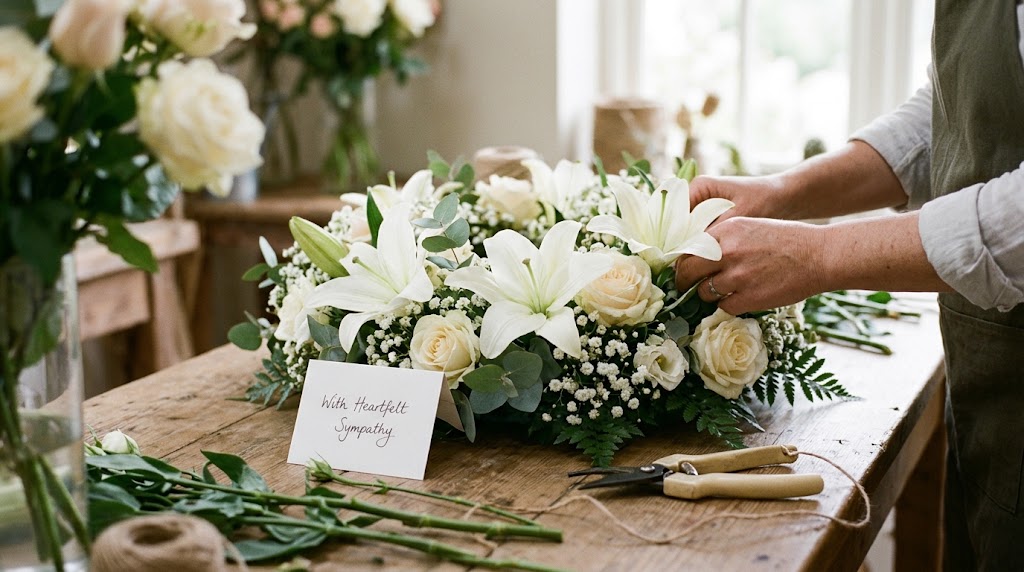
When you learn that a friend, colleague, or loved one has experienced a death in the family, sending flowers is one of the most immediate, heartfelt ways to express sympathy. A floral tribute brings natural beauty, softness, and warmth into spaces defined by profound grief. However, navigating the logistics of a funeral flowers delivery can quickly feel overwhelming if you have never coordinated one before.
Should the flowers be sent to the funeral home, the church, or the family’s private residence? When is the ideal delivery window to ensure the blooms look fresh for the service? And what specific information does the florist need so your tribute arrives without delay? Exploring diverse funeral flower arrangement ideas is only the first step; ensuring those arrangements arrive respectfully and punctually is just as essential.
Whether you are sending a formal easel tribute, coordinating an office group gift, or sending a personal vase arrangement, this comprehensive guide covers proper funeral flower delivery etiquette, timing rules, florist coordination, and practical advice to ensure your condolences arrive seamlessly.
Delivery Etiquette Principle: Funeral flowers are time-sensitive deliveries governed by strict venue schedules. Ordering early through a florist who coordinates directly with the funeral home ensures your arrangement is arranged, delivered, and placed in the sanctuary hours before the grieving family arrives.
Formal funeral arrangements (standing sprays, wreaths, and large baskets) should be delivered directly to the funeral home or church at least two to three hours before the first scheduled visitation or service. Personal sympathy arrangements and potted plants should be delivered directly to the family’s home address.
Where to Send Funeral Flowers: Funeral Home vs. Church vs. Home
One of the most common points of confusion for senders is choosing the right delivery destination. The correct location depends entirely on the type of floral arrangement you choose and your personal relationship to the bereaved.
1. Delivering to the Funeral Home or Mortuary
The funeral home is almost always the best and safest destination for formal floral tributes. Funeral homes are designed to receive, process, catalog, and display large floral displays.
- Arrangements to Send Here: Standing easels, circular tributes detailed in our funeral wreaths guide, heart-shaped sprays, large floor baskets, and formal pedestals.
- Logistical Advantages: Licensed funeral directors carefully inspect incoming deliveries, water floral foam bases, record the sender’s name in a registry for the family, and arrange the pieces artistically around the casket or chapel.
- Cemetery Transportation: If the service moves to a cemetery for burial, funeral home staff handle loading and transporting standing tributes to the gravesite, saving the family from logistical strain.
2. Delivering Directly to a Church or Place of Worship
If the viewing or funeral service takes place exclusively at a house of worship—without a prior visitation at a funeral parlor—flowers may be delivered directly to the church. However, this option requires extra vigilance:
- Churches and temples rarely have full-time staff available during weekday mornings to accept deliveries.
- Some religious venues have strict liturgical policies governing what flowers can be placed near the altar, particularly during holy observances like Lent or Advent.
- Always verify that the florist has confirmed delivery access with church staff prior to dispatching the driver.
3. Delivering Sympathy Flowers to the Family’s Residence
Sending flowers to a private residence is a warm, intimate gesture, but it requires a different style of arrangement:
- Appropriate Styles: Send tabletop arrangements, compact funeral bouquets in decorative glass or ceramic vases, living green plants (such as peace lilies or orchids), or gourmet sympathy gift baskets.
- What NOT to Send Home: Never send large standing sprays, circular wreaths on tripod easels, or oversized funeral baskets to a private residence. Grieving families do not have space for commercial floral installations, nor do they want the burden of transporting heavy easels to the mortuary themselves.
- Timing Flexibility: Residential sympathy deliveries can be sent immediately upon hearing the news, during the week of the service, or even several weeks later when the initial rush of visitors has quieted.
Timing & Scheduling: When Should Funeral Flowers Be Delivered?
Proper timing is the single most critical factor in a successful funeral flower delivery. Floral arrangements delivered too late may arrive after the chapel doors have closed, while arrangements delivered days too early risk wilting under dry chapel heating or cooling vents.
Standard Delivery Windows for Services
Florists follow strict protocol when dispatching arrangements for memorial services:
- Morning Services (9:00 AM – 11:00 AM): Flowers should be delivered either late the afternoon before or very early that morning (at least two hours prior to the start of the service or private family viewing).
- Afternoon/Evening Services (1:00 PM – 7:00 PM): Deliveries should arrive during the late morning, typically between 10:00 AM and 12:00 PM. This gives the funeral staff ample time to photograph, log, and arrange the tributes before the family arrives for private viewing.
- Multi-Day Visitations: If there is an evening wake scheduled on Thursday followed by a funeral on Friday, schedule the delivery for Thursday afternoon before the first public visitation begins.
How Far in Advance Should You Order?
While many online flower networks promise “same-day delivery,” ordering funeral arrangements requires advance notice. Unlike a standard birthday bouquet, complex standing sprays, casket pieces, and customized wreaths take several hours to build and require specialized structural hardware.
To ensure the florist has adequate inventory and time, place your order 24 to 48 hours prior to the scheduled viewing. If you must order on short notice, call a florist located directly in the same town as the funeral home to discuss available in-stock blooms.
Venue Delivery vs. Home Delivery: Quick Comparison
To help you decide where to direct your delivery, the table below highlights the differences between sending flowers to a public service versus the family’s home.
| Feature | Funeral Home / Church Delivery | Family Residence Delivery |
|---|---|---|
| Primary Purpose | Honors the deceased publicly and adorns the ceremonial space. | Offers personal comfort, quiet sympathy, and enduring care to survivors. |
| Ideal Arrangement Types | Standing sprays, wreaths, formal pedestals, large urn baskets. | Vase arrangements, potted plants (peace lilies, orchids), dish gardens. |
| Required Timing | Strict deadline: 2 to 3 hours before first public viewing. | Flexible: anytime from the day of passing to several weeks post-funeral. |
| Handling & Setup | Handled entirely by funeral directors and chapel staff. | Received and placed by the family inside their living space. |
| Typical Senders | Extended family, coworker groups, corporations, civic clubs. | Close friends, neighbors, distant associates who missed the service. |
Information You Need Before Placing an Order
When contacting a florist or ordering online, having accurate details ready prevents costly delivery errors. Florists handle dozens of weekly deliveries across multiple mortuaries, so precision is paramount.
Be sure to provide the following details:
- Full Legal Name of the Deceased: Funeral homes often hold multiple services on the same day. Having the exact name (including maiden names or suffixes) ensures the delivery driver routes your arrangement to the correct parlor.
- Funeral Home or Venue Name and Address: Provide the exact street address, including specific chapel locations if the mortuary operates multiple satellite facilities.
- Date and Time of the First Service: Specify the exact start time of the initial viewing or visitation, not merely the final burial service.
- Your Card Message: Prepare your condolence note ahead of time so it can be neatly printed on the florist enclosure card.
- Sender Identification: Clearly state who the arrangement is from (e.g., “The Marketing Department at Acme Corp” or “The Henderson Family”) so the funeral home can record the gift accurately for the family’s acknowledgment records.
Delivery Etiquette & Cultural Considerations
Before placing an order for a funeral flowers delivery, take a moment to confirm that floral tributes align with the family’s cultural, religious, and personal preferences.
1. “In Lieu of Flowers” Notices
Always read the published obituary carefully. If the family states, “In lieu of flowers, donations may be made to St. Jude Children’s Research Hospital,” proper etiquette dictates honoring their wishes by making a memorial donation instead. If you still wish to send a tangible gesture of sympathy, sending a living houseplant or a personalized sympathy card to the family’s home is appropriate, but avoid sending large standing displays to the chapel against their requests.
2. Religious Traditions and Funeral Flowers
Different faith traditions maintain distinct customs regarding flowers at death services:
- Christian Traditions (Catholic, Protestant, Orthodox): Floral arrangements are widely welcomed and play a central role in church services and graveside committals.
- Jewish Tradition: Flowers are traditionally not displayed at Jewish funerals, nor are they sent to the mourning home during the seven-day period of Shiva. Instead, friends express support through charitable contributions, planting trees in Israel, or bringing kosher food to the family.
- Islamic Tradition: Simplicity and modest rites are paramount. While some families accept flowers, many Islamic traditions discourage elaborate floral arrangements, preferring charitable gifts (Sadaqah Jariyah) made in the deceased’s honor.
- Buddhist Tradition: White flowers (such as chrysanthemums and lilies) are traditional; red flowers, which symbolize celebration and luck, should never be sent to a Buddhist funeral.
What to Write on the Flower Delivery Card
Every floral delivery includes a small card attached to the arrangement. Because the card is small, keep your condolence message concise, sincere, and comforting.
Here are brief, respectful templates you can adapt:
For Close Friends and Family
- “With deepest love and heartfelt memories of a wonderful life. You are in our prayers.”
- “Holding your family close in our thoughts during this difficult time. With endless love.”
- “May these flowers remind you of how deeply [Name] was loved by all of us.”
For Professional Colleagues and Organizations
- “With deepest sympathy from your friends and colleagues at [Company Name].”
- “In honored memory of [Name], whose dedication and warmth inspired us all.”
- “Please accept our sincere condolences during this time of loss. Wishing you peace.”
Frequently Asked Questions (FAQs)
Here are clear answers to common questions about ordering and delivering funeral flowers.
Can I get same-day funeral flower delivery?
While some florists can accommodate same-day delivery if you call early in the morning, it is never guaranteed for formal funeral pieces. Easels, sprays, and wreaths require substantial construction time. If a service is occurring today, call a florist located immediately near the funeral home and ask what ready-made arrangements or large floor plants they can deliver before service time.
What happens to the flowers after the funeral?
Following the chapel ceremony, funeral home attendants transport standing tributes and wreaths to the cemetery for the burial service. Afterward, family members often choose several arrangements to take home, donate arrangements to local nursing homes, hospices, or churches, or take petals home to press into keepsakes. Many families also use potted perennials or flowering shrubs to learn how to create a memorial garden to honor a loved one in their backyard.
Is it bad etiquette to send flowers after the funeral has ended?
Not at all. In fact, sending sympathy flowers or a potted plant to the family’s home a week or two after the service can be deeply meaningful. In the weeks following a funeral, out-of-town visitors leave and quiet sets in. Receiving a thoughtful arrangement weeks later reassures the family that their loved one is still remembered.
Who pays for and orders the casket flowers?
The casket spray (the flowers draped over the casket) is reserved exclusively for the immediate family—typically the surviving spouse, children, or parents. Extended relatives, coworkers, and friends should never order a casket spray; they should choose standing sprays, wreaths, baskets, or personal vases instead.
While fresh flowers bring immediate beauty and comfort to a funeral chapel, lasting memorial keepsakes preserve love and legacy for decades to come. Custom funeral programs, personalized prayer cards, and enduring memorial bookmarks provide grieving families with meaningful treasures to hold close long after the service concludes. Discover how personalized memorial stationery can help honor your loved one’s extraordinary life story.