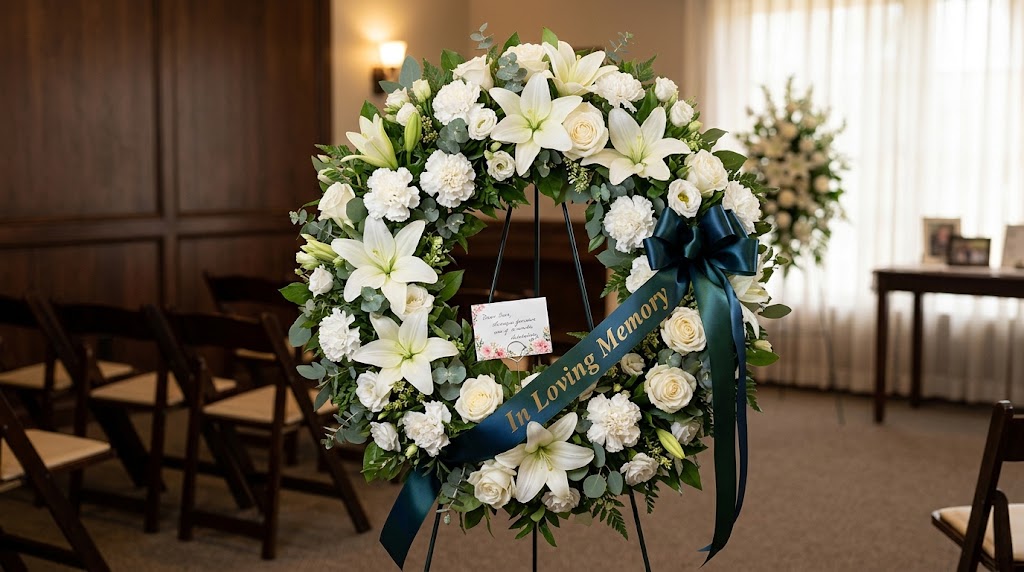
When word arrives that someone dear has passed away, expressing the depth of your sympathy can be one of life’s greatest challenges. In moments when spoken words feel inadequate, flowers have long served as a universal language of condolence, love, and comfort. Among the diverse floral arrangements present at a memorial service, the funeral wreath stands out as one of the most distinguished and meaningful tributes you can send.
Suspended gracefully on a standing easel near the casket or altar, a floral wreath commands a dignified presence. However, selecting and sending one involves thoughtful considerations. Who traditionally sends a wreath? What do the specific blooms signify? And how do you ensure the tribute adheres to proper delivery etiquette? When deciding what to send to a funeral, understanding the traditions surrounding floral tributes helps you honor the deceased with reverence and support the grieving family with grace.
In this comprehensive guide, we will explore the timeless symbolism behind wreaths, compare them with other funeral arrangements, provide flower and color recommendations, share ready-to-use ribbon message templates, and explain essential etiquette rules.
Sympathy Reminder: A floral tribute is more than a decorative gesture; it is an outward expression of shared sorrow and solidarity. Sending a wreath tells the bereaved that their loved one’s presence was treasured and that their legacy will endure within the community.
A funeral wreath is a circular floral tribute displayed on a standing easel during services. Its unbroken circular shape represents eternity, the continuous cycle of life, and everlasting love. Traditionally sent by extended family, friends, or organizations, it honors the deceased with formal dignity.
The Symbolism and Meaning of a Funeral Wreath
To understand why wreaths for funerals hold such an enduring place in end-of-life customs, one must look at both sacred history and botanical symbolism. The funeral wreath meaning is rooted in centuries of cultural tradition across the globe.
The Eternal Circle
The most striking feature of a wreath is its geometry. A circle has no beginning and no end. In ancient Greece and Rome, laurel and floral wreaths were presented as crowns to celebrate victory, honor, and devotion. As early Christian traditions emerged, the circular shape was adopted to signify the immortality of the soul, divine love, and eternal life beyond physical death.
When you send a funeral flower wreath, the circular design represents:
- The Unbroken Circle of Life: The journey of existence from birth, through earthly life, to peaceful rest and eternal memory.
- Enduring Affection: A tangible symbol that the bond shared with the deceased cannot be severed by death.
- Community Solidarity: Wreaths are often larger and more elaborate than personal vases, making them an ideal visual tribute from a unified group, such as extended family branches, corporate departments, or fraternal organizations.
Wreath vs. Spray: What’s the Difference?
When consulting with a florist, you will likely encounter several specialized terms for large standing arrangements. Comparing a funeral wreath vs standing spray helps you select the appropriate piece for your relationship to the deceased.
- Casket Spray: This is a large, elongated floral arrangement designed to sit directly on top of the casket. Etiquette rule: The casket spray is reserved strictly for the immediate family (the surviving spouse, children, or parents). Guests, extended relatives, and coworkers should never order a casket spray.
- Standing Spray: A vertical, one-sided arrangement displayed on an easel, typically shaped like a teardrop, diamond, or botanical fan. Standing sprays are visible from across the room and are suitable for family friends and associates.
- Funeral Wreath: A circular arrangement constructed upon a round frame and mounted on a sturdy tripod easel. It can feature flowers clustered around the entire perimeter or an asymmetrical crescent design accented with lush foliage. It is commonly sent by extended family, friend groups, civic clubs, and workplaces.
- Table Arrangements & Bouquets: Smaller vases or baskets, such as personal funeral bouquets, are typically placed on memorial tables, near register books, or sent directly to the family’s residence.
How to Choose the Right Funeral Wreath
Designing a funeral wreath involves balancing botanical aesthetics, personal memories, and cultural reverence.
1. Choosing the Best Flowers for a Funeral Wreath
Different blooms carry distinct emotional associations. The best flowers for funeral wreath designs include:
- White Lilies: Considered the quintessential funeral flower, lilies symbolize restored innocence, peace, and the rebirth of the soul. Peace lilies and calla lilies lend statuesque elegance to any easel piece.
- Roses: Each hue carries its own message. Red roses signify deep, enduring love and respect; white roses convey purity and reverence; yellow roses represent warm bonds of friendship; and pink roses express gratitude and grace.
- Carnations: Highly durable and vibrant, carnations provide full, lush texture. White carnations represent pure love and innocence, while red carnations convey deep admiration.
- Chrysanthemums: In European and Asian death customs, mums are deeply tied to mourning, honor, and truth. In Western arrangements, they provide wonderful volume and longevity.
- Gladioli and Hydrangeas: Gladioli stand for strength of character and moral integrity, while hydrangeas add fullness, soft texture, and heartfelt sincerity.
2. Choosing by Color Palette
The color scheme sets the emotional tone of the tribute:
- Classic All-White: Composed of white lilies, ivory roses, snapdragons, and emerald greenery, an all-white wreath is timeless, elegant, and universally appropriate for formal religious services.
- Celebration of Life Palettes: If the service is styled as an upbeat memorial, bright arrangements featuring sunflowers, orange gerbera daisies, coral roses, and wildflower textures mirror cheerful celebration of life decorations.
- Masculine Palettes: When choosing funeral wreaths for men, florists often incorporate deep crimson roses, navy blue delphinium, bronze mums, seeded eucalyptus, and rustic branch accents.
- Feminine Palettes: For funeral wreaths for women, softer color stories featuring pastel blush, lavender, peach, soft magenta, and creamy whites convey warmth, tenderness, and beauty.
Reviewing curated funeral flower arrangement ideas can provide visual inspiration when discussing customized color palettes with your local florist.
What to Write on a Funeral Wreath Ribbon
Standing wreaths typically include a wide satin banner or sash draped across the center or anchored to the base. Because space on the ribbon is limited, knowing what to write on a funeral wreath ribbon requires keeping the phrasing concise, impactful, and easily legible from several feet away.
In addition to the ribbon banner, a small enclosure card will be pinned to the arrangement. This card allows you to include a longer, personal condolence message to the family.
The table below provides clear ribbon wording templates and card ideas based on your relationship to the deceased:
| Relationship to Deceased | Ribbon Sash Inscription | Enclosure Card Message |
|---|---|---|
| Immediate / Close Family | “Forever in Our Hearts” “Beloved Mother / Father” “Always Loved” |
“Your love shaped our lives and lives on in our hearts. We will carry your memory with us every day.” |
| Extended Family | “In Loving Memory” “Our Deepest Sympathy” “With Endless Love” |
“Remembering Uncle Charles with so much love, warmth, and gratitude for the joyful memories we shared.” |
| Friends & Neighbors | “Cherished Friend” “Rest in Peace” “Never Forgotten” |
“Thank you for a lifetime of laughter, warmth, and faithful friendship. You will be deeply missed.” |
| Coworkers & Businesses | “With Deep Respect” “In Honored Memory” “From Your Colleagues” |
“With heartfelt condolences and highest respect from your teammates and leadership at [Company Name].” |
| Clubs & Associations | “In Loyal Fellowship” “In Grateful Service” “Rest in Glory” |
“Honoring a dedicated brother, leader, and servant whose contributions made a lasting difference.” |
Funeral Wreath Etiquette and Delivery Rules
Because standing wreaths are large, formal installations mounted on metal or wooden easels, following established delivery and timing etiquette is essential.
1. Where to Send the Wreath
Always send a funeral wreath directly to the funeral home, mortuary, or church sanctuary.
Never order a large standing wreath to be delivered to a family’s private home address. Standing easels are designed for public chapels, viewing rooms, and gravesides. Arriving at a private residence with a five-foot floral easel places an unnecessary burden on the grieving family, who must then figure out how to transport the heavy piece to the chapel themselves.
2. When to Order
Constructing a formal wreath requires specialized floral foam rings, sturdy standing easels, and significant stem preparation. Place your order at least 24 to 48 hours before the scheduled viewing or funeral service. This ensures the florist has ample time to source high-grade flowers, allow blooms to open properly, and deliver the arrangement several hours before guests arrive.
When ordering, make sure you provide:
- The full legal name of the deceased.
- The exact name and street address of the funeral home or church.
- The date and start time of the first public service or visitation.
3. Cultural and Faith-Based Nuances
Before sending flowers, confirm the religious and cultural customs of the family:
- Jewish Funerals: Flowers are traditionally not displayed at Jewish funerals or sent to a home during shiva. Making a charitable donation to an organization meaningful to the deceased is standard.
- Islamic Funerals: Modesty and simplicity are valued; floral arrangements are generally kept minimal, and many families prefer charitable gifts.
- “In Lieu of Flowers”: Always scan the published obituary. If the family explicitly requests “in lieu of flowers, donations may be made to…”, it is considered proper etiquette to honor their request rather than sending a floral piece.
Frequently Asked Questions (FAQs)
Here are answers to the most common questions regarding wreath selection, costs, and practical arrangements.
How much does a funeral wreath typically cost?
A professionally arranged funeral wreath typically costs between $150 and $400+. Smaller wreaths (18 to 22 inches in diameter) featuring standard carnations, mums, and greenery fall on the lower end ($150 to $225). Larger wreaths (24 to 36 inches) packed with premium open lilies, imported roses, orchids, and custom ribbon banners fall between $250 and $450+.
Can you send a wreath for a cremation service?
Yes. Funeral wreaths are frequently displayed during memorial services where the body has been cremated. In many arrangements, a circular wreath is set upon an easel directly behind or beside the display table where the urn, framed portraits, and memorial programs rest.
Who typically pays for a funeral wreath?
Because wreaths are prominent, higher-cost pieces, they are frequently purchased collectively. It is very common for extended relatives (such as nieces and nephews or cousins), neighborhood associations, coworker groups, or business departments to pool contributions to send a single, stunning tribute together.
What happens to the wreath after the funeral service?
Following the chapel service, the funeral home staff will transport the standing wreath to the cemetery for the graveside burial, where it will remain beside the plot. Alternatively, family members may choose to bring smaller elements home or save the personalized satin sash as a keepsake.
While fresh flowers offer immediate, beautiful comfort during a memorial service, lasting tributes help keep a loved one’s memory alive for generations. Personalized memorial keepsakes, custom funeral programs, and meaningful prayer cards provide grieving families with a tangible reminder of love and community support. Browse our collection of memorial products to honor your loved one’s legacy with elegance and dignity.