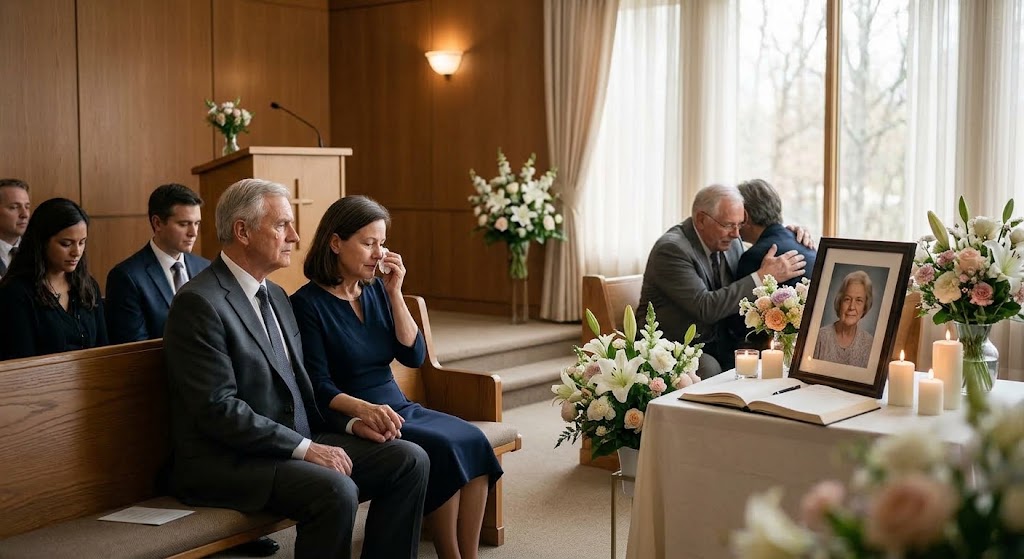
A wake is usually a less formal gathering where guests come and go, offer condolences, and share memories.
A funeral is a scheduled ceremony with a defined beginning and end, often including readings, music, a eulogy, prayers, or other rites. When deciding on the right type of service, reading through customer reviews of other families’ experiences can offer guidance and comfort.
Families may hold both, combine them, or choose one event.
In the United States, the words wake, visitation, and viewing often overlap. Their meaning can change by family, region, faith, and funeral home, so the obituary or service notice is the best guide to the specific arrangements.
“A wake usually gives people time to visit, offer condolences, and share memories, while a funeral brings everyone together for a more structured ceremony.”
Quick answer: A wake is generally an informal or semi-formal gathering where guests may arrive and leave during a set window. A funeral is a scheduled ceremony that usually follows an order of service. Families may hold both, combine them, or choose just one.
Funeral and Wake Comparison
| Point of Comparison | Wake | Funeral |
|---|---|---|
| Main purpose | Offer support, share memories, and spend time with the family | Honor the person through a structured ceremony |
| Typical timing | Often the evening before or shortly before the funeral | Held at a set time, often after a wake or visitation when one is planned |
| Format | Guests often arrive and leave during an open time window | Guests usually attend the full service from beginning to end |
| Tone | Often conversational and less formal | Usually more formal and quiet during the program |
| What may happen | Condolences, stories, prayer, quiet reflection, or a viewing | Readings, music, eulogy, prayer, procession, or committal |
| Casket, urn, or memorial display | A casket, urn, photos, or no remains may be present | A casket or urn may be present, depending on the arrangements |
| Common setting | Funeral home, family home, or place of worship | Funeral home, place of worship, chapel, cemetery, or another venue |
| How long guests stay | A brief visit may be appropriate | Guests generally stay for the full service |
What Is a Wake?
A wake is a gathering where people can pay respects, offer condolences, and support the family.
It often happens before the funeral and may be held at a funeral home, a place of worship, or a private home.
The format is usually flexible.
Guests may:
- Arrive during a posted time window
- Speak with the family
- Sign a register book
- Look at photographs
- Share a memory
Some wakes include a prayer service, rosary, reading, or moment of silence.
Others focus mainly on conversation and remembrance.
A wake may include an open or closed casket, an urn, a photo display, or no remains at all.
What Is a Funeral?
A funeral is the formal service held to honor the person who died.
It starts at a set time and usually follows an order of service.
The program may include:
- Music
- Readings
- A eulogy
- Prayers
- Cultural rites
- A final blessing
An officiant, clergy member, funeral director, family member, or friend may lead the ceremony.
A burial, cremation, or committal may follow the service, but arrangements differ.
Some families hold the funeral and graveside service on the same day. Others separate them or choose a private committal.
Key Differences Between a Wake and a Funeral
Purpose and Interaction
A wake gives guests time to connect directly with the family.
Conversation, brief visits, and shared memories are usually part of the gathering.
A funeral brings everyone together for a common ceremony that formally honors the person’s life and marks a goodbye.
Timing and Structure
A wake often takes place the day or evening before the funeral, although it may be scheduled earlier or on the same day.
Guests generally arrive within a time window and leave when they are ready.
A funeral has a set start time, a planned sequence, and an expected ending.
Tone and Guest Expectations
Wakes are often quieter and more conversational than funerals.
A guest may speak with several people, share a story, or sit silently for a few minutes.
During a funeral, guests usually remain seated and quiet except when the service invites participation.
Faith and Cultural Traditions
Some faiths and cultures have specific practices.
In Catholic tradition, the Vigil for the Deceased often takes place during visitation before the funeral liturgy.
Other families may use the word wake for a home gathering, a multi-day observance, or a reception after the funeral.
When the wording is unclear: Check the obituary or service notice, or call the funeral home. The exact meaning of “wake,” “visitation,” and “viewing” can vary by family, region, and tradition.
What Usually Happens First?
A common sequence in the United States is wake, visitation, or viewing first, followed by the funeral, then burial or cremation, and finally a reception or repast.
This is a custom, not a requirement.
Families can combine events, change the order, or omit any part.
| 1 | 2 | 3 | 4 |
|---|---|---|---|
| Wake or visitation | Funeral | Committal | Reception or repast |
Wake, Viewing, and Visitation
A visitation is a scheduled period for guests to meet the family and pay respects.
A viewing describes the option to see the person who died, usually in an open casket.
A wake may include both, but it does not have to.
Funeral homes and families sometimes use all three terms for the same gathering.
The service notice may clarify whether the casket will be open, whether prayers are planned, and when visitors may arrive.
If those details matter to you, call the funeral home rather than asking a grieving family member to explain the schedule.
Should You Attend the Wake or Funeral?
If you were close to the person who died or the immediate family, attending both is common when you are able.
The wake offers time to speak with the family, while the funeral allows you to take part in the formal tribute.
If you can attend only one, consider your relationship and what the family has announced.
A wake may be especially helpful when you know a surviving relative and want a moment to offer condolences.
A funeral may be the better choice when you were close to the person who died or want to join the full ceremony.
There is no universal rule.
If a service notice lists public visiting hours and does not say the gathering is private, community members generally may attend.
A private service should be treated as invitation only.
When travel, health, work, or grief makes attendance difficult, a card, message, requested donation, or later visit can still express care.
What to Expect as a Guest
What to Wear
Choose clean, understated clothing unless the family requests a specific color or dress code.
Dark or neutral colors are common, but black is not always required.
A funeral is often more formal than a wake.
The location, faith tradition, and family’s instructions should guide your choice.
What to Say
Keep condolences brief and sincere.
You can say “I am sorry for your loss,” mention the person by name, or share one specific memory.
Avoid asking for details about the death or offering explanations for why it happened.
Your presence matters more than finding perfect words.
What to Bring
You usually do not need to bring anything.
Read the obituary before sending flowers or a gift, since the family may request donations or another form of support.
If you are considering an alternative, review what to send to a funeral instead of flowers.
Do not bring service materials, large displays, food, or other items to the venue without approval.
How Long to Stay
At a wake or visitation, a short visit can be enough to sign the guest book, greet the family, and pay respects.
At a funeral, plan to arrive before the stated start time and remain through the service unless an emergency requires you to leave.
Planning a Wake and Funeral
Families do not need to hold both events.
One gathering may provide the right amount of time and structure.
When planning, decide:
- What each event should accomplish
- Who needs to attend
- Whether a viewing or prayer service is appropriate
- How much time and coordination the family can manage
A simple memorial planning checklist can help organize the date, venue, speakers, photos, music, and printed materials.
Confirm names, dates, photographs, service details, quantities, and delivery deadlines before placing any order.
Printed Materials for Each Event
The event format can guide the materials you prepare.
Personalized prayer and wake cards can accompany a wake or visitation.
Custom funeral service programs can present the order of service, readings, photographs, and tributes.
A memorial register book gives guests a place to record their names and messages at either gathering.
Honor You lets families personalize memorial items online or request design help.
Planning principle: Choose only the materials that support the gathering and the way your family wants to remember the person.
Frequently Asked Questions
Is a Wake Before or After a Funeral?
In the United States, a wake usually takes place before the funeral, often the evening before or earlier the same day.
In some regions and families, the word wake refers to a gathering after the service.
Check the obituary or funeral-home schedule.
Does a Wake Always Have an Open Casket?
No.
A wake may have an open casket, a closed casket, an urn, photographs, or no remains present.
The family and funeral provider decide what is appropriate.
How Long Does a Wake Last?
The event may last a few hours or longer, depending on the family and tradition.
Guests are usually not expected to remain for the entire wake.
A brief, considerate visit may be enough.
Can You Have a Wake After Cremation?
Yes.
Families may gather with an urn, photographs, or another memorial display.
They may call the gathering a wake, visitation, memorial service, or celebration of life.
Do You Need Both a Wake and a Funeral?
No.
Some families value the informal time of a wake and the structure of a funeral.
Others combine the two or hold one service that meets their needs.
Can Children Attend a Wake or Funeral?
Children can attend when the family considers it appropriate.
Explain what they may see and hear, give them a choice about approaching a casket, and arrange for a trusted adult to step outside with them if needed.
Choosing the Gathering That Fits Your Family
A wake gives people time to connect with the family, while a funeral provides a shared ceremony of remembrance.
Either can be meaningful on its own, and holding both is also common.
Let the person’s wishes, family needs, faith, culture, schedule, and available support shape the plan.
When printed tributes would help guests follow the service or carry a memory home, explore Honor You’s personalized memorial products or request help creating a custom order.