
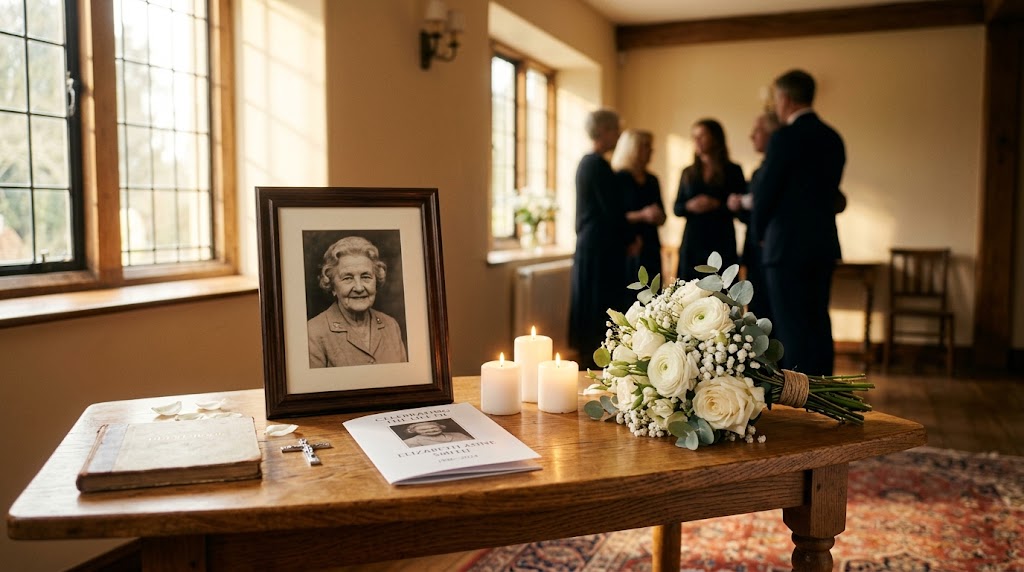
A funeral gives people a shared time and place to acknowledge a death, remember the person who died, express grief, and support one another—a meaningful sentiment echoed in many Honor You reviews.
Its value does not depend on formality, expense, or a single tradition. What matters is whether the gathering reflects the person and creates a meaningful way for those left behind to respond to the loss.
“A meaningful funeral does not have to be elaborate. Its value comes from helping people recognize a loss, remember a life, and support one another.”
Quick answer: Funerals can help people acknowledge a death, express grief, receive support, honor a person’s life, practice cultural or spiritual traditions, mark a transition, and preserve memories. They do not guarantee closure or make grief disappear, but they can create a meaningful structure for remembrance and support.
What Purpose Does a Funeral Serve?
When someone dies, practical decisions can arrive before the reality of the loss has fully settled in.
A funeral creates a pause. It marks what has happened and gives family, friends, and community members a chance to be present together.
That shared moment can serve several purposes at once. It can:
- Honor the person who died
- Give mourners a socially accepted space for emotion
- Bring support into view
- Express cultural or spiritual beliefs
- Begin the work of carrying the loss forward
Funerals are often described as being for the living.
That does not mean the deceased is secondary. It means the ceremony honors a life by tending to the people, relationships, memories, and traditions that continue.
7 Reasons Funerals Can Matter
1. They Help Acknowledge the Reality of a Death
Grief can create a strange divide between knowing that someone died and feeling the full reality of it.
Planning a service, hearing the person named, gathering with others, or taking part in a final ritual can make the loss more concrete.
What this can provide: A first point of orientation: this person has died, this loss matters, and we are responding to it together.
This acknowledgment is not the same as accepting every feeling or being ready for life to change.
2. They Create Space to Express Grief
Daily life rarely gives people a clear setting in which tears, silence, anger, gratitude, confusion, and even laughter can coexist.
A funeral can create that setting.
No one has to grieve in a particular way.
Some people speak, cry, pray, or share stories. Others sit quietly.
The value is in making room for honest responses without requiring everyone to feel or behave the same way.
3. They Bring Supportive People Together
Loss can feel isolating.
A funeral makes the family’s need for care visible and gives relatives, friends, coworkers, neighbors, and community members a specific way to show up.
Their presence may provide emotional comfort, but support can also be practical.
People may:
- Bring food
- Help with transportation
- Watch children
- Share service information
- Check in during the weeks that follow
The gathering can strengthen a support network that remains important after the service ends.
4. They Honor a Life Through Stories and Details
A meaningful funeral does more than announce a death.
It helps people recognize the individual life behind the loss.
A eulogy, photographs, music, readings, video tributes, favorite sayings, meaningful objects, and stories from different parts of a person’s life can reveal what they valued and how they affected others.
Guests may hear memories they never knew, while close family members gain a fuller picture of the relationships their loved one formed.
Families can use an obituary and a personalized funeral program to bring these details together.
A program can guide guests through the service while preserving the order of events, photographs, readings, and acknowledgments as a keepsake.
5. They Express Culture, Faith, and Family Traditions
Funeral customs help many families place death within a larger story.
Prayers, songs, processions, clothing, food, periods of mourning, and other rituals may connect people with their faith, heritage, or community.
A funeral does not have to be religious to carry meaning.
A secular service may use poetry, music, shared memories, a moment of silence, or a symbolic act that reflects the person’s values.
Families can follow long-held traditions, adapt them, or create something new with guidance from relatives, faith leaders, celebrants, or funeral professionals.
Read more about the healing power of rituals in memorial services.
6. They Mark a Transition
Ceremonies help people recognize major changes in life.
A funeral marks the transition from a relationship based on physical presence to one carried through memory, influence, and ongoing connection.
That transition may be represented by:
- A committal
- The closing of a casket
- The placement of flowers
- The lighting of a candle
- A final song
- A gathering after the service
These actions cannot resolve grief, but they can give form to a moment that may otherwise feel difficult to understand.
7. They Help Preserve Memory and Continuing Bonds
Grief does not require people to forget or leave a relationship behind.
Many people continue a bond with someone who died through stories, traditions, photographs, charitable acts, visits to a resting place, or annual remembrance.
A funeral can begin that continuing record.
The obituary, guest book, funeral program, photographs, recorded tributes, and digital memorial may become sources of comfort or family history in the months and years ahead.
They can also help children and future generations understand who the person was.
Do Funerals Help Everyone Grieve?
Funerals can support mourning, but they do not guarantee closure, shorten grief, or produce the same response for everyone.
A 2020 systematic review of 17 studies found that evidence about funeral practices and grief outcomes was mixed.
The qualitative findings suggested that ceremonies were more helpful when bereaved people could shape the service, say goodbye in a meaningful way, and experience social support.
A separate longitudinal study found that most participants evaluated the funeral positively, but a positive evaluation was not significantly linked to lower grief reactions over time.
Some people feel comforted, while others feel numb, overwhelmed, anxious, or unsure.
All of those reactions can be understandable.
Funeral, Memorial Service, or Celebration of Life?
The function of the gathering often matters more than its label.
| Type of Gathering | Typical Format | What to Know |
|---|---|---|
| Funeral | Often takes place soon after a death and may include the body or cremated remains. | May be religious, secular, formal, or personal. |
| Memorial service | Often held without the body present and may take place later. | Can allow more time for travel, planning, and participation. |
| Celebration of life | Usually emphasizes personal stories, interests, and a less formal atmosphere. | Can still include solemn, spiritual, or traditional elements. |
These formats can overlap.
A family may hold a private burial followed by a public memorial, or a traditional funeral followed by a personal celebration months later.
There is no rule that every act of remembrance must happen in one day.
What If a Traditional Funeral Does Not Feel Right?
A formal funeral is not the only respectful choice.
A private gathering, graveside service, home memorial, scattering ceremony, faith-based rite, community event, livestream, or digital remembrance may serve many of the same purposes.
If cost, travel, family conflict, religion, or the person’s wishes make a traditional service difficult, begin with the functions you want the gathering to serve:
- Who needs an opportunity to say goodbye?
- What stories or values should be remembered?
- Which customs feel supportive, and which do not?
- Would a public gathering or a small private ritual feel more appropriate?
- How can people who cannot attend participate or share memories?
A simple service can be deeply meaningful. Personal significance comes from the choices and participation involved, not from how elaborate the event is.
How to Make a Funeral Meaningful
Start with the person, not a checklist.
Explore ways to make a funeral more personal, then choose a few details that feel true to their life and manageable for the family.
- Invite several people to share short memories from different chapters of the person’s life.
- Select music, poems, prayers, or readings connected to their beliefs and personality.
- Display photographs and meaningful objects, such as artwork, uniforms, awards, recipes, tools, or hobby items.
- Include a simple participatory ritual, such as lighting candles, placing flowers, writing messages, or sharing a favorite food.
- Create a funeral program that combines service details with photographs, an obituary, acknowledgments, and readings.
- Offer a digital memorial for relatives and friends who cannot attend or want to revisit stories and images later.
Honor You offers customizable funeral programs and memorial keepsakes designed to help families share a loved one’s story.
Families can design online or request personal help from a professional team.
After the Service
The funeral is one moment in a longer experience of grief and remembrance.
Support often matters most after the calls and gatherings become less frequent.
Consider:
- Continuing to check in with immediate family members
- Sharing photographs and stories that surface later
- Marking birthdays or anniversaries in ways that feel natural
- Saving copies of the obituary, program, cards, and messages somewhere relatives can return to them
For additional support and practical guidance, visit Honor You’s grief and loss resources.
Frequently Asked Questions
Are Funerals Really Necessary?
Families generally are not required to hold a funeral service, though state and local rules govern how remains are handled and disposed of.
Many people find a funeral or another remembrance gathering helpful because it provides structure, acknowledgment, and support.
The most appropriate choice depends on the person’s wishes, the family’s needs, culture, faith, budget, and circumstances.
Are Funerals for the Living?
Funerals honor the person who died while supporting the people who remain.
They allow mourners to recognize the death, remember the person’s life, express beliefs and emotions, and care for one another.
Can a Funeral Be Secular?
Yes.
A secular or humanist funeral can focus on the person’s relationships, values, stories, music, photographs, poetry, and influence.
Religious language is not required for a ceremony to feel sincere or significant.
Can Children Attend a Funeral?
Children can attend when they are given a choice, prepared in age-appropriate language, and supported by a trusted adult.
Explain what they may see and hear, make each form of participation optional, and arrange for an adult who can leave the room with them if needed.
Does a Funeral Provide Closure?
A funeral may help someone acknowledge a death or say goodbye, but it does not end grief or guarantee closure.
Many people find it more accurate to think of the service as a beginning point in learning how to live with the loss while maintaining a bond through memory.
Can You Have a Memorial After Direct Cremation?
Yes.
A memorial service, celebration of life, scattering ceremony, or private remembrance can be held after direct cremation.
It may take place days or months later, with or without the cremated remains present.
A Meaningful Farewell Begins With a True Story
The importance of a funeral is not measured by its size or formality.
It comes from giving people a way to recognize a death, honor a distinct life, and support one another.
When you are ready to gather photographs, stories, readings, and service details, Honor You can help you create a personalized funeral program or memorial keepsake that reflects the person you are remembering.
Sources
- Burrell, A. and Selman, L. E. “How do Funeral Practices Impact Bereaved Relatives’ Mental Health, Grief and Bereavement? A Mixed Methods Review with Implications for COVID-19.” Palliative Medicine, 2020. PubMed review record.
- Mitima-Verloop, H. B., Mooren, T. T. M., and Boelen, P. A. “Facilitating Grief: An Exploration of the Function of Funerals and Rituals in Relation to Grief Reactions.” Death Studies, 2021. PubMed study record.
