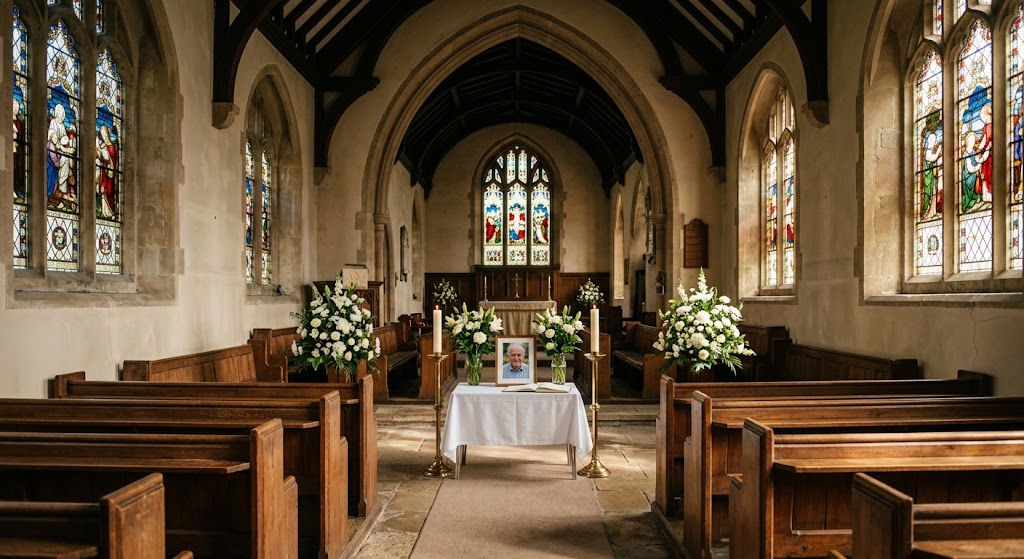
A eulogy is a speech that honors and remembers a person, most often someone who has died. It is usually delivered at a funeral, memorial service, or celebration of life and uses personal stories, qualities, and reflections to show who the person was and why they mattered.
In its broad dictionary sense, a eulogy can be spoken or written praise for a person or thing, including someone who is still living. In everyday use, though, the word usually means a remembrance speech given after a death.
“A eulogy does not need to summarize an entire life. Its purpose is to help listeners recognize the person through a few honest stories, qualities, and memories.”
Quick answer: A eulogy is a speech or tribute that honors someone who has died. It is commonly given at a funeral, memorial service, or celebration of life and usually includes personal memories, qualities, stories, and reflections about the person’s impact.
What Does the Word Eulogy Mean?
Eulogy is pronounced “YOO-luh-jee.” The word comes from a Greek term associated with praise or speaking well of someone.
That origin still shapes its meaning: a eulogy focuses on a person’s character, relationships, influence, and life rather than only on the fact that they died.
A eulogy is sometimes called a funeral speech or memorial speech. It can be formal or conversational, religious or secular, serious or gently humorous.
The right tone depends on the person being remembered, the speaker, and the setting.
One specific memory often says more about a person than a long list of dates, titles, and achievements.
What Is the Purpose of a Eulogy?
The main purpose of a eulogy is to honor a person through words.
A thoughtful speech can also help the people gathered at a service pause, remember, and feel connected to one another.
A eulogy may:
- Celebrate the person’s character, values, and relationships.
- Share memories that bring the person to mind in a vivid way.
- Recognize the influence they had on family, friends, coworkers, or a community.
- Give mourners a shared moment of reflection.
- Offer gratitude, affection, or a final farewell.
A eulogy cannot contain everything that could be said about a life, and it does not have to explain a loss or create a sense of closure.
Key idea: The value of a eulogy comes from saying something true, personal, and respectful rather than trying to cover every part of the person’s life.
Who Gives a Eulogy, and When Is It Given?
A eulogy is often given by a family member, close friend, colleague, faith leader, celebrant, or another person who knew the deceased.
There is no rule that the closest relative must speak. The best speaker is usually someone who can share meaningful memories and feels able to address the gathering.
More than one person may give a eulogy.
Different speakers can offer distinct views of the same life, such as:
- Family life
- Friendship
- Work
- Faith
- Community service
When several people are speaking, the service organizer can help each person understand the available time and avoid repeating the same stories.
Eulogies are commonly included in:
- Funeral services
- Memorial services
- Celebrations of life
- Wakes or visitations
- Graveside services
- Community remembrance events
The exact place in a service varies.
In some religious traditions, a eulogy may be limited, delivered outside the main rite, or replaced by a homily. Check with the officiant, funeral director, or service organizer before writing so you know what is expected.
What Should a Eulogy Include?
Most effective eulogies combine a little context with a few carefully chosen details.
The speech should sound like the person giving it and reflect the person being remembered.
Useful elements include:
- A brief introduction to the speaker and their relationship to the deceased.
- One or two qualities that defined the person.
- Specific stories that show those qualities in action.
- Important relationships, interests, beliefs, or contributions.
- A reflection on what the person taught others or how they will be remembered.
- A simple closing thought, expression of gratitude, or goodbye.
You do not need to recite a full biography.
If a fact does not help listeners understand the person’s character or impact, it may belong in an obituary or funeral program instead.
It is also wise to leave out private information, unresolved disputes, embarrassing stories, and humor that could hurt or confuse the audience.
How Long Should a Eulogy Be?
Many eulogies last about three to five minutes, which is often around 400 to 700 spoken words.
Some services allow more time, especially when there is one main speaker. Others need shorter remarks because several people will participate.
Ask the service organizer for a time limit before you begin.
Then read your draft aloud and time it. Spoken delivery is usually slower during an emotional service, so leave room for pauses.
Length matters less than focus. A concise speech built around two strong memories can feel more personal than a longer speech that tries to mention every event in a person’s life.
Eulogy vs. Obituary, Elegy, Homily, and Tribute
These terms all relate to remembrance, but they are not interchangeable.
| Term | What It Is | Where or How It Is Shared | Main Purpose |
|---|---|---|---|
| Eulogy | A spoken remembrance, or more broadly an expression of praise | Funeral, memorial service, celebration of life, or another gathering | Honor the person through stories, qualities, and reflection |
| Obituary | A written notice and biographical summary | Newspaper, funeral home site, memorial page, social post, or printed program | Announce the death and share key life and service information |
| Elegy | A poem, song, or literary work of mourning | Read, performed, published, or included in a service | Express grief, loss, or remembrance artistically |
| Homily | A religious reflection connected to scripture or faith teaching | Worship service or funeral liturgy | Interpret faith teachings and offer spiritual reflection |
| Tribute | Any expression of respect or appreciation | Spoken, written, musical, visual, or digital | Honor a person in a broad range of formats |
A eulogy may draw on information from an obituary, but it should not simply read like a list of facts.
It may include a poem, but that does not make the whole speech an elegy. It may be part of a religious service, but its focus is the person rather than the scripture or doctrine that guides a homily.
Families preparing both pieces can use Honor You’s guidelines for writing an obituary to keep the factual notice separate from the personal speech.
A Short Eulogy Example
The following passage shows how a small, specific memory can reveal character:
“My aunt Rosa never arrived at anyone’s home empty-handed. Sometimes she brought a pie, sometimes a bag of tomatoes from her garden, and sometimes a newspaper clipping she was certain you needed to read. The gift itself was never the point. It was her way of saying, ‘I thought of you before I came through the door.’
That quiet attentiveness shaped our family. Rosa remembered the first day of school, the hard appointment, and the anniversary no one else put on a calendar. We will miss her questions, her laughter in the kitchen, and the feeling that there was always a place for us at her table. I hope we honor her by noticing one another as carefully as she noticed us.”
This example works because it does not rely on generic praise.
The objects, habits, and setting allow listeners to picture Rosa. The final sentence connects the memory to a lasting value without claiming to summarize her entire life.
How to Write a Eulogy
If you have been asked to speak, begin with memories rather than polished sentences. The structure can come later.
- Confirm the setting and time limit. Ask when the eulogy will be delivered, how long you have, and whether other people are speaking.
- Gather details. Write down stories, expressions, habits, values, favorite places, and moments that capture the person. Ask family or friends what they remember most.
- Choose a central idea. Look for a quality or theme that connects your best memories, such as generosity, curiosity, faith, humor, persistence, or devotion to family.
- Build a simple arc. Introduce your relationship, share one or two stories, explain what those stories reveal, and close with gratitude or a farewell.
- Read it aloud and revise. Remove repetition, simplify phrases that are difficult to say, and make sure every story is appropriate for the audience.
Write in the language you naturally use.
You do not need to sound formal or poetic. Clear, concrete words are easier to deliver and often more moving because they feel familiar.
If a poem or reading fits the person, Honor You’s sample poem collection can help you consider a short addition.
Use only material that genuinely reflects the person and the family’s wishes.
Tips for Delivering a Eulogy While Grieving
Feeling emotional does not mean you are giving the speech poorly.
Tears, pauses, and a shaky voice are natural. A few practical choices can make the moment easier:
- Print the speech in a large, easy-to-read font.
- Mark places where you want to pause or look up.
- Practice aloud at least once and note the time.
- Keep water and tissues nearby.
- Speak more slowly than feels necessary.
- Ask a trusted person to stand with you or be ready to continue reading.
- Bring a second printed copy in case one is misplaced.
You can read the entire eulogy from the page. You do not need to memorize it.
If you cannot finish, another person can take over.
Remember: The meaning of the tribute does not depend on perfect delivery. A pause, tears, or asking someone else to finish does not diminish what you wanted to say.
Anyone who needs support before or after a service can also explore Honor You’s grief and loss resources.
Frequently Asked Questions About Eulogies
Does a Eulogy Have to Be Religious?
No.
A eulogy may include faith, scripture, or prayer when that reflects the person and the service, but it can also be entirely secular.
Can a Eulogy Be Funny?
Yes.
Gentle humor can help listeners recognize the person’s personality and remember warm moments.
Choose stories the person would have enjoyed and that will not embarrass or upset the audience.
Can You Read a Eulogy Instead of Memorizing It?
Yes.
Reading from a printed copy is common and often helpful. Use large type, short paragraphs, and clear page breaks so you can find your place easily.
Can More Than One Person Give a Eulogy?
Yes.
Several people can speak, especially at a memorial service or celebration of life.
Coordinate the time, themes, and order with the service organizer.
Do You Have to Give a Eulogy?
No.
Giving a eulogy is an invitation, not an obligation.
You may write the speech and ask someone else to read it, share a shorter memory, or choose another way to participate.
Can a Eulogy Be for Someone Who Is Still Alive?
In the broad sense of the word, yes.
A eulogy can mean spoken or written praise for a living person. In common modern usage, however, it usually refers to a tribute for someone who has died.
Preserving the Words and Memories Shared at a Service
A spoken eulogy lasts a few minutes, but families may choose to preserve parts of it in a keepsake.
A meaningful excerpt can be included in a custom funeral program, paired with photos in a memorial display, or shared through a digital memorial.
Honor You helps families create personalized memorial products that bring a person’s story, images, service details, and words of remembrance together.
The eulogy does not need to carry the whole story on its own. It can be one honest part of a larger tribute.