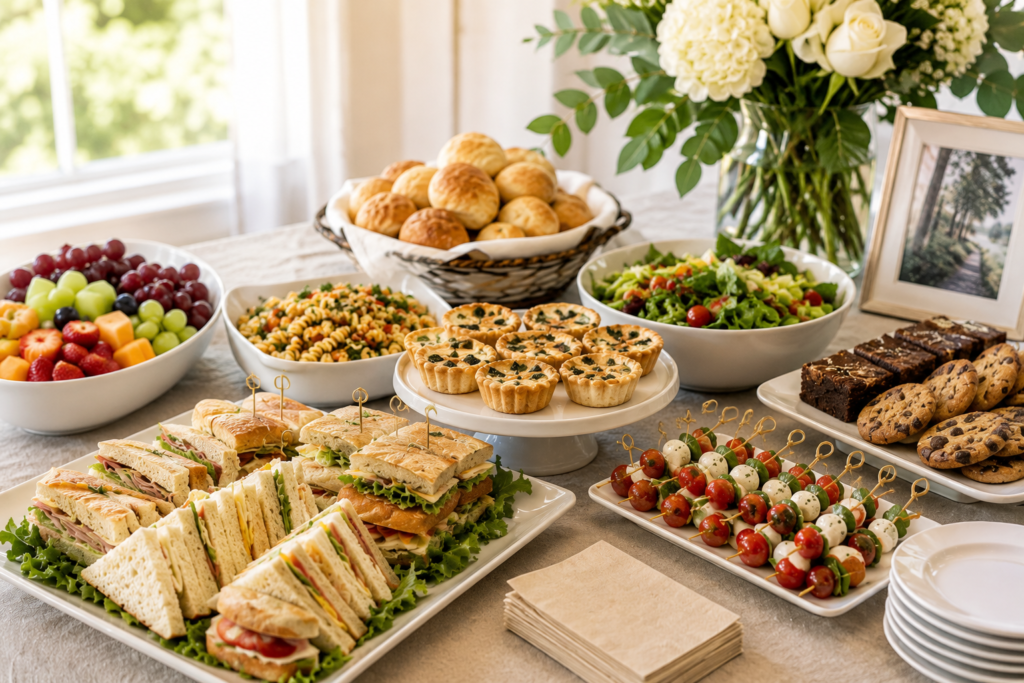
Food for a celebration of life can be simple, personal, and easy to share. Finger foods, sandwich platters, brunch dishes, buffet favorites, desserts, coffee, and the person’s favorite foods can all work well.
The best menu is one that suits the time of day, venue, guest count, budget, and energy your family has available.
You do not need to serve an elaborate meal. A few familiar dishes, clearly labeled and arranged so guests can help themselves, can create a comfortable place to gather, talk, and remember.
“The best celebration of life menu is not necessarily elaborate. It is one that feels manageable for the family, welcoming for guests, and meaningful to the person being remembered.”
Quick answer: Good celebration of life food ideas include finger foods, sandwich platters, comfort-food buffets, brunch dishes, potluck favorites, desserts, coffee, and favorite foods connected to the person being honored. Choose a menu based on the gathering time, venue, guest count, dietary needs, and how much preparation your family wants to manage.
How to Choose a Celebration of Life Menu
Before choosing individual dishes, decide what kind of food service will fit the gathering. These six questions can narrow the options quickly.
1. What Time Will the Gathering Take Place?
A morning service may call for coffee, pastries, fruit, and egg dishes. An early afternoon gathering can work well with finger foods, sandwiches, and desserts.
If guests will be together through lunch or dinner, plan a more substantial buffet or catered meal.
2. Will Guests Be Seated or Moving Around?
For an open house or a gathering where people will mingle, choose foods that are easy to carry and eat with one hand.
Mini sandwiches, skewers, small pastries, and individual portions help guests eat without balancing a full dinner plate.
If tables and seating are available, casseroles, pasta, chicken, salads, and other buffet foods become easier to serve.
3. What Equipment Does the Venue Provide?
Ask whether the venue has refrigeration, warming equipment, outlets, serving tables, a sink, and space for food preparation.
A church hall with a kitchen can support a different menu than a funeral home lounge or outdoor park.
When kitchen access is limited, cold platters, shelf-stable snacks, bakery items, and delivered food can reduce complications.
4. How Many People Are Expected?
Use the best guest estimate available, then ask the caterer, restaurant, or grocery deli how many people each tray serves.
For a self-prepared menu, choose dishes that are easy to scale and replenish in smaller batches.
5. Who Will Prepare, Serve, and Clean Up?
Families often receive sincere offers of help. Assign specific jobs such as:
- Picking up sandwich trays
- Setting out drinks
- Labeling dishes
- Monitoring the buffet
- Packing leftovers
- Clearing tables
Clear assignments prevent the immediate family from managing every detail.
6. Are There Dietary, Cultural, or Religious Needs?
Include at least one satisfying option for guests who do not eat meat, and ask about allergies or other dietary needs when possible.
Religious and cultural traditions may shape which foods are appropriate. When you are unsure, speak with relatives, clergy, the venue, or a community leader.
Celebration of Life Food Ideas by Gathering Style
Use these categories as a starting point. A good menu usually needs only a few complementary choices rather than every item on the list.
Finger Foods for a Casual or Open-House Gathering
- Mini sandwiches or pinwheels
- Sliders
- Mini quiches
- Deviled eggs
- Meatballs with toothpicks
- Chicken skewers
- Cheese, crackers, and fruit
- Vegetable cups with dip
- Hummus with pita wedges
- Bruschetta or crostini
- Stuffed mushrooms
- Savory hand pies
- Cookies, brownies, or dessert bars
Choose foods that are not overly messy and do not require a knife. Put napkins, small plates, and trash bins where guests can find them easily.
Buffet Foods for Lunch or Dinner
- Baked chicken or fried chicken
- Lasagna, baked ziti, or another pasta casserole
- Meatballs or pulled pork
- Macaroni and cheese
- Roasted vegetables
- Green salad or pasta salad
- Mashed potatoes or rice
- Dinner rolls
- Fruit platter
- Sheet cake, pie, or brownies
- Coffee, tea, water, and lemonade
A buffet is usually easier to manage than plated service because guests can choose their portions and eat when they are ready.
For a balanced spread, select one or two main dishes, two or three sides, bread, dessert, and drinks.
Brunch Food Ideas
- Bagels with cream cheese and simple toppings
- Mini muffins, scones, or croissants
- Breakfast casserole
- Quiche or frittata squares
- Yogurt, granola, and fruit
- Breakfast sandwiches
- French toast or baked oatmeal
- Coffee, tea, juice, and water
Brunch works especially well after a morning service. Many items can be purchased ready to serve or prepared the day before.
Potluck and Community Meal Ideas
- Casseroles and baked pasta
- Roasted or fried chicken
- Sandwich trays
- Soup with bread
- Potato, pasta, or green salads
- Fruit and vegetable platters
- Family recipes
- Cakes, cookies, and pies
- Coffee, tea, and cold drinks
Choose one coordinator to track what people are bringing. A simple sign-up list with categories such as main dish, side, dessert, drinks, and supplies can prevent several people from arriving with the same item.
Dessert and Coffee Reception Ideas
- Favorite cake or pie
- Cookies and brownies
- Mini cupcakes
- Pastries
- Fruit platter
- Chocolate or candy associated with the person
- Coffee, decaffeinated coffee, tea, and water
A dessert reception can be a thoughtful choice for a shorter afternoon or evening gathering. It also works when the venue does not allow a full meal.
Five Sample Celebration of Life Menus
These menus are intentionally simple. Adjust them to reflect the person being honored and the needs of your guests.
1. Afternoon Finger-Food Menu
- Turkey and vegetable pinwheels
- Mini quiches
- Cheese and cracker platter
- Vegetable cups with hummus
- Fruit platter
- Brownies and cookies
- Coffee, tea, lemonade, and water
2. Comfort-Food Buffet
- Baked chicken
- Macaroni and cheese
- Green beans
- Garden salad
- Dinner rolls
- Sheet cake
- Coffee, tea, and water
3. Brunch Gathering
- Egg casserole
- Bagels with cream cheese
- Mini muffins
- Yogurt and fruit
- Coffee, tea, juice, and water
4. Easy Cold Buffet
- Sandwich platter with meat and vegetarian choices
- Pasta salad
- Green salad
- Fruit and vegetable trays
- Cookie tray
- Iced tea, lemonade, and water
5. Personalized Favorites Menu
- One favorite main dish or restaurant order
- A family recipe
- A side connected to the person’s heritage or hometown
- Their favorite dessert
- Coffee, tea, water, and a favorite nonalcoholic drink
Small menu cards can explain why a dish was chosen. A note such as “Dad made this chili for every family reunion” gives guests another memory to share.
How Much Food Should You Plan?
Start with the expected number of guests, the length of the gathering, and whether the food is a snack or a meal. Then check serving information from the caterer, restaurant, grocery deli, or recipe.
For a light reception between meals, offer several small bites plus dessert and drinks. If the gathering takes place during lunch or dinner, plan enough substantial food to serve as a meal.
An open house needs food that can be refreshed over time, while a seated meal can be portioned more precisely.
Use this practical process:
- Estimate the number of adults and children who may attend.
- Decide whether you are serving light refreshments or a full meal.
- Choose a small number of menu categories.
- Check the stated yield for every tray, package, or recipe.
- Add a modest buffer for unexpected guests.
- Order more water, cups, napkins, plates, and utensils than the food count alone suggests.
- Prepare containers and labels for leftovers.
Planning tip: Avoid ordering too many different dishes. A shorter menu with enough food and clear serving supplies is usually easier to manage than a large selection with small quantities of everything.
Ways to Make the Food Feel Personal
A celebration of life does not have to follow a traditional funeral menu. Food can reflect the person’s story, personality, and relationships.
Consider serving:
- A favorite home-cooked meal
- A family recipe passed down through generations
- Food from the person’s hometown or heritage
- A dish from a favorite restaurant
- A dessert they made for holidays
- Barbecue for someone who loved cooking outdoors
- Ballpark snacks for a devoted sports fan
- Breakfast foods for someone who never missed Sunday brunch
- A favorite candy, soda, coffee, or tea
Personalization can be small. One meaningful dish among a practical buffet may be enough.
Add a short printed card beside it, include the recipe in a memory table, or invite guests to write down the story they associate with the food.
HonorYou’s guides to planning a celebration of life and celebration of life decorations offer more ways to connect the gathering to the person being remembered.
Catering, Potluck, or DIY: Which Is Best?
There is no single right approach. Choose the option that asks the least of the people who are grieving most closely.
Catering
Catering reduces shopping, cooking, setup, and cleanup.
Ask what is included, how serving portions are calculated, whether staff will remain on site, and what happens to leftovers.
Confirm delivery time, venue access, dietary options, service charges, and equipment needs before placing the order.
Potluck
A potluck allows relatives, friends, a church, or a community group to contribute.
It works best with one coordinator and specific assignments. Ask contributors to label ingredients, provide reheating instructions, and use containers that do not need to be returned quickly.
Do It Yourself
A family-prepared menu can feel personal and may cost less, but it requires time and reliable helpers.
Simplify by ordering main dishes and preparing only a few sides or desserts. Grocery-store platters, bakery trays, and restaurant takeout can bridge the gap between full catering and cooking everything at home.
For broader guidance on funeral receptions, repasts, and food etiquette, see HonorYou’s funeral food guide.
Dietary Needs and Buffet Food Safety
Label dishes clearly, especially when they contain common allergens.
Dedicated serving utensils can help reduce buffet cross-contact, but they do not make a dish allergy-safe. Shared ingredients, preparation surfaces, cookware, and serving equipment also matter.
Guests with serious allergies should verify ingredients and handling with the caterer or venue before eating. Do not describe food as allergy-safe unless its ingredients and preparation have been verified.
For buffet safety, the U.S. Food and Drug Administration recommends keeping hot foods at 140°F or warmer and cold foods at 40°F or colder.
Unless food is held at those temperatures, perishable food should not remain at room temperature for more than two hours, or more than one hour when the temperature is above 90°F.
The FDA also recommends using smaller platters and replacing them with fresh ones rather than continually adding new food to a dish that has been sitting out.
Review the FDA’s safe buffet guidance when planning the setup.
Ask the venue or caterer about local requirements, refrigeration, warming equipment, and food handling. When in doubt, let a professional handle foods that are difficult to hold safely.
Food safety reminder: Keep hot foods at 140°F or warmer and cold foods at 40°F or colder. Perishable foods that are not being held at safe temperatures should generally be refrigerated or discarded within two hours, or within one hour when temperatures are above 90°F.
A Simple Food and Serving Checklist
- Confirm the guest estimate and gathering time.
- Check the venue’s food, alcohol, and cleanup policies.
- Choose the service style and a short menu.
- Ask about allergies, dietary needs, and cultural traditions.
- Assign ordering, pickup, setup, serving, and cleanup tasks.
- Confirm refrigeration and warming equipment.
- Gather serving spoons, tongs, platters, and labels.
- Provide plates, cups, utensils, napkins, and trash bags.
- Set up water where it is easy to reach.
- Keep backup food chilled or hot until it is needed.
- Refrigerate or discard perishable leftovers within two hours, or within one hour when the temperature is above 90°F, unless the food has been held at 140°F or warmer or 40°F or colder.
- Place a small note beside any dish with a special story.
Frequently Asked Questions
What Food Is Appropriate for a Celebration of Life?
Appropriate food can range from coffee and pastries to finger foods, a buffet, a potluck, or a restaurant meal.
Choose food that fits the time, venue, guest count, and tone of the gathering. Favorite dishes and family recipes are especially meaningful.
Do You Have to Serve a Full Meal?
No. Light refreshments are often enough for a short gathering held outside regular mealtimes.
If the event overlaps lunch or dinner, tell guests what will be served or plan more substantial food.
What Are Easy Celebration of Life Foods for a Crowd?
Sandwich platters, baked pasta, chicken, salads, rolls, fruit, cookies, brownies, coffee, and water are practical choices.
They are easy to portion and can often be ordered from a grocery store, restaurant, or caterer.
What Foods Work Best When Guests Will Be Standing?
Mini sandwiches, pinwheels, skewers, mini quiches, vegetable cups, cheese and crackers, cookies, and other small portions work well.
Avoid foods that require cutting or create drips and spills.
How Can We Honor Our Loved One Through the Menu?
Serve a favorite meal, family recipe, hometown dish, preferred dessert, or food connected to a hobby or tradition.
A small card explaining the connection can turn the dish into a conversation and memory prompt.
Should We Hire a Caterer?
A caterer can be helpful when the guest list is large, the venue has specific rules, or the family does not have the time or energy to coordinate food.
A potluck, restaurant order, or grocery-store trays may be better for a smaller or more casual event.
Plan a Gathering That Feels Like Them
The most meaningful celebration of life menu is not necessarily the largest. It is the one that helps guests feel welcome and gives the family space to be present.
Choose a manageable format, include one or two personal touches, and accept help where it is offered.
As you plan the rest of the gathering, HonorYou can help you create funeral programs, celebration of life invitations, and memorial photo boards that share the person’s story with care.