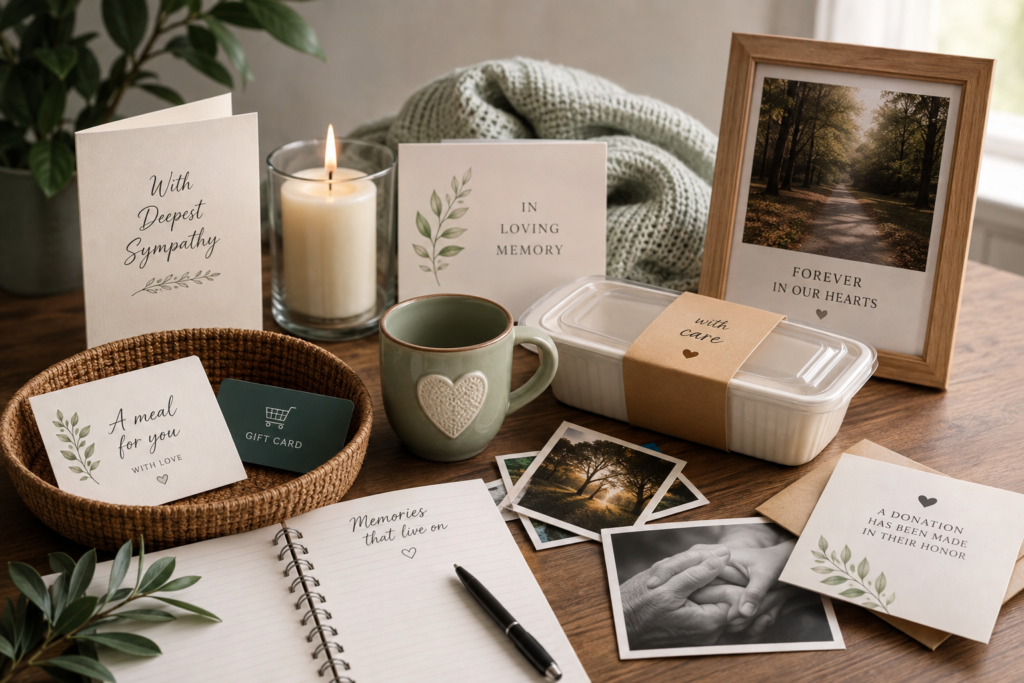
Before sending anything, follow the obituary or family’s request, as gift expectations can depend on whether you are attending a funeral vs. wake. Appropriate alternatives to flowers include a memorial donation, a card sharing a specific memory, flexible meal or grocery support, practical help, meaningful photographs, or a lasting keepsake. Many gifts belong at the family home, not at the funeral service.
Flowers remain a kind expression of sympathy when the family has not requested otherwise. An alternative may be more personal, practical, or lasting, but it should never create extra decisions or work for the recipient.
Use the family’s wishes, your relationship, the destination, and the amount of coordination required to guide your choice.
“The most thoughtful alternative to funeral flowers is one that respects the family’s wishes, fits your relationship, and does not create additional work for those who are grieving.”
Quick answer: If you are wondering what to send to a funeral instead of flowers, consider a handwritten card with a personal memory, a memorial donation, meal or grocery support, practical help, photographs, a memory book, or a personalized keepsake. Always check the obituary or family’s instructions first.
| Option | Best For | Timing | Send To | Check First |
|---|---|---|---|---|
| Specific-memory card | Any relationship | Whenever you are ready | Home or approved service delivery | Names and personal details |
| Memorial donation | Most relationships | When instructions are available | Named charity or fund | Family’s preferred organization |
| Meal or grocery gift card | Friends, relatives, coworkers | When practical support would help | Home or digital delivery | Store availability and dietary needs |
| Ready-to-heat meal | Close contacts and neighbors | At an agreed time | Family home | Allergies, storage, and delivery |
| Specific practical help | Close contacts | When the family accepts the offer | Family home | The exact task and timing |
| Shared photos or videos | Friends, relatives, colleagues | Before or after the funeral | Home or private digital delivery | Privacy and permissions |
| Memory book | Close contacts or groups | After memories are collected | Family home | Whether another person is making one |
| Personalized keepsake | Close relationships | When the family is ready | Family home | Taste, wording, and space |
| Digital memorial | Families and community groups | Before or after the service | Private digital delivery | Family approval and access |
| Group contribution | Coworkers, clubs, communities | Once the purpose is confirmed | Named fund or organizer | Recipient, purpose, and privacy |
Before You Send Anything, Check the Family’s Wishes
Read the obituary, memorial page, funeral-home notice, or other instructions before choosing a gift. The family may name a charity, scholarship, religious organization, community cause, or specific fund. They may also ask for no gifts.
Following the stated request is more considerate than selecting a different tribute based on personal preference. When the notice is unclear, ask a close relative or the funeral home a short, practical question.
Honor You’s guide to sympathy gift etiquette offers more guidance on choosing respectfully.
What “In Lieu of Flowers” Means
“In lieu of flowers” generally indicates that the family prefers the alternative named in the obituary, often a memorial donation. It does not automatically mean that any non-floral gift is welcome.
Read the entire request. If the family names a food bank, scholarship, or other organization, direct the donation there and follow the acknowledgment instructions. If no alternative is named, a card or a discreet question to someone close to the family is appropriate.
“In lieu of flowers” usually means the family’s specifically requested alternative should be respected rather than replaced with another gift of your choosing.
Decide Where the Gift Should Go
A funeral home, family home, charity, and digital memorial each serve a different purpose. Sending a thoughtful item to the wrong place can create delivery, storage, or setup problems.
Meals, comfort packages, household services, and personal keepsakes usually belong at the family home. Donations should go directly to the named charity or fund. Digital material should be sent privately to the family or an approved coordinator.
Nothing should be delivered for display at a funeral or memorial service without permission.
Gifts for the Funeral or Memorial Service
Service materials require approval from the immediate family or funeral home. Appropriate items may include a card, donation acknowledgment, requested photographs, remembrance cards, a guest register, or a coordinated photo-video tribute.
Before sending anything to the venue, confirm the item, quantity, delivery address, deadline, and contact person. Even a suitable tribute can create work if it arrives unexpectedly or does not fit the planned service.
Support to Send to the Family Home
Food support, grocery credit, household help, comfort items, photographs, memory books, and personal keepsakes generally belong at the family home. Arrange physical deliveries for a time the household has accepted.
Choose support that requires little scheduling, storage, or decision-making. A flexible digital gift card may be more useful than an unplanned delivery that someone must receive, refrigerate, assemble, or return.
Important: A gift can be thoughtful and still be inconvenient if the family has to coordinate delivery, find storage space, return containers, or decide where the item should be displayed.
15 Thoughtful Alternatives to Funeral Flowers
1. A Handwritten Card With a Specific Memory
Best for: Almost any relationship.
Why it helps: A personal memory tells the family something meaningful about their loved one. Mention a kind act, familiar phrase, shared project, or small moment you remember clearly.
Send to: The family home or an approved card destination at the service.
Check first: Confirm names and details. Avoid private or embarrassing stories. A few sincere sentences are enough, and the family should not feel expected to reply.
2. A Donation in the Person’s Memory
Best for: Friends, relatives, coworkers, groups, and people unable to attend.
Why it helps: A donation can recognize a cause connected to the person’s values, community, faith, interests, or life experience.
Send to: The organization or official fund named by the family.
Check first: Follow the obituary’s instructions, including the fund name and any reference details. Request family notification when offered, but do not include the amount in your note. Do not substitute a different organization without a clear reason or family approval.
3. A Meal-Delivery, Restaurant, or Grocery Gift Card
Best for: Households that would value flexible food support.
Why it helps: The recipient can choose the food, timing, and delivery address that suit the household.
Send to: The family home by mail or through private digital delivery.
Check first: Choose a service or store available in the recipient’s area. Consider dietary needs and delivery coverage. Avoid short expiration periods or a redemption process that requires the family to coordinate with you.
4. A Ready-to-Heat Meal or Shelf-Stable Snack Box
Best for: Close friends, relatives, and neighbors who know the household.
Why it helps: Simple food may remove an everyday task or help when relatives and visitors are present.
Send to: The family home at an agreed time.
Check first: Ask about allergies, dietary practices, refrigerator or freezer space, and delivery preferences. Label ingredients and reheating instructions. Use containers that do not need to be returned.
5. A Specific Offer of Errands, Childcare, Pet Care, Lawn Care, or Rides
Best for: Close friends, relatives, and trusted neighbors.
Why it helps: A concrete offer is easier to consider than saying, “Let me know if you need anything.” Offer one task you can complete reliably.
Send to: Make the offer privately by text, call, or card.
Check first: Give the family an easy way to decline.
“I can walk the dog on Tuesday afternoon if that would help. No need to reply if you already have it covered.”
6. Prepaid Cleaning or Household Support
Best for: Someone you know well enough to discuss help at home.
Why it helps: Cleaning, laundry, or another requested household service can address a practical need.
Send to: The family home only after permission and scheduling approval.
Check first: Never book a provider as a surprise. Ask about privacy, security, pets, access, and preferred providers. A flexible credit may work better than a fixed appointment, but only if the company serves the recipient’s area and the family wants the service.
7. Photos or Videos the Family May Not Have
Best for: Friends, relatives, classmates, coworkers, and community members with meaningful images.
Why it helps: A candid photograph or video may show a part of the person’s life that the immediate family did not often see.
Send to: The home as prints or through a private, clearly labeled digital folder.
Check first: Ask before posting anything publicly. Identify the people, location, and approximate date when possible. Share a curated selection instead of an unsorted archive that the family must organize.
8. A Photo Album, Memory Book, or Book of Letters
Best for: Close family, longtime friends, teams, clubs, or colleagues.
Why it helps: A collected remembrance brings photographs, stories, and messages together in one place.
Send to: The family home after contributors have had enough time to provide thoughtful material.
Check first: Ask whether someone is already preparing a similar gift. Proofread names and dates, use respectful photographs, and avoid including private information. Consider leaving space for the family to add memories later.
9. A Personalized Memorial Keepsake
Best for: A close relationship where you understand the recipient’s taste.
Why it helps: A keepsake can preserve a name, photograph, signature, verse, or other meaningful detail without requiring ongoing care.
Send to: The family home when the recipient is ready to receive a personal memorial item.
Check first: Confirm spelling, dates, wording, faith references, and image quality. Think about the recipient’s style and available space.
Honor You creates personalized memorial keepsakes using family-approved details.
10. A Memorial Bookmark, Remembrance Card, or Approved Guest Register
Best for: Immediate family members or someone coordinating the service.
Why it helps: Printed remembrance items can share a photograph, meaningful text, or service information. A guest register can preserve attendee names and messages.
Send to: The funeral home or venue only with family and funeral-home approval.
Check first: Confirm wording, quantity, deadline, delivery contact, and display plan.
Honor You offers memorial bookmarks, as well as prayer cards, remembrance cards, and register books. Use religious language only when it matches the family’s tradition.
11. A Digital Memorial or Photo-Video Tribute
Best for: Families with memories and contributors in different locations.
Why it helps: A digital tribute can gather photographs, stories, and video clips without adding physical items to the home.
Send to: Share a private preview or access link with the family first.
Check first: Obtain approval before publishing or displaying the tribute at a service. Confirm who can view, contribute, and manage it.
Honor You’s Memorial Scan and photo-video montage service provide options for preserving approved memories.
12. A Memorial Tree, Garden Stone, or Outdoor Tribute
Best for: Families with suitable outdoor space and an interest in gardening or nature.
Why it helps: An outdoor tribute can create a personal place for remembrance when it fits the household and property.
Send to: The family home or another location approved by its owner or manager.
Check first: Ask about climate, space, maintenance, pets, property rules, and moving plans. A plant requires care, so do not arrange delivery or installation without permission.
13. A Low-Scent Comfort Package
Best for: Someone whose preferences you know.
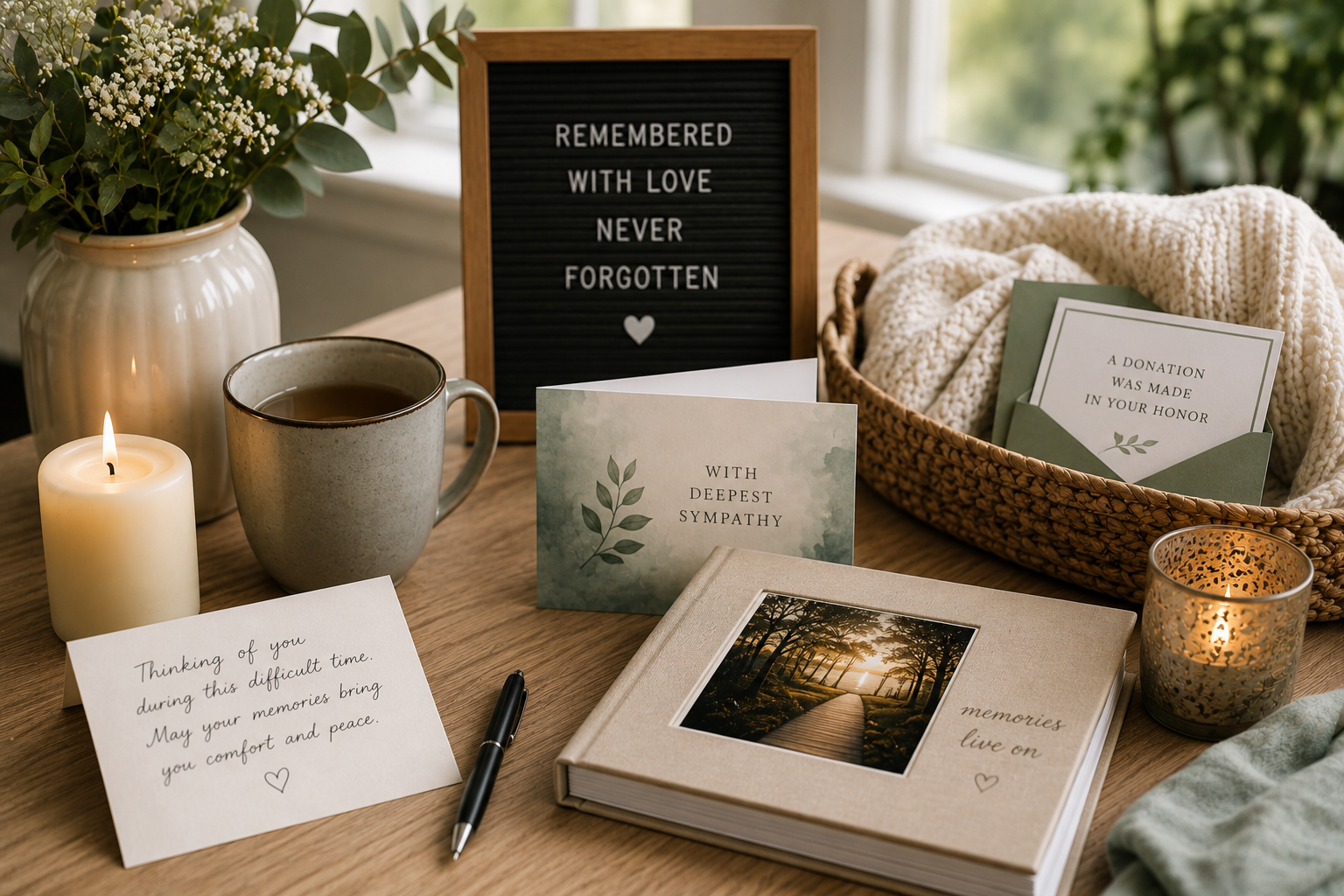
Why it helps: A modest package might include tea, a soft blanket, unscented hand cream, simple snacks, or a notebook.
Send to: The family home at an accepted delivery time.
Check first: Consider allergies, sensitivities, dietary requirements, and available space. Avoid heavily scented candles, perfume, or bath products unless you know they are welcome. Keep the package manageable and do not request a thank-you or response.
14. A Grief or Support Book, Only if Welcome
Best for: A close recipient whose reading preferences, beliefs, and circumstances you understand.
Why it helps: A carefully chosen book may offer useful language or companionship when the recipient decides to read it.
Send to: The family home, without suggesting a required reading schedule.
Check first: Avoid books that prescribe a grief timeline, assume a particular faith, or promise an emotional outcome.
Sharing optional grief and loss resources may be more appropriate when you are unsure about a specific book.
15. A Group Contribution to Funeral Costs, a Memorial Fund, or a Practical Service
Best for: Coworkers, clubs, congregations, teams, and community groups.
Why it helps: A coordinated contribution can support a family-requested need without sending many separate items.
Send to: The official fund, designated organizer, or approved service provider.
Check first: Confirm the recipient, purpose, payment method, privacy settings, and person responsible for communicating with the family. Keep individual contribution amounts private, make participation optional, and do not assume that financial support is wanted unless a legitimate channel has been provided.
How to Choose by Your Relationship
Close Family or Friend
A specific memory, hands-on help, photographs, a memory book, or a personal keepsake may suit a close relationship. Your familiarity can help you account for the household’s preferences, beliefs, schedule, and practical needs.
Still, ask before arranging services, public tributes, or large deliveries.
Coworker or Acquaintance
Choose a respectful option that does not presume intimacy. A signed card, requested donation, meal or grocery gift card, or group contribution can express care without requiring a personal response.
Do not ask the recipient to explain what they need or how they will use the gift.
Group or Community
Use one organizer to prevent duplicate gifts and conflicting messages. A group donation, book of letters, shared photo folder, meal credit, or family-approved service can reflect the group’s connection while giving the family one clear point of contact.
When to Send Your Gift
The right timing depends on the gift and the family’s instructions. Cards, named donations, and requested photographs can be sent once accurate details are available.
Service materials must arrive only after approval and within the schedule provided by the family or funeral home.
Practical support may be useful before or after the funeral, but coordinate deliveries and tasks. A later message, photograph, meal card, or completed memory book can still be thoughtful. There is no need to treat condolences as inappropriate simply because the service has passed.
For a later note, acknowledge the loss directly and keep any apology about timing brief.
What to Write With a Non-Floral Sympathy Gift
A short, specific message is usually enough. Keep the focus on the person and family, and do not require a reply.
Shared-Memory Message
I will always remember how Maria welcomed every new person into the room. Her warmth made a difference to me. I am thinking of you and your family.
Practical-Support Message
I am so sorry for your loss. I have sent grocery credit for your household to use whenever it is helpful. There is no need to reply.
Donation Message
In memory of James, I made a donation to the community food bank named in the obituary. I am grateful to have known him and am keeping your family in my thoughts.
What Not to Send Without Asking
Avoid surprise perishables, strongly scented products, alcohol, live plants requiring care, large decorative items, prescriptive grief books, jewelry, and urn-related objects.
Do not send service materials or create public memorials without explicit approval.
Consider the work attached to a gift. Scheduling, setup, storage, returnable containers, public acknowledgments, and thank-you expectations can turn a kind gesture into another task.
When uncertain, follow the obituary or choose a simple card.
Remember: The goal is to show care without adding another obligation. Simple, flexible support is often more useful than an elaborate surprise.
Frequently Asked Questions
Is It Rude Not to Send Flowers to a Funeral?
No. A sincere card, requested donation, practical support, or appropriate memorial gift can express sympathy. The family’s stated wishes matter more than the format.
What Does “In Lieu of Flowers” Mean?
It generally means the family prefers the donation or tribute named in the obituary instead of flowers. It does not necessarily mean another gift is expected.
Should I Send the Gift to the Funeral Home or the Family’s Home?
Send only family-approved service items to the funeral home. Meals, household support, comfort packages, and personal keepsakes generally go to the family home. Send donations to the named organization and digital tributes privately for approval.
What Can Coworkers Send Instead of Flowers?
A signed card, requested group donation, flexible meal or grocery credit, collection of memories, or another approved group gift may be appropriate. One person should coordinate the gift and message.
Can I Send a Sympathy Gift After the Funeral?
Yes. A later remembrance or practical gift can still be thoughtful. Coordinate anything requiring delivery or scheduling, and include a brief note that does not ask for a response.
How Much Should I Spend or Donate?
There is no required amount. Choose an amount that fits your budget, relationship, and the family’s request. Thoughtfulness does not depend on price, and contribution amounts should remain private.
What if I Do Not Know the Family’s Preferences or Customs?
Read the obituary or memorial notice, ask the funeral home, or check discreetly with someone close to the family. Customs vary by family, culture, and faith. When uncertainty remains, a simple card or named donation is a respectful choice.
Final Thoughts
There is no single correct answer to what you should send to a funeral instead of flowers. The most appropriate choice depends on the family’s wishes, your relationship with them, and the type of support that would be genuinely useful.
A personal memory, memorial donation, meal card, practical offer of help, meaningful photograph, or carefully chosen keepsake can all be thoughtful alternatives.
Whatever you choose, aim to make the gesture simple for the recipient. Avoid gifts that require unexpected scheduling, maintenance, storage, or decisions.
Simple support can be enough. When a personalized remembrance is appropriate, you can ask Honor You for design and order help without committing to a particular format before the family is ready.