

Many families choose cremation, but they may still feel unsure about what funeral homes actually do during the process. Some people assume cremation means there is no funeral, memorial, or formal service, but that is not the case. A family can choose a simple cremation, a traditional funeral before cremation, a memorial service after cremation, or a personal celebration of life.
Funeral homes cremation services usually include practical support, paperwork, transportation, crematory coordination, urn selection, obituary assistance, and memorial planning. A funeral home can help guide families through each step so they do not have to manage everything alone during an already difficult time.
This guide explains how funeral homes handle cremation, what cremation services may include, how to compare providers, what questions to ask, and how families can create a meaningful memorial around cremation.
What Does Funeral Homes Cremation Mean?
Funeral homes cremation usually refers to cremation services arranged through a funeral home. The funeral home may operate its own crematory, or it may work with a licensed crematory to complete the cremation process.
When a family chooses cremation through a funeral home, the funeral provider can help manage the arrangements from beginning to end. This may include bringing the deceased into care, completing required paperwork, coordinating with the crematory, helping the family choose service options, and returning the cremated remains to the family.
A funeral home can help with:
- Bringing the deceased into care
- Completing required paperwork
- Coordinating with the crematory
- Helping the family choose cremation options
- Arranging a funeral or memorial service
- Providing urns or keepsakes
- Supporting final placement of ashes
“Choosing cremation through a funeral home gives families professional support during a difficult time. The funeral home helps manage the practical details so the family can focus on honoring their loved one.”
Cremation can be simple or highly personalized. The right option depends on the family’s wishes, budget, timeline, culture, faith, and the type of remembrance they want to create.
Do You Need a Funeral Home for Cremation?
Requirements may vary by location, but many families choose to work with a funeral home because it simplifies the process. Cremation involves legal documents, authorization forms, identification procedures, transportation, permits, and coordination with a crematory.
A funeral home understands these steps and can help families avoid confusion. This support can be especially helpful when arrangements need to be made quickly or when family members are unsure what decisions must be made first.
Some families choose a direct cremation provider that focuses mainly on basic cremation arrangements. Others prefer a full-service funeral home that can also help plan a viewing, funeral, memorial service, celebration of life, obituary, printed programs, flowers, and keepsakes.
Working with a funeral home may be helpful if your family wants:
- Guidance with required paperwork
- Help understanding cremation service options
- A viewing, visitation, funeral, or memorial service
- Support choosing an urn or keepsake
- Help coordinating final placement of ashes
- A provider who can manage both cremation and memorial planning
Types of Cremation Services Funeral Homes Offer
Funeral homes may offer several cremation service options. Some are simple and private, while others include traditional funeral elements or personalized memorial details.
Direct Cremation
Direct cremation is usually the simplest cremation option. It typically does not include a formal viewing, visitation, or funeral service before cremation. The funeral home or cremation provider handles transportation, paperwork, crematory coordination, and the return of the ashes to the family.
Even with direct cremation, families can still hold a memorial service later. Some families choose direct cremation first and then plan a celebration of life at a home, church, restaurant, outdoor space, or memorial venue.
Cremation With Memorial Service
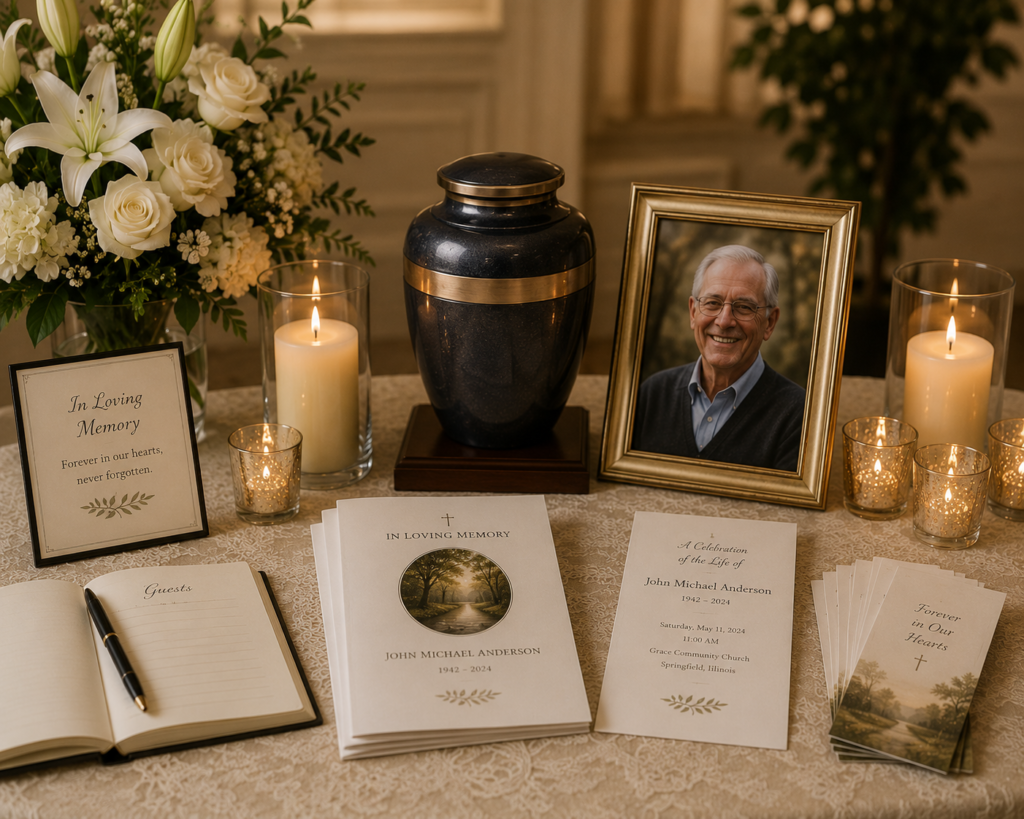
Cremation with a memorial service means the cremation usually takes place before the ceremony. The service may include an urn, framed photo, flowers, candles, funeral program, music, readings, prayers, eulogies, and shared memories.
This option gives families flexibility because the memorial service does not always need to happen immediately. It can be planned around travel, family schedules, religious preferences, or a meaningful date.
Cremation With Traditional Funeral Service
Some families choose to have a traditional funeral service before cremation. This may include a viewing, visitation, ceremony, religious service, casket rental, flowers, funeral programs, and a formal gathering.
After the service, cremation takes place instead of burial. This option can be meaningful for families who want the comfort of a traditional funeral while still choosing cremation as the final form of disposition.
Cremation With Celebration of Life
A celebration of life is often less formal than a traditional funeral. It may focus on stories, favorite music, photos, personal details, hobbies, meaningful objects, food, and joyful remembrance.
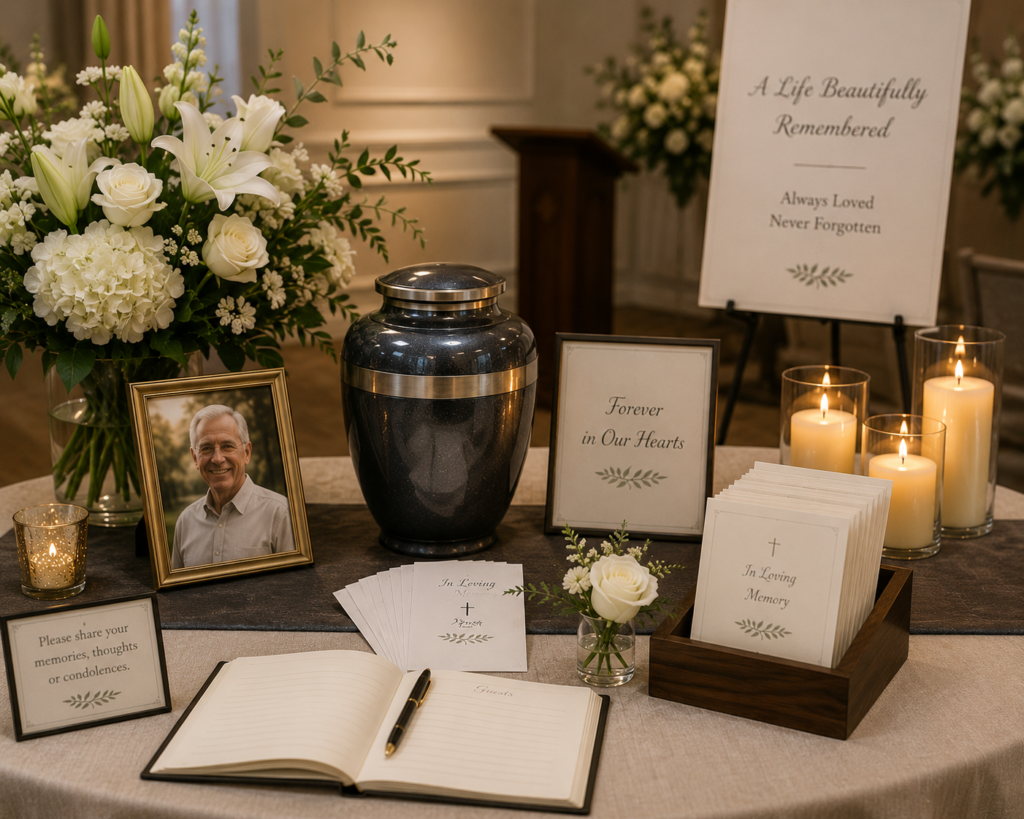
Cremation works well with celebration of life services because families can design the gathering in a flexible and personal way. The urn may be displayed with flowers, candles, programs, memory cards, or a photo table.
Graveside or Columbarium Service
Some families choose to bury ashes in a cemetery plot, place them in a columbarium niche, or hold a graveside committal ceremony. A funeral home can often help coordinate these arrangements with the cemetery or memorial location.
A graveside or columbarium service may include prayers, readings, a short tribute, flowers, music, or a final farewell with close family and friends.
What Funeral Homes Usually Handle During Cremation
A funeral home can handle many of the practical details involved in cremation. This support can reduce stress for families and make the process easier to understand.
Funeral homes may assist with:
- Transportation of the deceased: Whether a death occurs at home, in a hospital, or at a care facility, understanding who picks up dead bodies can bring clarity to the initial steps. The funeral home or a licensed transport team handles bringing your loved one safely into care.
- Identification and authorization
- Death certificate support
- Cremation permits
- Coordination with the crematory
- Refrigeration or care before cremation
- Obituary assistance
- Service planning
- Urn and keepsake selection
- Memorial program or prayer card coordination
- Return of cremated remains to the family
Every funeral home may structure its services differently, so families should ask for a clear explanation of what is included in each cremation package.
Before choosing a cremation provider, ask exactly what is included, what is optional, and what may be billed separately. A written estimate can help families compare options clearly.
Funeral Home Cremation vs. Direct Cremation Provider
Families may compare a full-service funeral home with a direct cremation provider. Both can be appropriate, but they may offer different levels of support.
Funeral Home Cremation
Funeral home cremation is often best for families who want more guidance, service planning, viewing options, memorial coordination, printed materials, flowers, obituary support, and help with meaningful arrangements.
A full-service funeral home may be helpful if the family wants:
- A visitation or viewing
- A funeral before cremation
- A memorial service after cremation
- A religious or cultural ceremony
- Help with programs, prayer cards, flowers, or keepsakes
- Support coordinating cemetery or columbarium placement
Direct Cremation Provider
A direct cremation provider may offer a simpler and more limited service. The focus is usually on transportation, paperwork, cremation, and returning the ashes to the family.
This may be a good fit for families who want the most basic arrangement or who plan to hold a separate memorial service on their own later.
Neither option is automatically better. The right choice depends on your family’s needs, budget, timeline, service preferences, and how much support you want during the planning process.
Cremation Funeral Services: What Can Be Included?
Cremation does not limit how meaningful a service can be. Families can still gather, share memories, pray, sing, display photos, create printed programs, and honor the person’s life in a personal way.
A cremation funeral service may include:
- Visitation or gathering
- Memorial service
- Celebration of life
- Religious or spiritual ceremony
- Music
- Eulogies
- Scripture or poetry readings
- Photo slideshow
- Memory table
- Funeral programs
- Prayer cards
- Guest book or register book
- Flowers
- Urn display
- Candle lighting
- Graveside or scattering ceremony
Printed materials can help guide guests through the service and give them something meaningful to take home. HonorYou’s guide to funeral program ideas can help families plan a thoughtful printed tribute.
Families may also choose prayer cards or a register book to preserve guest names, messages, prayers, and memories.
How to Choose a Funeral Home for Cremation
Choosing a funeral home for cremation is an important decision. The right provider should be clear, respectful, responsive, and willing to explain your options without pressure.
When comparing funeral homes, consider:
- Whether the funeral home offers cremation services
- Whether they have an on-site crematory or use a third-party crematory
- Pricing transparency
- Reviews and reputation
- Service options
- Religious or cultural experience
- Memorial planning support
- Communication style
- Availability and response time
- Urn and keepsake options
Families may also consult funeral home reviews before making a final decision. Reading these shared experiences can help you understand how other families describe a provider’s communication, compassion, transparency, and overall level of support during their time of need. If you are still deciding which provider is right for your family, HonorYou’s guide on how to choose the right funeral home can help you know exactly what to look for.
If you are still deciding which provider is right for your family, HonorYou’s guide on how to choose the right funeral home can help you know what to look for.
Questions to Ask Funeral Homes About Cremation
Asking clear questions can help families compare providers and avoid confusion later. Before agreeing to a cremation arrangement, ask for a written estimate and make sure you understand what is included.
Helpful questions include:
- Do you offer cremation services?
- Do you have your own crematory?
- If not, which crematory do you use?
- What is included in your cremation package?
- What is the difference between direct cremation and cremation with a service?
- Are there required fees?
- Are permits and death certificates included?
- Can we hold a viewing before cremation?
- Can we have a memorial service after cremation?
- What urn options are available?
- How and when will the ashes be returned?
- Can you help with an obituary, programs, prayer cards, or register book?
- Are there additional third-party costs?
A transparent funeral home should be willing to explain cremation options, pricing, timelines, and required documents in a way your family can understand.
How Much Does Cremation Through a Funeral Home Cost?
Cremation costs through a funeral home can vary depending on location, service type, funeral home pricing, crematory fees, urn selection, and whether the family chooses a viewing, funeral, memorial, or celebration of life.
Direct cremation is usually simpler than cremation with a full service, but every provider prices services differently. Families should ask for an itemized estimate so they understand what is included and what may be optional.
Factors that can affect cremation funeral costs include:
- Direct cremation vs. cremation with service
- Funeral home basic services fee
- Transportation
- Permits and paperwork
- Crematory fee
- Viewing or visitation
- Rental casket
- Memorial service facility use
- Urn or keepsake urns
- Printed memorial items
- Flowers
- Obituary placement
- Cemetery, niche, or burial fees for ashes
For a broader breakdown of common funeral-related charges, HonorYou’s guide to funeral home expenses explains the types of fees families may see when planning arrangements.
Can You Still Have a Funeral If You Choose Cremation?
Yes. Cremation and funeral services are not opposites. Choosing cremation does not mean giving up the chance to gather, remember, and honor a loved one. It simply changes how the body is cared for after death.
Families can still have:
- A funeral before cremation
- A memorial after cremation
- A celebration of life
- A church service
- A graveside urn burial
- A private family gathering
- A scattering ceremony
Some families find comfort in holding a traditional service before cremation. Others prefer a memorial or celebration of life after receiving the ashes. Both choices can be respectful and meaningful.
The service can include music, prayers, readings, photos, flowers, candles, a memory table, a video tribute, funeral programs, prayer cards, and personal stories.
What Happens to the Ashes After Cremation?
After cremation, the cremated remains are usually returned to the family in a temporary container or urn, depending on what was selected. Families can then decide what to do with the ashes based on personal, religious, cultural, legal, and emotional considerations.
Common options for ashes after cremation include:
- Keep ashes in an urn at home
- Bury ashes in a cemetery plot
- Place ashes in a columbarium niche
- Scatter ashes in a meaningful place where allowed
- Divide ashes among family members in keepsake urns
- Create memorial jewelry
- Use ashes in a memorial garden
- Include ashes in a permanent memorial
HonorYou’s guide to cremation ashes ideas offers thoughtful options for families deciding how to preserve, place, or honor cremated remains.
Funeral Homes, Cremation, and Memorial Keepsakes
Whether a family chooses direct cremation or a full memorial service, printed and digital keepsakes can help tell the loved one’s story and give guests something meaningful to remember them by.
Memorial keepsakes can include:
- Funeral programs
- Prayer cards
- Memorial bookmarks
- Register books
- Thank-you cards
- Digital memorial pages
- Photo keepsakes
- Memorial scan or QR code tributes
These items can include photos, dates, poems, prayers, service details, favorite quotes, family memories, and personal messages. They can be especially meaningful during a cremation memorial service where families want to create a warm and personal setting around an urn, photo display, or memory table.
HonorYou helps families create printed and digital memorial items that preserve stories, honor loved ones, and support meaningful remembrance.
Final Thoughts
Funeral homes can play an important role in cremation by managing practical details and helping families create a meaningful farewell. They may assist with transportation, paperwork, crematory coordination, urn selection, obituary support, memorial planning, and service arrangements.
Cremation can be simple, traditional, religious, personal, or celebratory depending on the family’s wishes. A family may choose direct cremation, a funeral before cremation, a memorial service after cremation, or a celebration of life centered around memories, photos, flowers, music, and keepsakes.
The most important thing is choosing an option that feels respectful, manageable, and true to the person being honored. With the right support, cremation can still include a beautiful and meaningful tribute.
Frequently Asked Questions
Do funeral homes offer cremation services?
Yes. Many funeral homes offer cremation services or coordinate with a licensed crematory to help families arrange cremation.
What does a funeral home do for cremation?
A funeral home may handle transportation, paperwork, permits, identification, crematory coordination, urn selection, service planning, obituary support, and returning the ashes to the family.
Can you have a funeral service before cremation?
Yes. Families can hold a traditional funeral, viewing, or visitation before cremation if they wish.
Can you have a memorial service after cremation?
Yes. Many families hold a memorial service or celebration of life after cremation, often with the urn, photos, flowers, programs, and personal tributes.
Is direct cremation the same as funeral home cremation?
Direct cremation is one type of cremation service. Funeral home cremation may include direct cremation or additional services such as viewing, ceremony planning, memorial coordination, and keepsake options.
How much does cremation through a funeral home cost?
Costs vary based on the funeral home, location, cremation type, service options, urn selection, permits, transportation, and memorial choices. Families should ask for an itemized estimate.
What questions should I ask a funeral home about cremation?
Ask whether they have an on-site crematory, what is included in the cremation package, what fees are required, whether a service can be held, how ashes are returned, and what memorial options are available.
What can families do with ashes after cremation?
Families may keep ashes in an urn, bury them, place them in a columbarium, scatter them where allowed, divide them into keepsake urns, create memorial jewelry, or use them in a memorial garden.
Can cremation include printed funeral programs?
Yes. Cremation services can include printed funeral programs, prayer cards, register books, bookmarks, and other memorial keepsakes, especially when the family holds a memorial service or celebration of life.
Can a funeral home help plan a cremation memorial service?
Yes. Many funeral homes can help plan a cremation memorial service, including the urn display, flowers, music, readings, guest book, printed programs, and other personal tribute details.
