
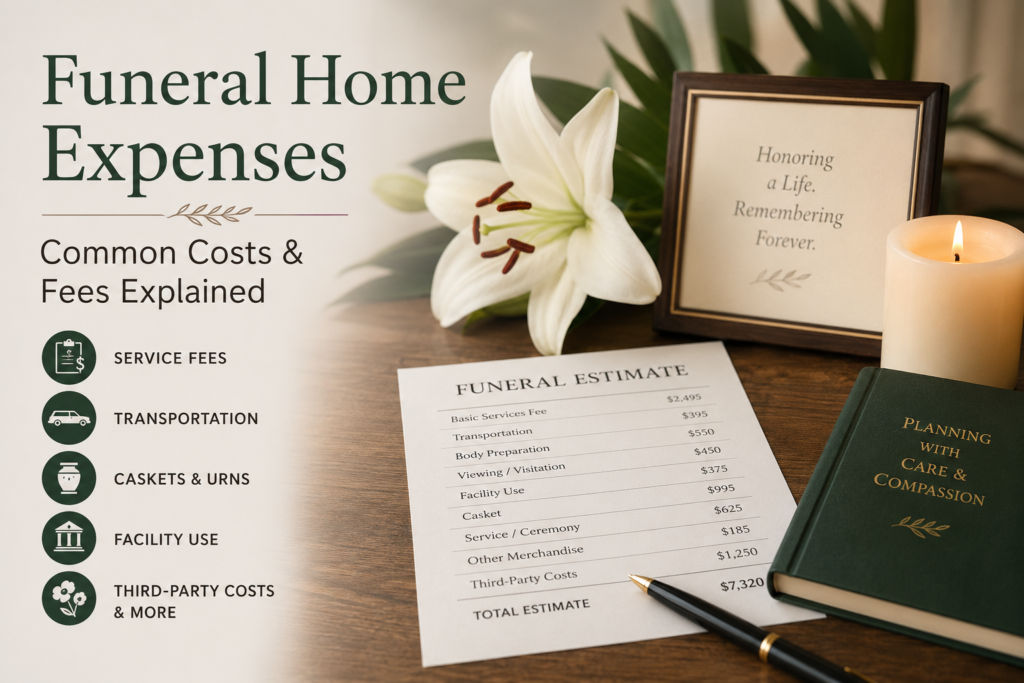
Funeral home expenses can feel confusing, especially when families are making decisions during a difficult and emotional time. Between service fees, transportation, preparation, merchandise, cemetery costs, and optional extras, it is not always clear what is included or what may be charged separately.
Understanding common funeral home expenses can help families make more confident choices, compare providers, and avoid unexpected costs. While prices can vary based on the funeral home, location, type of service, and family preferences, most funeral arrangements include a similar set of basic costs.
This guide explains what funeral home costs usually include, which fees may be optional, what third-party expenses to expect, and what questions to ask before agreeing to funeral arrangements.
What Are Funeral Home Expenses?
Funeral home expenses are the costs charged by a funeral provider for the services, coordination, paperwork, transportation, facilities, preparation, and merchandise involved in arranging a funeral, burial, cremation, or memorial service.
These expenses may include the funeral director’s time, staff support, body preparation, use of the funeral home or chapel, a hearse or other funeral cars, caskets, urns, printed materials, and help with permits or documents.
The total cost can vary depending on:
- The type of service selected
- Whether the family chooses burial or cremation
- The funeral home’s pricing
- Local transportation needs
- Casket, urn, or memorial item choices
- Cemetery or crematory fees
- Personalized service details
“Funeral home expenses are not just one single fee. They are usually made up of several services, products, and third-party costs that together create the final price.”
Why Funeral Home Costs Can Vary
Funeral home costs can vary widely because every family makes different choices. A traditional funeral with a viewing, ceremony, hearse, casket, and burial will usually cost more than a direct cremation or simple memorial service.
Costs may change based on:
- Service type – traditional funerals, memorials, graveside services, and direct cremations all have different pricing.
- Burial vs. cremation – burial often includes cemetery and casket costs, while cremation may include crematory fees and urn costs.
- Location – funeral home pricing can differ by city, state, and local market.
- Transportation – longer distances or multiple service locations may increase costs.
- Facility use – using the funeral home chapel or visitation rooms may add fees.
- Merchandise – caskets, urns, programs, register books, and keepsakes vary in price.
- Personalization – video tributes, livestreaming, flowers, and custom printed items may increase the total.
If you are comparing providers, you can compare funeral home reviews to help find a funeral home that feels transparent, supportive, and right for your family.
Common Funeral Home Expenses
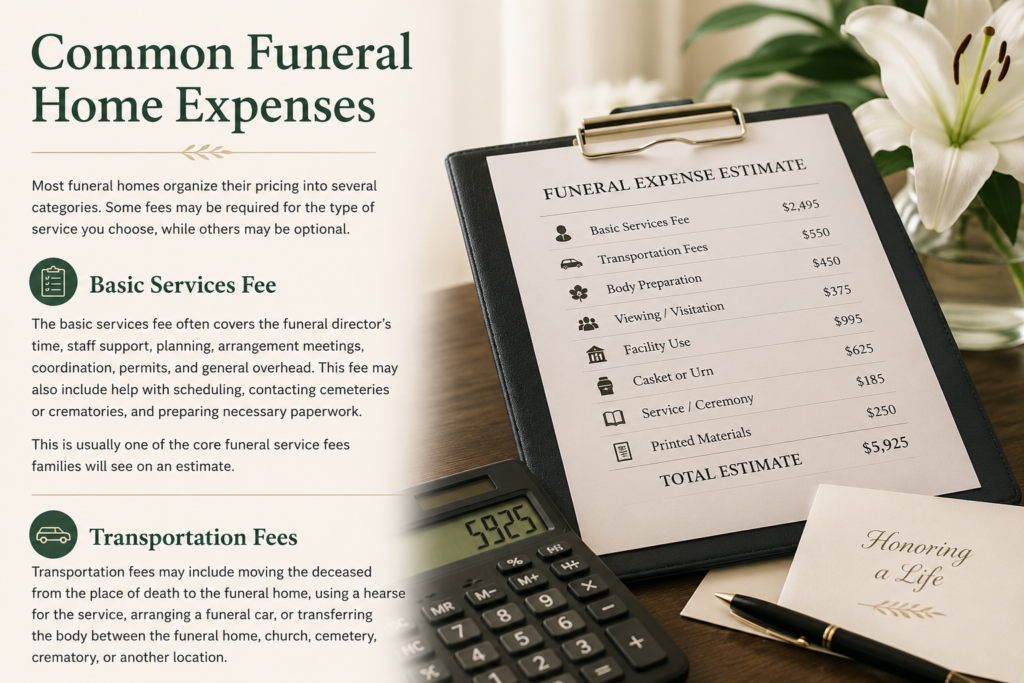
Most funeral homes organize their pricing into several categories. Some fees may be required for the type of service you choose, while others may be optional.
Basic Services Fee
The basic services fee often covers the funeral director’s time, staff support, planning, arrangement meetings, coordination, permits, and general overhead. This fee may also include help with scheduling, contacting cemeteries or crematories, and preparing necessary paperwork.
This is usually one of the core funeral service fees families will see on an estimate.
Transportation Fees
Transportation fees may include moving the deceased from the place of death to the funeral home, using a hearse for the service, arranging a funeral car, or transferring the body between the funeral home, church, cemetery, crematory, or another location.
Additional transportation costs may apply if travel distances are long or if the family requests extra vehicles, such as a family limousine.
Body Preparation Fees
Body preparation fees can include embalming, dressing, cosmetology, casketing, refrigeration, or other care services. Embalming may not always be required, but it may be recommended or necessary if there will be a public viewing or if the service is delayed.
Families should always ask whether preparation services are required for the type of arrangement they choose.
Viewing or Visitation Fees
A viewing or visitation fee may cover use of the funeral home’s visitation room, staff time, setup, cleaning, and coordination. These expenses may increase if the family wants additional visitation hours or a larger space.
Funeral or Memorial Service Fees
Funeral or memorial service fees may apply when holding a ceremony at the funeral home, chapel, church, or another venue. These fees may include staff support, setup, coordination, equipment, and use of the facility.
A simple graveside service may cost less than a full funeral service with visitation and chapel use.
Casket or Urn Costs
Casket and urn costs can vary widely. A casket may be made from different types of wood, metal, or other materials, while urns can range from simple containers to personalized keepsakes.
Families can usually choose from several price levels. A more expensive casket or urn is not required to create a meaningful service.
Cremation Fees
Cremation expenses may include the cremation service fee, crematory charges, permits, authorization forms, a cremation container, urn, and optional memorial service costs. Direct cremation is usually one of the lower-cost options because it does not include a formal viewing or traditional funeral service.
Burial-Related Costs
Burial-related funeral home charges may include coordination with the cemetery, use of a hearse, graveside service support, burial permits, and staff assistance. Cemetery costs are often separate and may not be included in the funeral home’s price.
Printed Materials and Keepsakes
Printed memorial items can include funeral programs, prayer cards, register books, memorial folders, bookmarks, thank-you cards, and other keepsakes. These items are optional, but many families choose them because they give guests something meaningful to take home.
If you are trying to manage costs, HonorYou’s guide to affordable funeral programs can help families create meaningful printed materials without overspending.
Funeral Home Expenses vs. Third-Party Costs
Not every funeral cost comes directly from the funeral home. Some charges are paid to outside providers, often called third-party costs or cash advance items. The funeral home may help coordinate these services, but the money may go to another company or organization.
Common third-party costs may include:
- Cemetery plot
- Grave opening and closing
- Headstone or grave marker
- Burial vault or grave liner
- Clergy or officiant honorarium
- Flowers
- Obituary placement
- Certified death certificates
- Reception or catering costs
- Musicians, livestreaming, or venue fees
Before signing an agreement, ask which costs are funeral home charges and which are third-party expenses. This can help prevent confusion when the final bill is prepared.
Burial Expenses to Consider
Burial expenses are often higher because they may involve both funeral home charges and cemetery costs. Families choosing burial should ask for a full funeral cost breakdown so they understand what is included.
Common burial expenses may include:
- Casket
- Cemetery plot
- Burial vault or grave liner
- Grave opening and closing
- Headstone or marker
- Hearse or transportation to the cemetery
- Graveside service coordination
- Viewing, visitation, or embalming if selected
Some families may choose a simpler burial, such as immediate burial, to reduce funeral arrangement costs while still honoring their loved one respectfully.
Cremation Expenses to Consider
Cremation expenses can vary depending on whether the family chooses direct cremation, cremation with a memorial service, or cremation after a traditional funeral.
Common cremation costs may include:
- Cremation service fee
- Crematory fee
- Cremation authorization and permits
- Cremation container
- Urn
- Memorial service or celebration of life
- Keepsake urns or memorial jewelry
- Ash scattering, burial, or placement arrangements
Direct cremation is often the lowest-cost cremation option because it avoids many expenses connected to viewing, embalming, and a traditional ceremony.
Optional Funeral Home Expenses
Some funeral expenses are optional and depend on the family’s wishes. These items can make a service more personal, but they can also increase the total cost.
Optional funeral home expenses may include:
- Embalming for viewing
- Upgraded casket or urn
- Family limousine
- Extra visitation hours
- Livestreaming
- Video tribute or memorial slideshow
- Custom printed materials
- Floral arrangements
- Personalized keepsakes
- Reception or catering support
These extras can be meaningful, but families should feel comfortable asking which items are necessary and which can be removed or adjusted.
How to Read a Funeral Home Price List
A funeral home price list should clearly show the services and products available, along with their costs. Federal consumer protection laws like the FTC Funeral Rule require providers to give you an itemized breakdown, ensuring you only pay for the goods and services you actually want.
Look for:
- Basic services fee
- Transportation fees
- Preparation or embalming costs
- Viewing or visitation fees
- Ceremony or chapel fees
- Casket and urn prices
- Burial or cremation package options
- Third-party charges
Ask the funeral director for an itemized estimate before making final decisions. This helps you see exactly where the money is going.
A clear written estimate is one of the best tools families have for comparing funeral homes and avoiding unexpected charges.
Questions to Ask About Funeral Home Expenses
Before agreeing to arrangements, ask direct questions about funeral service fees, optional costs, and payment expectations.
Helpful questions include:
- Can you provide a full written price list?
- What is included in the basic services fee?
- Which costs are required and which are optional?
- Are transportation fees included?
- Is embalming required for the service we want?
- What are the lowest-cost burial and cremation options?
- Are there third-party fees we should expect?
- Are payment plans available?
- Can we make changes to reduce the total cost?
- Will we receive an itemized estimate before signing?
These questions can help your family understand exactly what you are paying for and avoid feeling pressured into choices that do not fit your needs or budget.
How to Reduce Funeral Home Expenses
A meaningful funeral does not have to include every available option. Families can often reduce funeral planning costs while still creating a respectful and personal service.
Ways to reduce funeral home expenses include:
- Ask for an itemized estimate before agreeing to services.
- Compare more than one funeral home.
- Choose direct cremation or immediate burial if appropriate.
- Select a simple casket or urn.
- Hold a smaller memorial service.
- Limit extra visitation hours.
- Use affordable printed materials.
- Ask which services are optional.
- Plan ahead where possible.
Planning ahead can also reduce stress for loved ones. HonorYou’s guide to pre-need funeral plans explains how families can make arrangements in advance and reduce uncertainty later.
Red Flags to Watch For
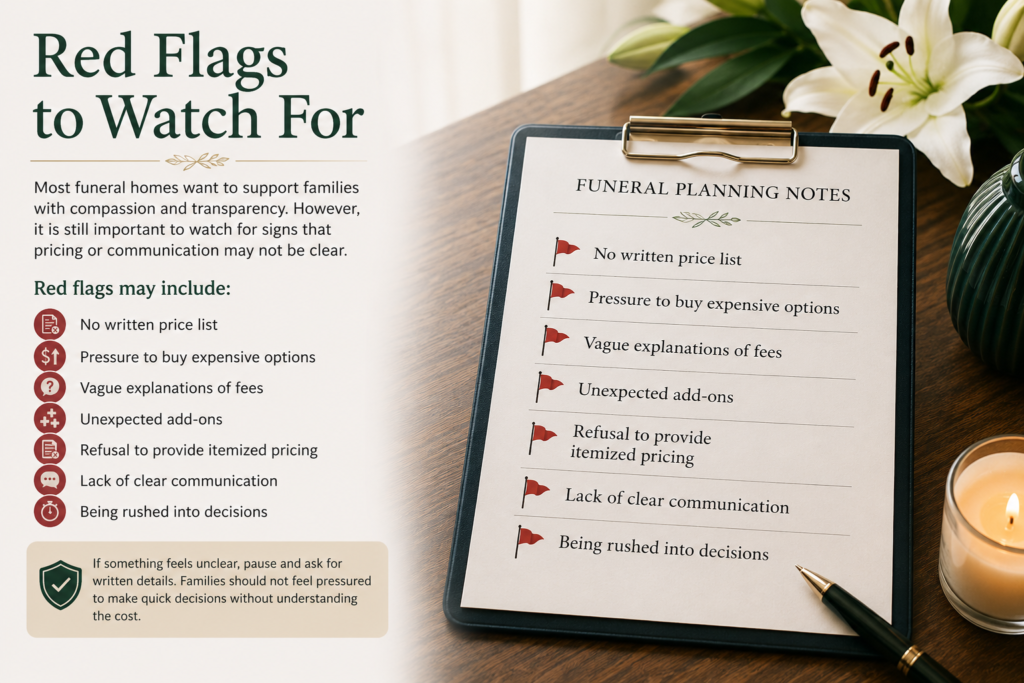
Most funeral homes want to support families with compassion and transparency. However, it is still important to watch for signs that pricing or communication may not be clear.
Red flags may include:
- No written price list
- Pressure to buy expensive options
- Vague explanations of fees
- Unexpected add-ons
- Refusal to provide itemized pricing
- Lack of clear communication
- Being rushed into decisions
If something feels unclear, pause and ask for written details. Families should not feel pressured to make quick decisions without understanding the cost.
Funeral Home Expenses Checklist
Use this checklist when reviewing a funeral home estimate:
- Basic services fee
- Transportation
- Preparation or embalming
- Viewing or visitation
- Ceremony or chapel use
- Casket or urn
- Burial or cremation fee
- Cemetery costs
- Death certificates
- Obituary
- Flowers
- Printed memorial items
- Reception costs
- Optional personalization
You can also compare these items against broader cost guides, such as HonorYou’s article on average funeral costs, to better understand how expenses may fit into the larger funeral budget.
Final Thoughts
Funeral home expenses can vary depending on the type of service, burial or cremation choices, transportation needs, merchandise, personalization, and local third-party fees. While the total cost may feel overwhelming at first, understanding each charge can help families make more informed decisions.
The most important step is to ask for written pricing, review the estimate carefully, and separate required costs from optional extras. A meaningful service does not have to be the most expensive service. What matters most is that the arrangements feel respectful, manageable, and true to the person being honored.
By asking clear questions, comparing options, and understanding common funeral home charges, families can plan with more confidence during a difficult time.
Frequently Asked Questions
What are common funeral home expenses?
Common funeral home expenses include the basic services fee, transportation, body preparation, viewing or visitation, ceremony use, casket or urn costs, cremation or burial coordination, and optional printed memorial items.
How much does a funeral home cost?
The cost of a funeral home can vary depending on location, service type, burial or cremation, transportation, merchandise, and personalization. Ask for an itemized estimate so you can understand each charge before agreeing to arrangements.
Are funeral home fees different from cemetery costs?
Yes. Funeral home fees usually cover services, preparation, transportation, coordination, and merchandise. Cemetery costs may include the plot, grave opening and closing, burial vault, and headstone or marker.
Is embalming always required?
No, embalming is not always required. It may be recommended or needed for a public viewing, delayed service, or certain circumstances, but families should ask whether it is required for the specific service they choose.
What is the lowest-cost funeral option?
Direct cremation and immediate burial are often lower-cost options because they usually avoid expenses connected to a traditional viewing, full ceremony, embalming, or extended facility use.
How can families avoid unexpected funeral costs?
Families can avoid unexpected funeral costs by asking for a written price list, requesting an itemized estimate, clarifying which services are required, asking about third-party charges, and reviewing all costs before signing an agreement.
Are printed memorial items required?
No, printed memorial items such as funeral programs, prayer cards, register books, and bookmarks are optional. Many families choose them as meaningful keepsakes, but they can be adjusted to fit the budget.
Can funeral expenses be planned ahead?
Yes. Families can plan ahead through pre-need funeral plans, insurance, savings, or written instructions. Planning ahead can reduce stress and help loved ones understand your wishes.
